Shipping Nations Forge Historic Agreement on Greenhouse Gas Tax
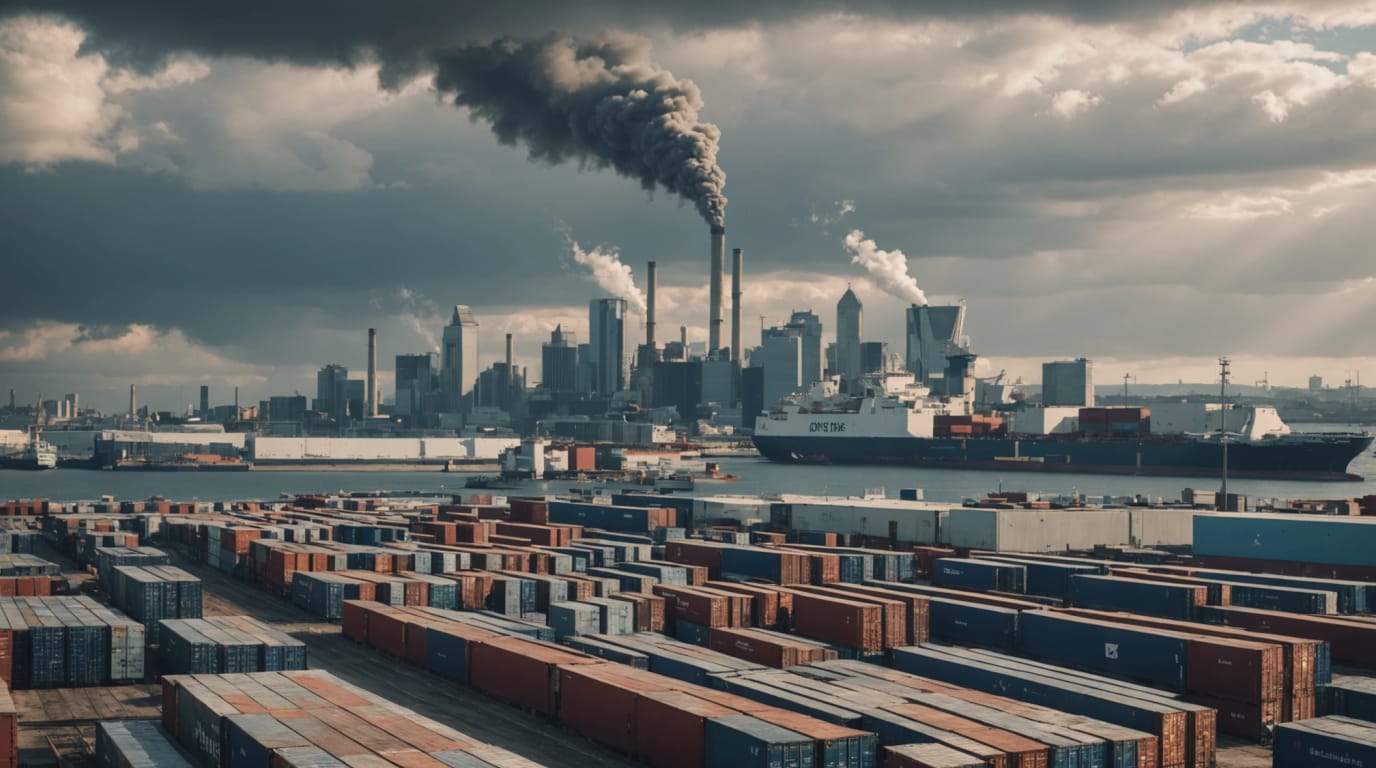
In a landmark decision hailed as a crucial step toward combating climate change, a majority of the world's leading shipping nations have agreed to implement a global tax on greenhouse gas emissions from the shipping industry. The agreement, finalized Friday at a meeting of the International Maritime Organization (IMO) in London, marks the first-ever global levy on greenhouse gas emissions and aims to accelerate the transition to cleaner fuels and technologies within the maritime sector.
Key Provisions of the Agreement
The core of the agreement centers on a minimum fee of $100 per ton of greenhouse gases emitted by cargo ships exceeding certain thresholds. This levy will be imposed if nations have not contributed sufficiently to the IMO's net-zero fund or if their ships fail to meet compliance targets. Scheduled to take effect in 2027, the agreement also establishes a marine fuel standard designed to phase in cleaner fuels across the industry. The revenue generated from these fees, estimated to be between $11 billion and $13 billion annually, will be channeled into the IMO's net-zero fund. This fund will then be used to invest in the development and adoption of greener fuels and technologies, as well as to support developing countries in their transition to lower-emission shipping practices. Furthermore, the agreement includes incentives for ships achieving zero or near-zero greenhouse gas emissions.
Voting Breakdown and Notable Absences
The agreement garnered significant support from major shipping nations, including the European Union, Brazil, China, India, and Japan. However, it faced opposition from major oil-producing countries such as Russia, the United Arab Emirates, and Saudi Arabia. The United States abstained from the vote. The IMO aims for consensus in decision-making, but in this case had to vote. Sixty-three nations, including China, Brazil, South Africa and many European states, approved the agreement. Led by Saudi Arabia, 16 opposed. And 24 nations, including a group from the Pacific Islands, abstained.
Impact and Environmental Implications
The shipping industry accounts for approximately 3% of global greenhouse gas emissions, a figure that has risen over the past decade due to the increasing size of vessels and the growing volume of cargo transported. Most of the world's 100,000 cargo ships still rely on highly polluting diesel fuel. The IMO's new measures are designed to address this issue by incentivizing the use of less carbon-intensive fuel mixes and imposing financial penalties on ships that fail to comply. The IMO has set a target for the sector to reach net-zero greenhouse gas emissions by approximately 2050 and has committed to promoting fuels with zero or near-zero emissions. The thresholds set through the agreement will get stricter over time to try to reach the IMO's goal of net zero across the industry by about 2050.
Reactions and Concerns
While many have lauded the agreement as a historic step forward, some environmental groups and climate-vulnerable nations have expressed concerns that it does not go far enough. Ministers from the island nations said they refused to support an agreement that would “do too little, too late to cut shipping emissions and protect their islands,” and will try to strengthen it at the October meeting. Emma Fenton, senior director for climate diplomacy at a U.K.-based climate change nonprofit, Opportunity Green, stated that the tax doesn't capture all emissions or drive enough emission reductions and it won't raise enough revenue to help developing countries transition to greener shipping. Other groups welcomed the IMO's decisions as a step in the right direction.
U.S. Position
The United States was notably absent from the negotiations, with the Trump administration urging other governments to oppose the greenhouse gas emission measures under consideration. The administration stated that it would reject any efforts to impose economic measures against its ships based on emissions or fuel choice, arguing that such measures would burden the sector and drive inflation. A US State Department spokesperson said Washington would not be "engaging in negotiations" since US President Donald Trump's administration wanted to put US interests first in the "development and negotiation of any international agreements."
Looking Ahead
The agreement is expected to be formally adopted at an October meeting and will take effect in 2027. The IMO aims to cut total annual emissions of greenhouse gases by 50 per cent by mid-century to meet the Paris Agreement goal of a maximal 1.5 C rise in the average global temperature compared with the pre-industrial era. Despite the challenges and concerns raised by some parties, the implementation of a global greenhouse gas tax on the shipping industry represents a significant milestone in the global effort to mitigate climate change and promote a more sustainable future for maritime transport.


