Slovakia PM Sparks Backlash After Questioning NATO Mutual Defense Clause
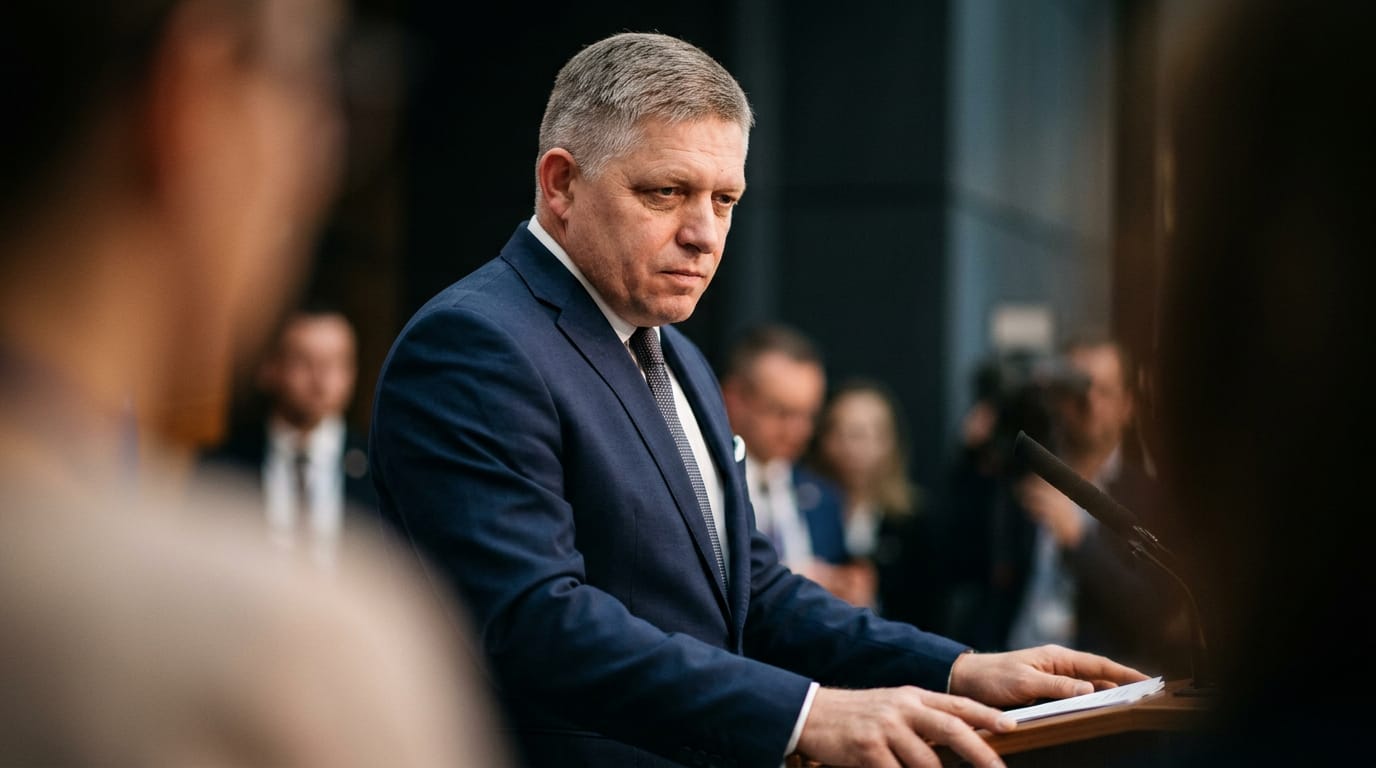
Slovak Prime Minister Robert Fico has ignited widespread domestic and international criticism after openly questioning his nation's obligations under NATO's cornerstone collective defense clause. The remarks have raised sharp questions about Bratislava's reliability inside the transatlantic military alliance at a moment of heightened tensions across Eastern Europe.
Addressing students and hospital personnel in the eastern city of Presov, Fico warned that the conflict in neighboring Ukraine had spun out of control and that European rhetoric risked provoking a catastrophic war. The Slovak leader asserted that he would do everything in his power to ensure his country avoids being pulled into a major military confrontation under the terms of the North Atlantic Treaty.
The statements represent an unprecedented public hesitation by a sitting NATO head of government regarding mutual defense. They have drawn swift pushback from regional partners, domestic political opponents, and defense analysts who warn that undermining alliance solidarity threatens European security.
Collective Defense Under the Microscope
The core of the controversy centers on Article 5 of the North Atlantic Treaty, which establishes that an armed attack against one member state is considered an attack against all. Fico characterized the potential invocation of the clause as an unacceptable burden on Slovakia, dismissively referring to the principle while questioning whether thousands of Slovak troops should ever be dispatched abroad to defend an ally.
The prime minister suggested that Western capitals were actively stoking war rhetoric instead of managing critical domestic problems such as energy prices, economic competitiveness, and migration. Rather than pinpointing external aggression as the principal security risk, he framed NATO's escalating posture as a potential trap that could draw smaller members into an unwanted conflict.
Security specialists pointed out that Fico's rhetoric misrepresents the actual mechanics of the treaty. While Article 5 guarantees collective assistance, it does not mandate specific troop quotas or demand automatic offensive deployments. Each member government retains sovereign authority to decide what form of support—ranging from direct military force to logistical aid or humanitarian supplies—it considers necessary in response to an attack.
Diplomatic Repercussions Across Central Europe
The remarks triggered an immediate reaction among Slovakia's closest neighbors. Czech President Petr Pavel, a former general who previously served as the chairman of NATO's Military Committee, rejected the Slovak prime minister's stance as contrary to the foundation of the alliance. Pavel emphasized that mutual security depends entirely on reciprocal trust, warning that enjoying the security umbrella of the alliance while rejecting assistance to others undermines the fundamental meaning of solidarity.
Within Slovakia, the political fallout was equally intense. Slovak President Peter Pellegrini cautioned government leaders to weigh their language carefully when discussing security commitments, emphasizing that the country must not signal any intent to stand aside during a crisis.
Opposition lawmakers called for parliamentary scrutiny over the comments, pointing out that Article 5 serves as Slovakia’s ultimate shield against foreign aggression. Critics argued that questioning the mutual assistance pact leaves Slovakia vulnerable, prompting former diplomats to ask who would come to Bratislava’s defense if its own government casts doubt on helping others.
Domestic Pressures and Strategic Realities
Fico has consistently advanced a populist foreign policy platform, halting state military assistance to Ukraine upon returning to office and advocating for swift negotiated settlements. Analysts view his recent statements as partly aimed at his domestic political base, where skepticism toward Western military integration remains notable amid ongoing economic strains.
Despite the combative political rhetoric, Slovakia remains deeply integrated into NATO's actual operational structures. The country has been a full member of the alliance since 2004, spending approximately 2 percent of its gross domestic product on defense in line with alliance targets. Slovak service members currently deploy alongside allied troops on NATO’s eastern flank in Latvia, where multinational forces maintain a deterrence brigade.
Moreover, the Slovak government continues to permit commercial defense production and arms sales from private domestic factories to foreign buyers, reflecting a pragmatic line between political rhetoric and military-industrial activity.
The Broader Challenge to Alliance Cohesion
The dispute highlights the balancing act facing the 32-member defense pact as it navigates divergent political perspectives across its eastern border. With Russia conducting hybrid operations and staging strikes near alliance territory, NATO planners rely heavily on the principle of unconditional mutual deterrence to prevent miscalculations.
Public doubts voiced by member states can erode that deterrence, creating potential fault lines that geopolitical adversaries may seek to exploit. While Slovakia officially affirms its continued participation in NATO, the prime minister's refusal to commit to collective defense operations creates strategic ambiguity.
The episode underscores the delicate balance small European nations face between domestic anti-war sentiment and international security guarantees. As debates over defense spending and joint operations intensify across the continent, Slovakia now faces mounting pressure from its allies to reaffirm that its commitment to collective security remains steadfast.


