Slovenia Navigates a Dual Path: Surging LGBTQ+ Rights Amidst Persistent Hostility
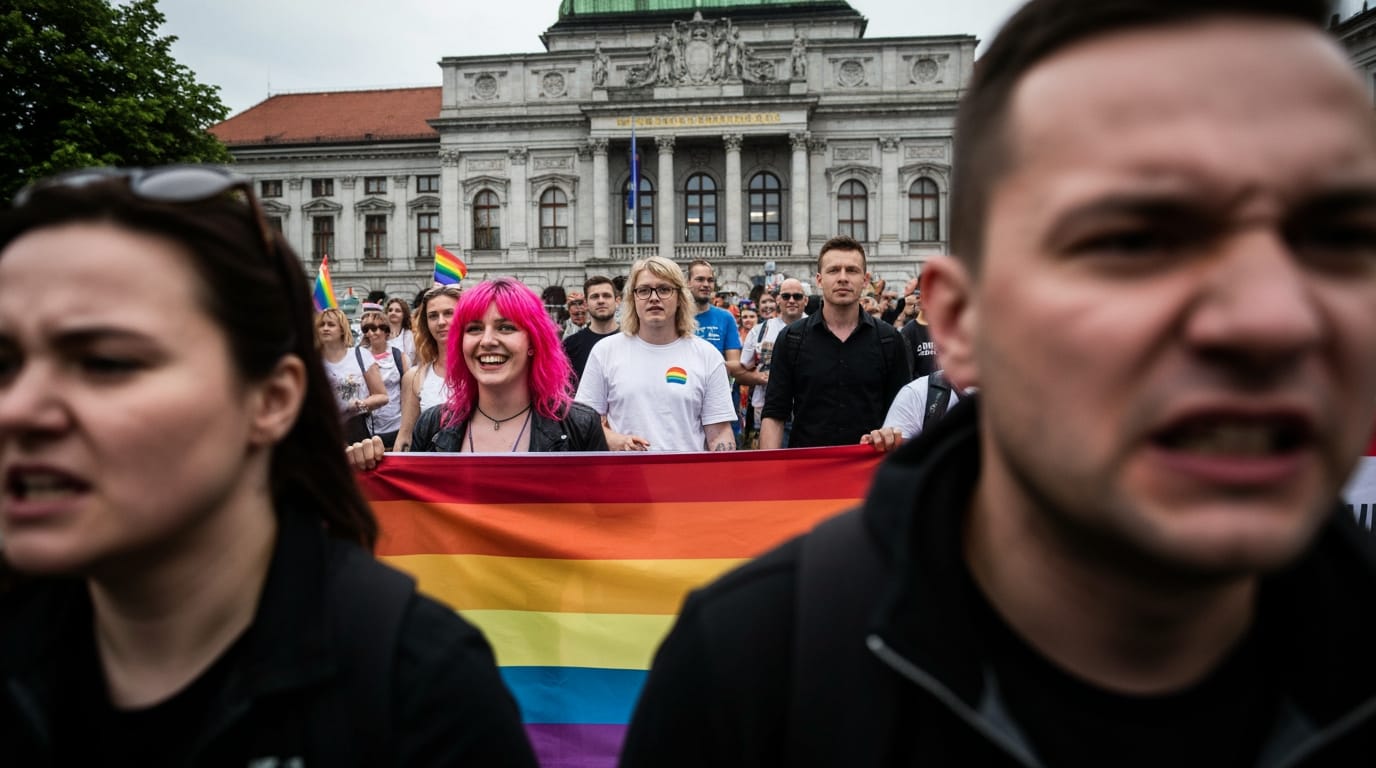
Ljubljana, Slovenia – Slovenia finds itself at a pivotal juncture in its journey toward LGBTQ+ equality, celebrating significant legislative milestones that position it as a trailblazer among post-communist nations while simultaneously grappling with deeply entrenched societal resistance and overt acts of hostility. This dynamic interplay of progress and backlash defines the contemporary landscape for the nation's LGBTQ+ community, where legal victories are increasingly met with public displays of support and equally vocal expressions of opposition.
A Historic Leap Towards Equality
Slovenia recently etched its name into history as the first post-communist country to legalize same-sex marriage and adoption, a landmark achievement that culminated in January 2023. This legislative triumph followed a crucial ruling by the Constitutional Court in June 2022, which declared the statutory definition of marriage as solely between a man and a woman to be unconstitutional. The court mandated the parliament to amend the law, a directive swiftly acted upon with a decisive vote of 48 in favor and 29 against in October 2022, overriding a subsequent veto by the National Council. This pivotal decision marked the culmination of decades of advocacy and a complex legislative journey, replacing earlier, more limited forms of registered partnerships that had been in place since 2006 and civil partnerships since 2017.
The path to this moment was not linear, illustrating the persistent push and pull within Slovenian society. While a 2015 parliamentary bill to legalize same-sex marriage initially passed with a 51-28 vote, it was subsequently rejected by a public referendum with a 63-37% margin, largely due to strong opposition from conservative groups and the Catholic Church. However, public opinion surveys have consistently shown a trend towards greater acceptance, with a majority of Slovenes indicating support for same-sex marriage in later polls. This evolving public sentiment, coupled with the Constitutional Court's intervention, underscores a gradual yet significant shift in the national discourse surrounding LGBTQ+ rights.
The Enduring Shadow of Intolerance
Despite the celebratory advancements, the LGBTQ+ community in Slovenia continues to navigate a landscape where hostility and discrimination remain palpable. Incidents of violence and harassment underscore the challenges that persist beyond legal frameworks. The 2023 Ljubljana Pride Parade, for instance, a vibrant display of community and advocacy that drew 3,500 participants, was marred by threats, insults, flag burnings, and property destruction. This echoes past instances of violence, including an attack during a 2009 literary event and assaults at a Maribor Pride parade in 2007.
Beyond overt acts of aggression, a more insidious form of "quiet homophobia" is reported, manifesting as discomfort with public displays of affection between same-sex couples and subtle political opposition to LGBTQ+ rights. Studies reveal that a significant portion of LGBTIQ+ individuals in Slovenia still avoid holding hands with their partners in public, and many conceal their identity at school. Moreover, anti-discrimination laws, while existing since 2016, are sometimes criticized for being vague and inconsistently enforced. This gap between legal protection and lived experience highlights the ongoing struggle to translate legislative equality into genuine social acceptance.
Conservative voices frequently fuel this opposition, with some public figures propagating discriminatory rhetoric. A notable example includes an MP who advocated for banning "LGBTI and cultural marxist indoctrination" from schools, proposing instead the teaching of "real" Slovenian tradition and culture. Organizations with anti-LGBTI beliefs further contribute to this climate, with some asserting that homosexuality can be "cured." These sentiments underscore the ideological battle being waged against LGBTQ+ inclusion, often framed around traditional family values and cultural heritage.
Pride as Protest: A Call for Dignity
The Ljubljana Pride Festival, an annual event strongly supported by the City of Ljubljana, serves as a crucial platform for the LGBTQ+ community to assert its visibility and demand equal rights. Originating from an anti-homophobia rally in 2001, triggered by an incident of intolerance at a Ljubljana art gallery, Pride in Slovenia has always carried a strong political message alongside its celebratory aspects. President Nataša Pirc Musar's address at the 2023 Pride Parade, the first time a head of state has done so, emphasized that the event is "an expression of the fight for human dignity" and a "protest with the clear message that every human being, regardless of their sexual orientation, sexual identity or sexual expression is worthy of respect, love and equal treatment." This high-level endorsement signals a growing recognition of the importance of LGBTQ+ rights within the highest echelons of Slovenian leadership.
The persistent need for such public demonstrations highlights that despite legal advancements, the fight for full social integration is far from over. Organizers of the 2026 Pride Festival have adopted the slogan "Democracy in our hands – hope is our resistance," emphasizing that democracy is not merely the right of the majority but also the duty of society to protect the dignity of every person. This framing positions the struggle for LGBTQ+ rights as integral to the health and vitality of Slovenian democracy itself, particularly in a region where such rights are increasingly under threat in neighboring countries.
Looking Ahead: Bridging the Divide
Slovenia's journey presents a compelling case study of a nation striving to reconcile progressive legal frameworks with lingering societal conservatism. The legalization of same-sex marriage and adoption stands as a testament to the power of sustained activism and judicial courage, setting Slovenia apart from many of its Eastern European counterparts. However, the continued prevalence of hate speech, discrimination, and violence underscores that legal equality does not automatically equate to social acceptance. The absence of official hate crime statistics related to sexual orientation or gender identity further compounds the issue, contributing to a culture where intolerance can remain unchecked.
The challenge for Slovenia moving forward lies in bridging this divide. It requires not only robust enforcement of existing anti-discrimination laws but also concerted efforts to foster empathy, understanding, and education across all segments of society. The dual narrative of increasing support and persistent hostility in Slovenia is a microcosm of a global struggle, where the fight for LGBTQ+ rights is a continuous process of legislative progress, cultural transformation, and the unwavering assertion of human dignity for all.


