Slovenia's Soul on the Ballot: Nation Grapples with Identity in Closely Contested Election
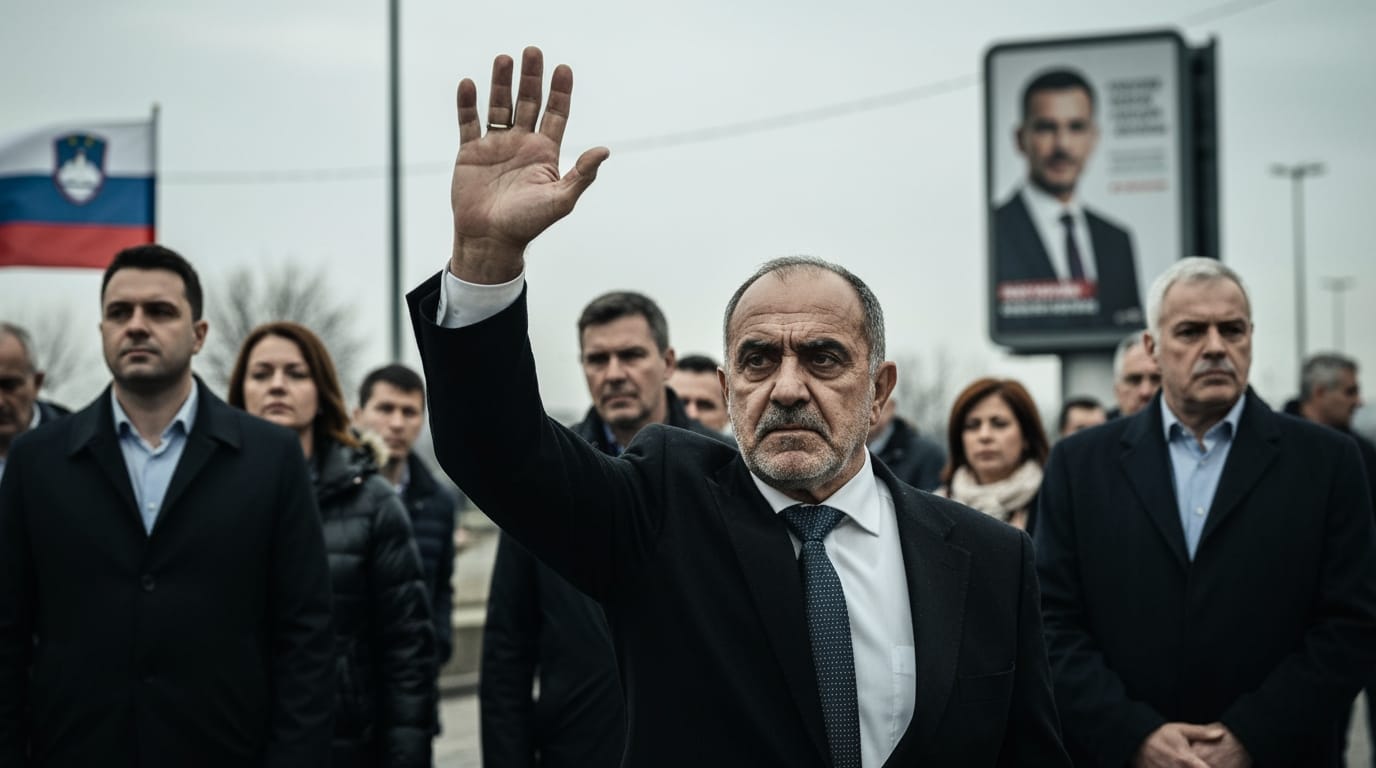
LJUBLJANA, Slovenia – Voters in Slovenia have delivered a fragmented political landscape following a closely contested parliamentary election, a vote widely perceived as a battle for the nation's identity. Preliminary results indicate no single party has secured a clear majority, setting the stage for potentially complex and protracted coalition negotiations that will ultimately determine whether the small European Union member maintains its liberal, pro-European trajectory or shifts toward a more nationalist, populist stance. The election, held on March 22, saw a high voter turnout, underscoring the deep divisions and strong public engagement surrounding the country's future direction.
The electoral contest pitted the incumbent Prime Minister Robert Golob's center-left Freedom Movement against the right-wing Slovenian Democratic Party (SDS) led by three-time premier Janez Janša. This ideological clash has been at the heart of the "battle for identity," with Golob's camp advocating for a continuation of liberal, pro-EU policies, while Janša's campaign embraced a more nationalist and traditionalist worldview. Since its independence from Yugoslavia in 1991 and subsequent entry into the EU and NATO in 2004, Slovenia's political narrative has frequently revolved around such choices, reflecting broader shifts across the European continent.
The Clash of Visions: Liberalism vs. Nationalism
The election served as a referendum on two distinct visions for Slovenia. Prime Minister Robert Golob, a former energy company executive, emerged as a fresh face in 2022, leading his Freedom Movement to power on a wave of hope for disillusioned voters. His government has consistently championed a strong liberal voice within the European Union, aligning Slovenia with mainstream European policy priorities. However, Golob's administration has faced its share of challenges, including government reshuffles, difficulties with healthcare reform, and frequent changes in tax policy, which have contributed to a decline in public support. Golob himself emphasized the stakes, urging voters to participate and not "let others to decide instead of you," highlighting concerns over the preservation of Slovenia's "democracy and sovereignty".
Opposing him was Janez Janša, a veteran politician and former dissident from the communist era, who has shaped Slovenian politics for decades. Leading the SDS, Janša's political brand is often described as populist, drawing parallels with figures like former U.S. President Donald Trump and Hungarian Prime Minister Viktor Orbán, with whom he shares close ties. During his previous term from 2020 to 2022, Janša faced accusations of undermining democratic institutions, clamping down on media freedoms, and exhibiting authoritarian tendencies. His campaign for this election also carried a distinct nationalist and identity-focused message, with campaign materials reportedly imploring voters to support SDS if they wished for their grandchildren to continue singing Slovene songs.
Campaign Marred by Allegations and High Stakes
The election campaign was not without controversy, particularly concerning allegations of foreign interference. Reports surfaced regarding an Israeli intelligence company, Black Cube, whose representatives reportedly met with Janez Janša in Ljubljana late last year. These meetings occurred amidst the release of anonymous online videos purporting to expose government-tied corruption, strategically timed to influence voters. While Janša denied commissioning Black Cube, he acknowledged meeting an adviser from the agency. Independent media and investigative journalists raised concerns that these tactics mirrored those seen in other European elections, suggesting an attempt to sway the electoral outcome.
Beyond these allegations, the core issues debated during the campaign included the rule of law, media independence, and the country's approach to migration. While European themes rarely dominate Slovenian campaigns, Janša's past rhetoric on migration and his alignment with more Eurosceptic figures like Orbán suggested a potential shift in Slovenia's European engagement. Conversely, Golob's government maintained a strong pro-European stance, even taking a high-profile pro-Palestinian position internationally, a sharp contrast to Janša's pro-Israel leanings. The robust voter turnout, notably higher than in previous elections, demonstrated the public's awareness of the profound choices at hand and the deeply polarized political climate.
A Fragmented Mandate and Uncertain Path Ahead
As the initial results rolled in, it became evident that the election had produced a fragmented National Assembly. While Prime Minister Golob's Freedom Movement appeared to secure the highest number of votes, its share was significantly reduced compared to its previous performance, and critically, insufficient to govern alone. Janez Janša's SDS followed closely, also without a clear path to a majority. This outcome thrust smaller parties into a pivotal role, effectively making them "kingmakers" in the intricate process of forming the next government.
Slovenia's multi-party system historically necessitates coalition governments, but the current configuration suggests that negotiations will be particularly challenging. The inability of either major bloc to secure a decisive mandate underscores the deep divisions within the electorate and the difficulty in forging consensus. The coming weeks will likely see intense bargaining and alliance-building as parties with diverse platforms attempt to reconcile their differences and form a stable governing coalition.
Implications for Slovenia and the European Union
The outcome of this election carries significant implications, not only for Slovenia's internal governance but also for its standing and influence within the European Union. A government aligned with Golob's liberal, pro-EU vision would likely ensure Slovenia's continued integration and cooperation with mainstream European policies. Conversely, a coalition heavily influenced by Janša's more nationalist and populist agenda could lead to shifts in areas such as immigration, judicial reforms, and a potentially more critical approach to EU initiatives.
Slovenia, despite its relatively small size, contributes to the broader balance of power within the EU, with its votes in EU councils and its stance on regional matters impacting bloc-wide policymaking. The election results will be closely watched across Europe as an indicator of prevailing political trends, particularly the ongoing tension between liberal democracy and rising populism. The challenge now facing Slovenian political leaders is to navigate this fragmented mandate and forge a government capable of addressing the nation's domestic priorities while clearly defining its role on the European and global stage.
In conclusion, Slovenia's parliamentary election was more than a contest for political power; it was a profound deliberation on the nation's core identity. The electorate's decision to grant neither a clear liberal nor a clear nationalist mandate reflects a country grappling with its direction in a rapidly evolving world. The ensuing period of coalition building will be critical in shaping Slovenia's future, determining its domestic policies, and reaffirming its place within the European family of nations.


