Social Democrats Maintain Lead in Hamburg State Election Amidst Coalition Talks
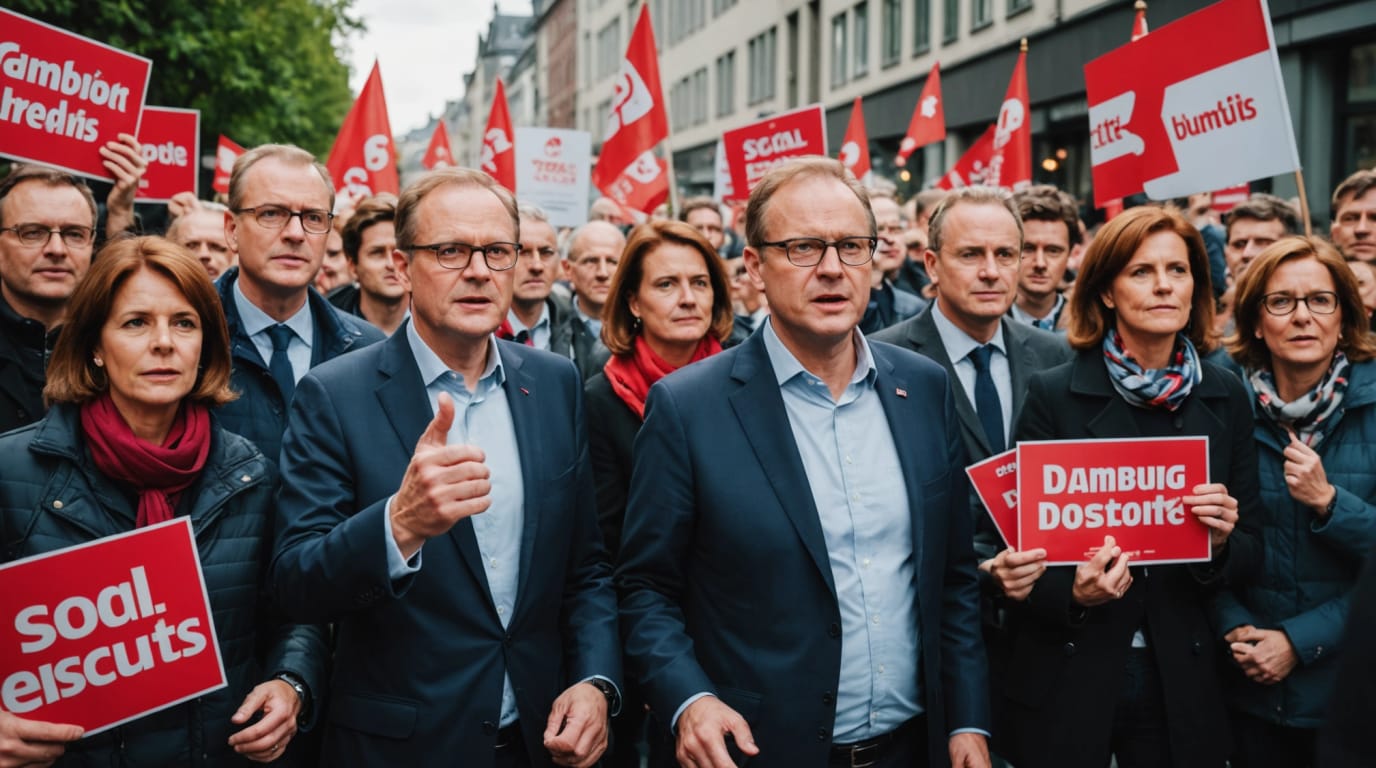
The Social Democrats (SPD) have emerged as the leading party in Hamburg's state election, preliminary results indicate, offering a much-needed morale boost after a recent setback in federal elections. While the SPD secured the largest share of votes, the outcome necessitates coalition negotiations to form a stable government in the northern city-state.
The election results, announced Sunday, point towards a continuation of the existing coalition between the SPD and the Green Party. However, both parties experienced a dip in their vote share compared to the previous election in 2020, highlighting shifting political dynamics within Hamburg. The SPD, led by incumbent Mayor Peter Tschentscher, remains the dominant force, but the final composition of the government hinges on successful coalition talks.
Tschentscher's Popularity Drives SPD Victory
Peter Tschentscher, the SPD's leading candidate and the current mayor of Hamburg, played a crucial role in the party's victory. Tschentscher enjoys high approval ratings among Hamburg residents, making him a key asset for the Social Democrats. Despite a slight decrease in the SPD's overall vote share, Tschentscher's personal popularity helped the party maintain its leading position.
The SPD garnered approximately 33.7% of the vote, according to preliminary projections. This figure represents a decline of more than 5% compared to the previous election. Nevertheless, the Social Democrats secured a clear lead over their rivals, positioning them as the primary party to lead coalition negotiations.
Green Party Eyes Continued Coalition
The Green Party is poised to be a key partner in the next Hamburg government. While the final vote share for the Greens is still being tallied, projections suggest they will secure a significant portion of the vote, solidifying their position as a major political force in the city-state.
The Greens are expected to engage in coalition talks with the SPD, aiming to continue their collaboration in governing Hamburg. The two parties share common ground on various policy issues, including environmental protection and sustainable development, making a coalition a likely outcome.
Other Parties Vie for Influence
While the SPD and the Greens are expected to form the core of the next Hamburg government, other political parties are also vying for influence. The Christian Democratic Union (CDU) and other parties are hoping to play a role in shaping the political landscape of the city-state.
The CDU, which recently won the federal elections, had hoped to gain ground in Hamburg. However, early results suggest the party did not achieve its desired outcome. Despite this, the CDU remains a significant political force in Hamburg and will likely seek to influence policy decisions.
Implications for German Politics
The Hamburg state election holds broader implications for German politics. The SPD's victory, albeit with a reduced vote share, provides a welcome boost for the party after a disappointing performance in the recent federal elections. The outcome also underscores the importance of strong local leadership and the ability to connect with voters on regional issues.
The election results may also influence coalition dynamics at the national level. The SPD, as the leading party in the federal government, will likely draw lessons from the Hamburg election as it navigates complex coalition negotiations on the national stage. The success of the SPD-Green coalition in Hamburg could serve as a model for potential collaborations in other regions and at the federal level.
Conclusion: Coalition Talks to Determine Hamburg's Future
The Hamburg state election has resulted in a victory for the Social Democrats, but the formation of a stable government hinges on successful coalition negotiations. The SPD, led by Mayor Peter Tschentscher, is expected to engage in talks with the Green Party to continue their existing coalition. The outcome of these negotiations will determine the future political direction of Hamburg and could have broader implications for German politics as a whole. The coming weeks will be crucial as parties navigate complex policy differences and seek to forge a common path forward for the city-state.


