South Africa's Top Court to Rule on Ramaphosa Impeachment Review, High Stakes for Accountability
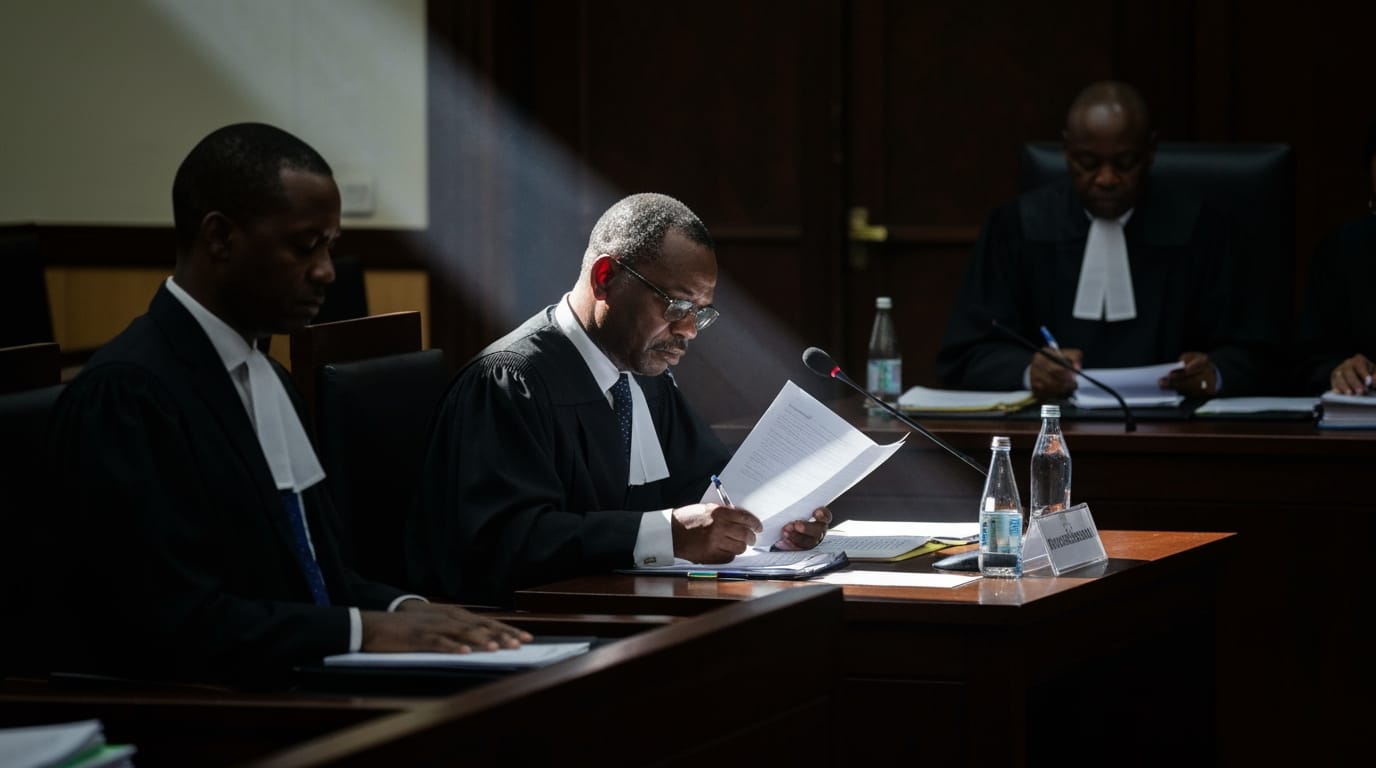
JOHANNESBURG, South Africa – South Africa's Constitutional Court is poised to deliver a landmark judgment today, Friday, May 8, 2026, that could reignite impeachment proceedings against President Cyril Ramaphosa, stemming from the controversial Phala Phala scandal. The highly anticipated ruling will determine whether Parliament acted lawfully when it previously dismissed a report that found sufficient evidence to warrant an impeachment inquiry into the President's conduct. This decision carries significant implications for presidential accountability and the stability of South Africa's political landscape.
The case before the apex court was brought by the Economic Freedom Fighters (EFF) and the African Transformation Movement (ATM), opposition parties challenging the National Assembly's December 2022 vote to reject an independent panel's findings. That panel had concluded that President Ramaphosa might have a case to answer regarding the alleged theft of a large sum of foreign currency from his Phala Phala game farm. The Constitutional Court's decision today is expected to clarify the extent of parliamentary discretion in impeachment proceedings and the legal weight of findings by such independent panels.
The Phala Phala Allegations: A Cloud Over the Presidency
The roots of the current legal battle lie in what has become known as the Phala Phala scandal, which first came to public light in June 2022. It involves allegations surrounding the theft of foreign currency from President Ramaphosa's private game farm in Limpopo province in February 2020. Initial reports from former State Security Agency boss Arthur Fraser claimed that up to $4 million had been stolen, though President Ramaphosa later stated the amount was approximately $580,000.
The allegations extend beyond the theft itself. Concerns were raised about the origin of the foreign currency, suggesting potential breaches of exchange control regulations and questions of undeclared funds. Furthermore, the President faced scrutiny for allegedly failing to report the crime to relevant law enforcement agencies through official channels and for the alleged misuse of state resources, specifically members of the Presidential Protection Unit, to investigate the theft privately and recover the money. President Ramaphosa has consistently denied any wrongdoing, asserting that the funds were legitimate proceeds from the sale of Ankole cattle to a Sudanese businessman who had not yet collected the livestock.
Following the public outcry, the Speaker of the National Assembly appointed an independent panel, chaired by retired Chief Justice Sandile Ngcobo, to assess whether there was sufficient evidence to warrant a full impeachment inquiry against the President under Section 89 of the Constitution. In November 2022, the panel delivered a report that found preliminary evidence suggesting President Ramaphosa may have violated his oath of office and committed serious misconduct. The panel's report did not make findings of guilt but concluded that the evidence presented was sufficient to necessitate further scrutiny through a formal impeachment inquiry.
Parliament's Rejection and the Path to the Constitutional Court
Despite the independent panel's findings, the National Assembly, dominated at the time by the African National Congress (ANC) with its substantial majority, voted against adopting the report in December 2022. This vote effectively halted the impeachment process, preventing it from advancing to a full inquiry stage within Parliament. The ANC leadership had instructed its lawmakers to reject the findings, a move that drew sharp criticism from opposition parties and civil society organizations. Critics argued that the parliamentary majority was being used to shield the President from accountability, undermining constitutional principles.
In response to Parliament's decision, the EFF and ATM launched a legal challenge at the Constitutional Court, South Africa's highest judicial body. Their application contended that Parliament acted irrationally and unconstitutionally by rejecting the independent panel's findings without proper consideration. They argued that Section 89 of the Constitution establishes a vital accountability mechanism, requiring Parliament to appropriately consider and act on such findings, rather than blocking the process based solely on political majorities.
Legal Battlegrounds: Accountability, Powers, and Interpretation
The core of the legal arguments before the Constitutional Court revolves around the interpretation of Section 89 of the South African Constitution, which outlines the grounds and procedures for removing a president from office. The opposition parties have asserted that once an independent panel finds a prima facie case for an impeachment inquiry, Parliament has an obligation to establish a formal inquiry to thoroughly investigate the facts. They maintain that the National Assembly's outright rejection of the report circumvented this constitutional duty and undermined the very purpose of the impeachment framework.
Conversely, those defending Parliament's original decision have argued that accepting the opposition's position would improperly shift political accountability from elected representatives to the judiciary, thereby infringing on the principle of the separation of powers. They contend that Parliament retains the discretion to decide whether to proceed with an inquiry, even after receiving a panel's report. The Constitutional Court's ruling is expected to provide crucial clarity on the boundaries of this discretion and the precise legal threshold required before Parliament is constitutionally mandated to move forward with an impeachment inquiry.
President Ramaphosa himself had previously initiated a legal challenge to the independent panel's report, seeking to have it reviewed, declared unlawful, and set aside. His legal team maintained that the panel exceeded its mandate and erroneously treated hearsay and allegations as conclusive evidence. While those specific legal efforts by the President were aimed at the panel's report itself, the current Constitutional Court case focuses on Parliament's subsequent actions.
Political Fallout and the Future of Governance
The outcome of today's judgment holds immense political weight for President Ramaphosa, his ruling ANC party, and the broader political stability of South Africa. The ANC, which traditionally held an overwhelming parliamentary majority, recently experienced a significant loss of support in the latest general elections, forcing it into a Government of National Unity (GNU) with several opposition parties. This shift in parliamentary dynamics means that any future impeachment proceedings would be far less straightforward for the ANC to block.
A ruling by the Constitutional Court that mandates a revival of the impeachment inquiry could place President Ramaphosa under renewed political pressure and potentially destabilize the nascent Government of National Unity. Political analysts have suggested that such a scenario would severely test the cohesion of the GNU and cast a long shadow over Ramaphosa's remaining term. Conversely, a ruling against the EFF and ATM would represent a temporary reprieve for the President, allowing him to further consolidate his position within the new coalition government.
Regardless of the immediate legal outcome, the Phala Phala scandal and the ongoing legal challenges have already taken a toll on the credibility of government institutions and fueled public debate about ethics and accountability in leadership. Opposition parties, particularly the EFF and ATM, have vowed to continue their pursuit of full accountability, emphasizing that no individual, including the President, should be above the law.
Conclusion
As South Africa's Constitutional Court prepares to hand down its pivotal judgment today, the nation holds its breath. The decision will not only shape the immediate future of President Cyril Ramaphosa but will also establish critical precedents for presidential accountability and parliamentary oversight in the country's democratic framework. Whether the court orders a re-evaluation of the impeachment inquiry or upholds Parliament's prior decision, the ruling is set to profoundly influence the political discourse and potentially redefine the landscape of governance in South Africa for years to come. The pursuit of justice and the upholding of constitutional principles remain at the forefront of this high-stakes legal and political drama.


