South Caucasus: A Geopolitical Crucible as Iran Conflict Escalates

The protracted and intensifying conflict involving Iran, the United States, and Israel is reshaping geopolitical realities far beyond the Persian Gulf, transforming the South Caucasus into a critical and increasingly volatile strategic flashpoint. This historically complex region, comprising Armenia, Azerbaijan, and Georgia, finds itself at the intersection of critical energy routes, competing global interests, and mounting security threats, fundamentally altering its role from a distant observer to a potential front line. The crisis has amplified existing vulnerabilities and created new challenges for regional stability, energy security, and international power dynamics.
A Region at the Crossroads: Inherently Strategic Location
The South Caucasus has long been recognized for its pivotal geographical position, serving as a natural bridge between Europe and Asia. It directly borders Iran to the south, Russia to the north, and Turkey to the west, placing it at the nexus of major regional powers. This unique geography makes it indispensable for numerous transit corridors, including those vital for transporting Caspian energy resources to global markets. For decades, these nations have navigated a delicate balance amidst the influences of Moscow, Ankara, and Tehran, but the current conflict threatens to demolish the existing regional equilibrium.
Historically, the region has been characterized by unresolved conflicts and fragile diplomatic arrangements, creating an "armed peace." These internal dynamics, coupled with external pressures, render the South Caucasus particularly susceptible to spillover effects from wider international confrontations. The ongoing conflict involving Iran has pushed the region from being a peripheral concern to a zone of immediate security implications, demanding heightened attention from global policymakers.
Kinetic Spillover and Heightened Security Risks
Recent events underscore the tangible risks of the escalating conflict reaching the South Caucasus. Reports of drone strikes on Azerbaijan's Nakhchivan exclave in early March 2026, bordering Iran, signaled a direct kinetic spillover into the region. Although Tehran denied involvement, the incident prompted Azerbaijan to withdraw diplomatic personnel from Iran and place its military on high alert, igniting fears of broader regional confrontation.
Such incidents highlight the vulnerability of the region's critical infrastructure. Pipelines like the Baku-Tbilisi-Ceyhan (BTC) corridor, which transports significant volumes of oil from the Caspian Sea to Turkey's Mediterranean coast and onward to Europe, are strategic assets that could become targets. Threats to these routes, whether through military action, sabotage, or cyberattacks, would not only destabilize the South Caucasus but also severely disrupt Europe's energy security. Turkish President Recep Tayyip Erdogan has warned that the conflict risks spreading, emphasizing the need for deterrent actions. Armenia, sharing a border with Iran, also faces similar risks from potential debris or misfires along its southern frontier.
Redrawing the Energy Map and Trade Routes
The South Caucasus plays an indispensable role in global energy corridors and trade routes, a significance now amplified by the instability further south. The Baku-Tbilisi-Ceyhan pipeline and the Southern Gas Corridor, including the South Caucasus Pipeline, are crucial for diversifying European energy supplies away from traditional sources. With an increased demand for non-Russian energy, the EU views Azerbaijan, a key player in the South Caucasus, as a reliable energy provider.
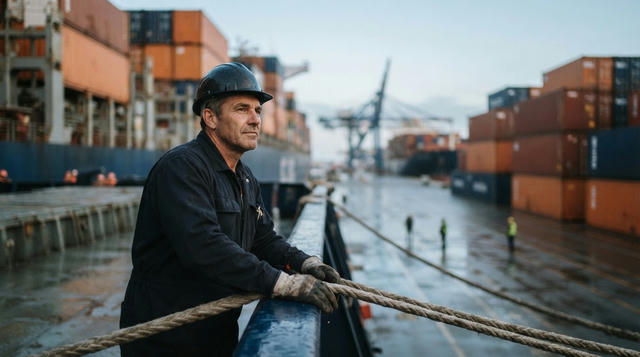
The conflict has also profoundly impacted established trade networks. Armenia, in particular, relies on Iranian transit for a substantial portion of its external trade, making it vulnerable to disruptions. The closure or insecurity of these routes causes immediate supply chain issues, prompting a shift towards alternative logistics. The International North-South Transport Corridor (INSTC), a multi-modal network designed to link Russia, the Caucasus, and the Persian Gulf with India, is particularly vulnerable to prolonged instability in Iran. This situation has accelerated the push towards the "Middle Corridor" (or Trans-Caspian International Transport Route) via Georgia and Azerbaijan, presenting it as a safer and more reliable alternative for connecting Central Asia and beyond to Europe. While this shift could offer long-term advantages for the transit states of the South Caucasus, the immediate reality includes surging energy costs and increased shipping premiums.
A Shifting Balance of Power and Regional Realignment
The deepening crisis in Iran is occurring amidst a broader geopolitical restructuring in the South Caucasus. Russia's traditional dominance in the region is visibly waning, largely due to its preoccupation with the ongoing conflict in Ukraine. This has created a power vacuum, leading to an "imbalanced multipolarity" where other regional and global actors vie for influence.
Turkey's influence, particularly through its strong alliance with Azerbaijan, has seen a notable increase. Ankara's support for Baku in recent regional conflicts has solidified its footprint and is viewed with apprehension by Iran. Meanwhile, Iran's own strategic posture has become more unpredictable, transitioning from a predictable buffer to a "transformative wildcard" in the region. The United States is also seeking to advance its strategic interests, notably through initiatives like the Trump Route for International Peace and Prosperity (TRIPP), a project intended to create a secure land connection for Azerbaijan's Nakhchivan exclave, potentially limiting Iranian and Russian influence.
Armenia, historically a close ally of Iran and Russia, is also adapting to this evolving landscape, seeking closer ties with Western partners and navigating complex diplomatic balances. The shifting allegiances and the emergence of new alliances indicate a profound realignment that could define the region's future for years to come.
Economic Strain and Humanitarian Concerns
Beyond the immediate security threats, the South Caucasus faces significant economic and humanitarian challenges stemming from the Iran conflict. Disruption of trade routes, particularly those passing through Iranian territory, poses a substantial risk to the economies of Armenia, Azerbaijan, and Georgia. While Azerbaijan, as an oil producer, has seen some short-term benefits from rising energy prices, the overall economic outlook for the region is marked by uncertainty. A decline in tourism and foreign investment is also anticipated, further straining fragile economies.
A prolonged military confrontation or, in a worst-case scenario, regime collapse within Iran, carries the significant risk of a massive influx of refugees into the South Caucasus. Countries like Armenia and Azerbaijan, which share direct borders with Iran and are already contending with internal displacement challenges, would be particularly vulnerable to such a humanitarian crisis. This potential for humanitarian disaster adds another layer of complexity and urgency to the already precarious situation in the South Caucasus.
Conclusion
The escalating conflict involving Iran has unequivocally elevated the strategic significance of the South Caucasus. What was once considered a buffer zone is rapidly becoming a central arena where regional and global power struggles converge. The threats of kinetic spillover, disruption of vital energy and trade routes, and the potential for a humanitarian crisis present immediate and long-term challenges. As Russia's influence recedes, a complex, multipolar environment is emerging, forcing Armenia, Azerbaijan, and Georgia to navigate shifting alliances and unpredictable security dynamics. The stability of these nations, and by extension, broader European energy security and East-West connectivity, now hinges critically on how this volatile confrontation unfolds, cementing the South Caucasus as a region of profound geopolitical importance.