South China Sea Simmers as New Clash Threatens to Overshadow ASEAN Summit
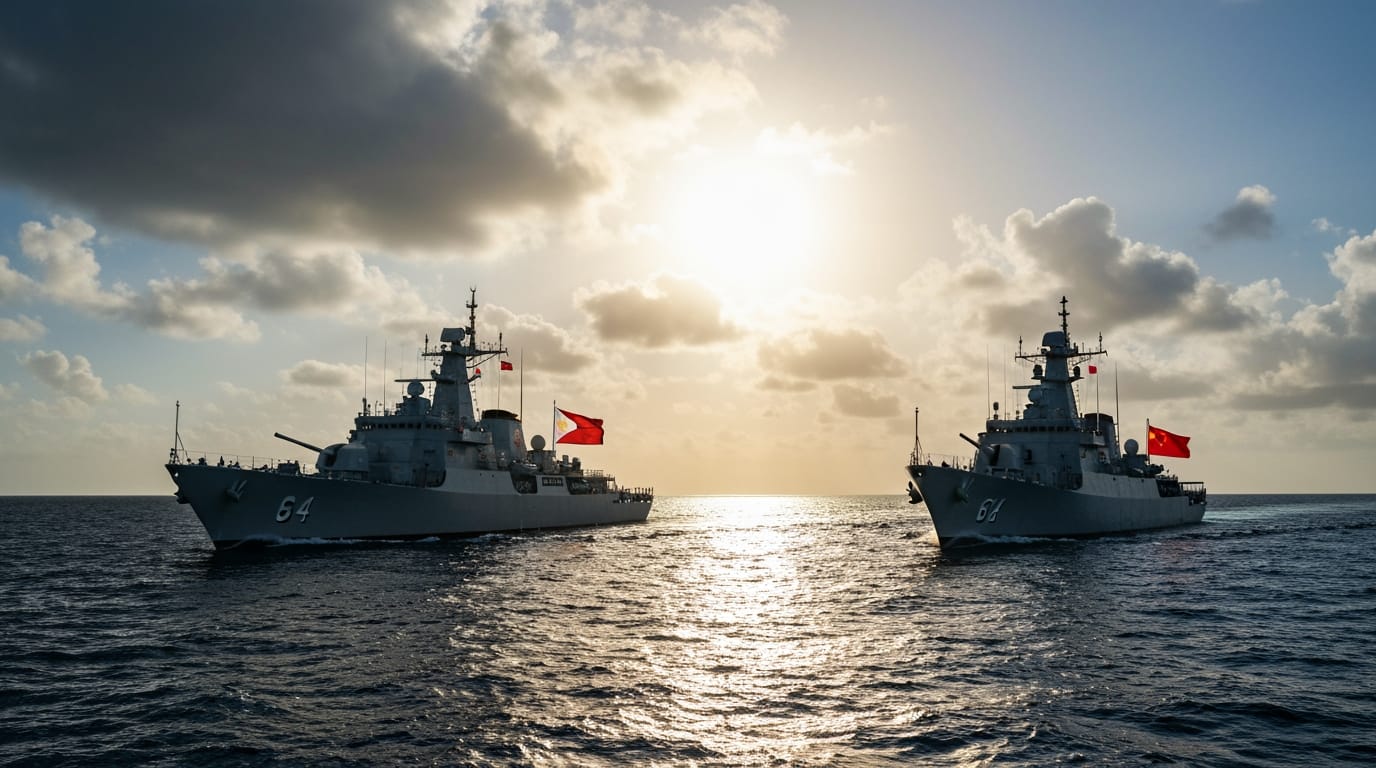
Manila, Philippines – Tensions in the South China Sea have reached a critical juncture following a violent confrontation between Chinese and Philippine vessels at Second Thomas Shoal on Monday, July 20, 2026, just as Southeast Asian foreign ministers gather in Manila for a high-stakes regional summit. The incident, which left a Filipino sailor injured and further deepened the diplomatic chasm between Beijing and Manila, casts a long shadow over efforts to foster regional stability and negotiate a long-awaited code of conduct for the contested waterway.
Escalation at Second Thomas Shoal
The latest maritime incident unfolded at Second Thomas Shoal, known as Ayungin Shoal in the Philippines, a flashpoint in the territorial disputes where the Philippine Navy maintains a grounded warship, the BRP Sierra Madre, as a military outpost. According to the Philippine military, Chinese Coast Guard (CCG) personnel aggressively interfered with a routine resupply mission to the outpost. Manila reported that CCG personnel struck a Filipino sailor on the head with a wooden baton and damaged a navy rubber boat. A video released by the Armed Forces of the Philippines reportedly showed a Chinese crew member hitting a Philippine Navy personnel.
Conversely, Beijing offered a starkly different account, asserting that Philippine vessels ignored repeated warnings, approached a CCG patrol boat in a "dangerous manner," and rammed it. China's Foreign Ministry claimed that Philippine personnel initiated "malicious attacks" using oars and long sticks. The China Coast Guard stated that two rubber boats from the BRP Sierra Madre rammed a Chinese patrol boat. Beijing promptly summoned the Philippine ambassador to China on Tuesday to lodge a protest over the encounter.
This confrontation marks a significant escalation in a series of incidents, including a June 2024 clash where a Filipino sailor reportedly lost a thumb during a similar resupply mission. The BRP Sierra Madre was intentionally grounded on the shoal in 1999 to assert the Philippines' sovereign claims, becoming a symbol of Manila's presence in the area. These repeated encounters underscore the fragility of peace in the crucial maritime region and the increasing risks faced by personnel on both sides.
The Contested Waters: Claims and Legal Battlegrounds
The South China Sea is a complex tapestry of overlapping territorial and maritime claims involving China, the Philippines, Vietnam, Malaysia, Brunei, and Taiwan. At the heart of China's assertion is its expansive "nine-dash line," a demarcation that encompasses nearly the entire sea, including areas far from its mainland coast. This claim, which Beijing often justifies with historical narratives, has been widely challenged internationally for lacking a basis in international law.
A landmark moment in this dispute occurred on July 12, 2016, when the Permanent Court of Arbitration in The Hague issued a ruling largely in favor of the Philippines. The tribunal unequivocally declared that China's nine-dash line claims had no legal foundation under the United Nations Convention on the Law of the Sea (UNCLOS). The ruling also affirmed that Second Thomas Shoal lies within the Philippines' exclusive economic zone (EEZ), granting Manila sovereign rights over its resources. Despite its legally binding nature, China has consistently rejected the arbitral award, deeming it "null and void".
The South China Sea holds immense strategic and economic significance. An estimated $3.36 trillion worth of global trade traverses its waters annually, representing a third of the world's maritime commerce. Beyond trade, the sea is believed to harbor vast reserves of oil and natural gas, alongside rich fishing grounds, making control over its features a geopolitical imperative for all claimant states.
International Outcry and Regional Diplomacy
The latest incident drew swift and strong international condemnation, particularly from the United States. U.S. Secretary of State Marco Rubio, who arrived in Manila on July 21 for the ASEAN meetings, publicly denounced China's "dangerous and aggressive actions". The U.S. State Department called on China to "immediately cease its destabilizing conduct," reaffirming its commitment to freedom of navigation and highlighting its mutual defense treaty obligations with the Philippines, which extend to attacks on Philippine nationals in the South China Sea. Rubio also used his visit to underscore Washington's commitment to regional defense and economic support in critical sectors.
The incident also coincided with the 10th anniversary of the 2016 arbitral ruling, an occasion marked by a joint statement from 14 countries, including the United States, United Kingdom, Japan, and Australia. This statement reiterated the ruling's final and legally binding status and called on China to respect international law. China, however, dismissed these calls, accusing external powers of exacerbating tensions.
The Association of Southeast Asian Nations (ASEAN) finds itself in a precarious position. While some member states, like the Philippines, are direct claimants and face daily challenges from China's assertive posture, the bloc has historically struggled to present a unified front. The absence of most ASEAN countries from the 14-nation joint statement on the arbitral ruling highlights this ongoing challenge. ASEAN's foundational principle of consensus can often lead to diluted responses, as members balance their individual economic and political ties with China against collective security concerns.
ASEAN Summit: A Test of Resolve
The ongoing ASEAN Foreign Ministers' Meeting in Manila, from July 21, 2026, was already set to address a range of pressing regional and global issues, including the civil war in Myanmar and the escalating Middle East conflict. However, the fresh South China Sea clash has thrust maritime security disputes to the forefront of the agenda, threatening to overshadow other discussions.
A key focus of the summit will be the protracted negotiations for a Code of Conduct (COC) in the South China Sea. For over two decades, ASEAN and China have been engaged in talks to establish a set of rules aimed at preventing incidents and managing disputes in the contested waters. The COC is envisioned as a more robust and potentially binding successor to the non-binding 2002 Declaration on the Conduct of Parties in the South China Sea (DOC). Despite a stated commitment from both sides to conclude the COC by 2026, progress has been slow, largely due to China's reluctance to agree on a legally binding instrument that might constrain its claims or activities.
The recent violent confrontation underscores the urgent need for an effective COC, yet it simultaneously complicates the negotiating environment. Foreign ministers will be pressed to address the incident, with the possibility of sideline meetings between key players, including Secretary Rubio and Chinese Foreign Minister Wang Yi. The summit will serve as a crucial barometer of ASEAN's capacity to navigate complex geopolitical pressures and assert its centrality in shaping the region's future.
Conclusion
The latest clash between China and the Philippines at Second Thomas Shoal serves as a stark reminder of the volatile nature of the South China Sea disputes. Occurring on the eve of a major ASEAN diplomatic gathering, the incident highlights the urgent need for effective mechanisms to prevent further escalation and ensure peaceful resolution. While the international community, particularly the United States, continues to vocalize support for the Philippines and adherence to international law, the path forward remains fraught with challenges. The ASEAN summit in Manila presents a critical opportunity, albeit a difficult one, for regional and global powers to collectively address these rising tensions and work towards a stable and predictable maritime order, even as fundamental disagreements over sovereignty persist. The world watches to see if diplomacy can prevail against the backdrop of an increasingly assertive maritime rivalry.


