South Korea Battles Deadly Wildfires, Prompting Mass Evacuations
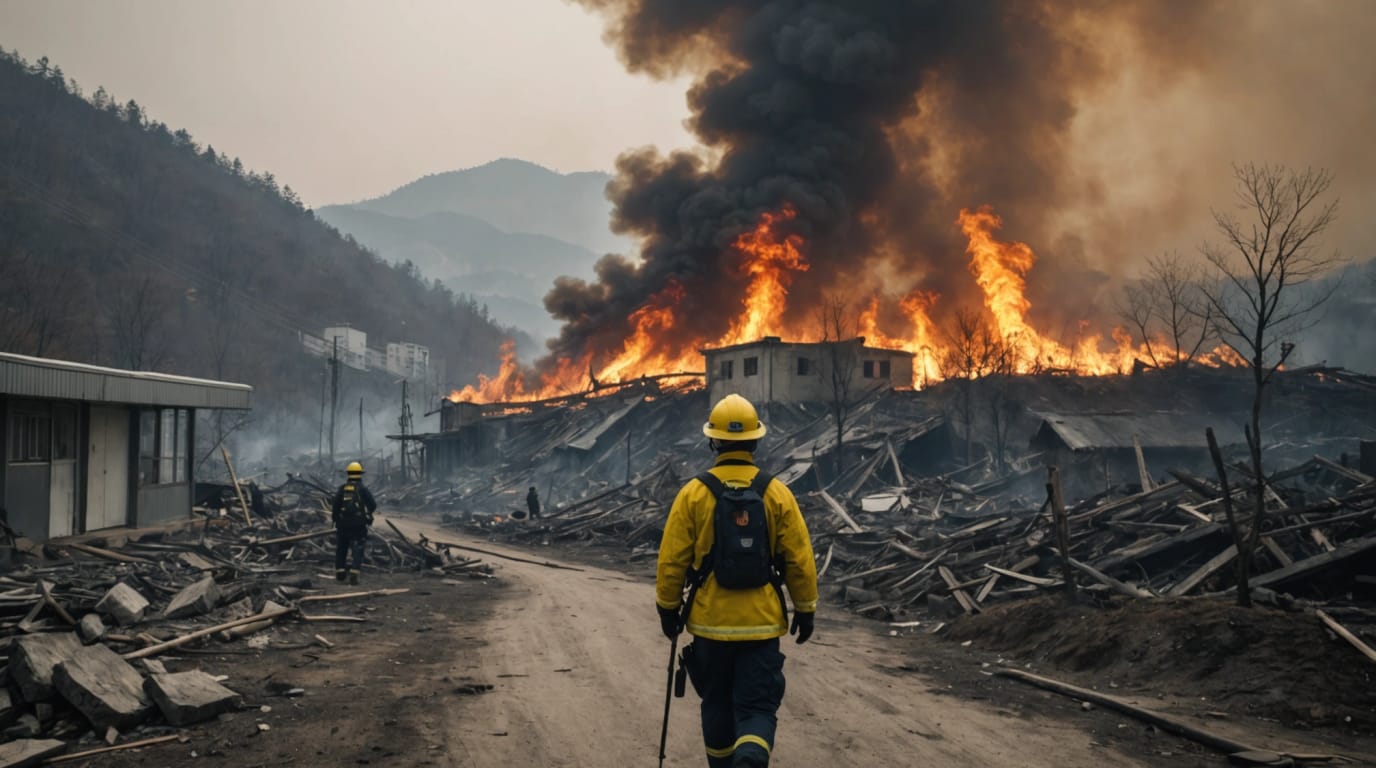
Fueled by dry winds and tinder-dry conditions, a series of wildfires are raging across South Korea, forcing hundreds to evacuate and claiming the lives of at least two firefighters. The blazes, concentrated in the southeastern regions of the country, have triggered a national crisis alert and prompted an all-out response from the government.
Rapid Spread and Devastating Impact
On Saturday, the Korea Forest Service raised the national crisis alert for wildfires in the Chungcheong, Honam, and Yeongnam regions to the highest level, "serious." Simultaneously, the alert level for the Seoul, Incheon, Gyeonggi, and Gangwon regions was elevated from "caution" to "alert." As of Saturday, 16 wildfires were burning nationwide, exacerbated by hot and dry weather conditions.
The most significant fires are located in the southeastern regions, particularly in Sancheong County, South Gyeongsang Province, where 260 residents have been evacuated to temporary shelters. The Sancheong wildfire has already consumed over 500 hectares (1,200 acres) of land, with containment efforts hampered by mountainous terrain and strong winds. Firefighters are struggling to contain the blaze, with only 35% of it under control as of Saturday evening.
In Uiseong County, North Gyeongsang Province, over 400 people have been evacuated as firefighters battle a blaze that has burned 300 hectares (740 acres). Dozens of residents have also fled their homes in Gimhae.
Casualties and Missing Personnel
Tragically, two firefighters have been confirmed dead while battling the blazes. Another firefighter and a government worker remain missing after being trapped by the fast-moving flames in Sancheong. Five other emergency workers were rescued and are currently receiving treatment for injuries sustained while fighting the fires.
Government Response and Resource Deployment
Acting President Choi Sang-mok has designated North and South Gyeongsang provinces and the city of Ulsan as disaster zones, vowing to mobilize all available resources to extinguish the flames. Nearly 1,600 emergency workers, 35 helicopters, and dozens of vehicles have been deployed to combat the wildfires.
The Korea Forest Service has increased the wildfire response level in Uiseong to Phase 3, the highest level, indicating the severity of the situation. This level is declared when the estimated damage area is less than 100 to 3,000 hectares, accompanied by winds of 11 meters per second or more, with expectations that extinguishment will take less than 24 to 48 hours.
In affected areas, military shooting training has been restricted, and permits for entering the mountains have been suspended. In "alert" regions, a significant portion of public officials and service personnel have been placed on standby. The Korea Forest Service is collaborating with local governments, fire departments, military units, police, and the Korea Meteorological Administration to coordinate firefighting efforts.
Impact on Infrastructure and Daily Life
The wildfires have forced the closure of several highway sections in the country's southeast, including a key route connecting Ulsan and Busan, South Korea's second-largest city. These closures are disrupting transportation and commerce in the region.
Authorities are issuing safety alerts via text message, advising residents and hikers to evacuate to designated safe zones. Evacuation measures are ongoing in several affected areas.
Historical Context and Prevention Efforts
South Korea is prone to wildfires, particularly during the dry spring season. According to Global Forest Watch, the peak fire season typically begins in early February and lasts around 13 weeks. While the three VIIRS fire alerts reported in South Korea so far in 2025 are considered normal compared to previous years, the most fires recorded in a single year was 2022, with 124 alerts.
From 2001 to 2023, South Korea lost 23.0 kha of tree cover due to fires and 313 kha from all other drivers of loss. The year with the most tree cover loss due to fires during this period was 2022, with 5.21 kha lost.
A 2022 UN report warned that extreme wildfire events are set to rise by 50% by 2100 due to global warming and changes in land use patterns. Most forest fires in South Korea are caused by human activities. Factors such as the burning of agricultural waste, negligence, and arson contribute to the ignition of wildfires.
Ongoing Challenges and Future Outlook
As firefighters continue to battle the blazes, strong winds and dry conditions remain a significant challenge. The government is urging all-out efforts to extinguish the fires before sunset to minimize further damage and potential casualties.
The wildfires serve as a stark reminder of the increasing threat of wildfires worldwide, driven by climate change and human activities. South Korea's experience highlights the importance of proactive prevention measures, rapid response capabilities, and international cooperation to mitigate the devastating impacts of these natural disasters.


