South Korea Emerges as Global Defense Powerhouse Amidst Rekindled Arms Race

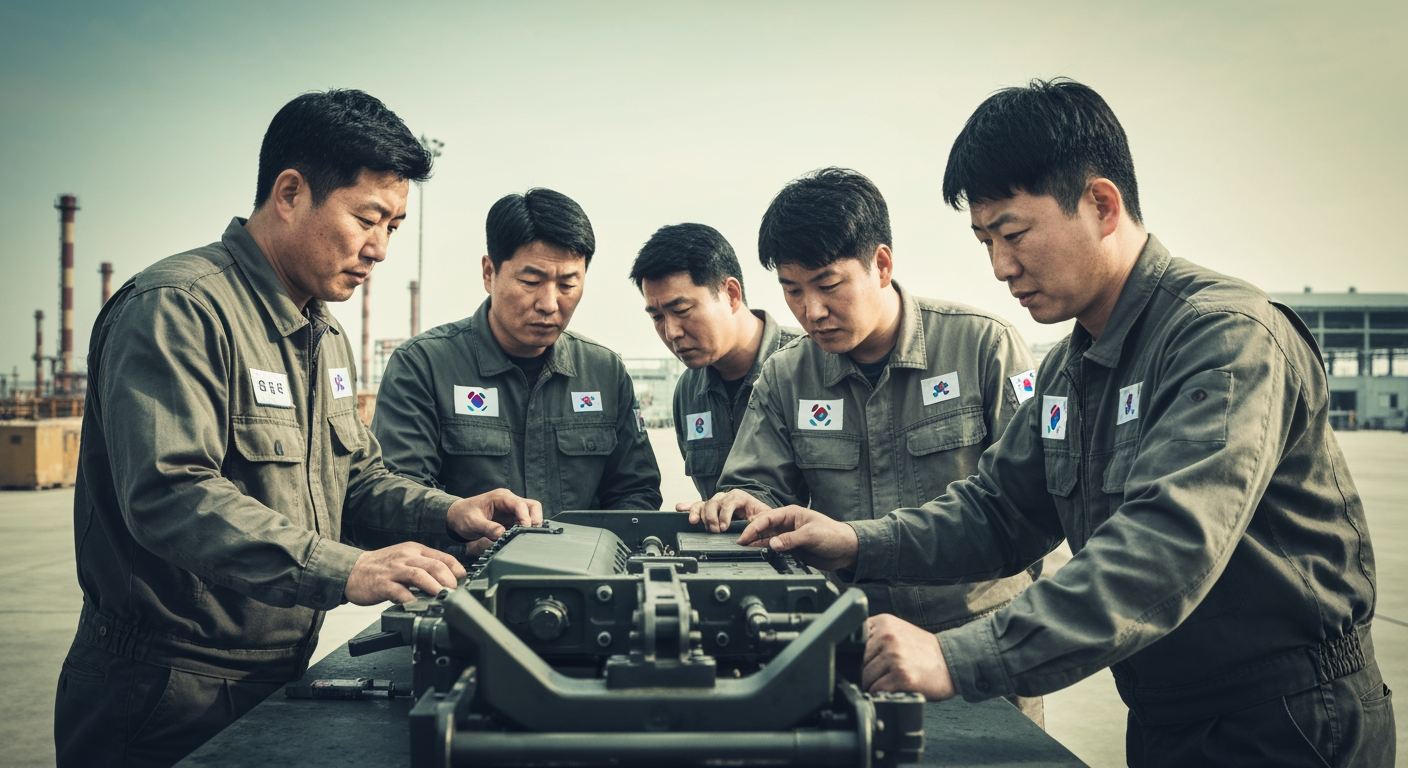
SEOUL – As global geopolitical tensions escalate and nations worldwide embark on a significant rearmament drive, South Korea has rapidly ascended to become a formidable force in the international defense market, transforming itself from a traditional arms importer to a top-tier exporter. This surge in "K-Defense" capabilities is not only bolstering the nation's economy but is also reshaping global security dynamics, positioning Seoul as a crucial strategic partner for countries seeking advanced, cost-effective, and rapidly deployable military hardware.
The dramatic increase in global defense spending, largely catalyzed by conflicts such as the war in Ukraine, has created an urgent demand for military equipment that traditional suppliers have struggled to meet. South Korea has adeptly stepped into this void, leveraging decades of investment in its domestic defense industry to offer competitive solutions. The nation's arms exports, which stood at a modest $250 million in 2006, skyrocketed to $17.3 billion in 2022 and maintained a robust $14 billion in 2023. Projections indicate that the combined revenue of South Korea's four largest defense firms—Hanwha Aerospace, Hyundai Rotem, Korea Aerospace Industries (KAI), and LIG Nex1—could reach approximately $37 billion in 2026, a fourfold increase from their 2021 figures. This remarkable growth has propelled South Korea to become the world's ninth-largest defense exporter by the 2021-2025 period, capturing a 3% share of the global arms market. President Yoon Suk Yeol has articulated an ambitious vision to elevate South Korea to the fourth-largest arms exporter globally by 2027.
The Global Call for Rearmament and Seoul's Timely Response
The conflict in Ukraine has particularly spurred a reevaluation of defense postures across Europe, leading many nations, especially those in Eastern Europe, to urgently replenish their arsenals and modernize their forces. These countries, some of whom have donated significant portions of their military equipment to Ukraine, found themselves facing a critical need for new arms but often encountered slow production lines and depleted inventories from traditional Western suppliers. This challenging environment created a unique opportunity for South Korea. Nations increasingly questioning the long-term reliability of single-source suppliers or facing prohibitive costs for certain Western systems have found South Korean offerings to be an attractive alternative.
Historically, South Korea’s drive for defense self-sufficiency stemmed from its persistent security threats, primarily from North Korea, and a desire to reduce reliance on foreign military aid following the Korean War. This continuous domestic demand fostered a robust industrial base and technological prowess, which is now proving invaluable on the international stage.
Flagship Products and Strategic Partnerships
At the forefront of South Korea's defense exports are several highly regarded systems that have garnered significant international interest. These include the K2 Black Panther main battle tank, the K9 Thunder self-propelled howitzer, and the FA-50 Fighting Eagle light combat aircraft. The K9 Thunder, in particular, is recognized as one of the most popular self-propelled howitzers globally due to its competitive performance and price. South Korea is also a successful exporter of warships, leveraging its advanced shipbuilding capabilities with less reliance on foreign technologies.
Poland has emerged as South Korea's most significant defense customer, accounting for a substantial 46% to 58% of South Korea's total arms exports between 2020 and 2025. A landmark deal signed in 2022, estimated to be worth upwards of $14.5 billion, included the sale of 180 K2 tanks, 670 K9 howitzers, and 48 FA-50 fighter jets. This was followed by additional contracts, including a $4 billion agreement in 2026 for Chunmoo guided missiles. These agreements often involve not just sales but also significant provisions for technology transfer and local co-production, with plans for K9 howitzer and K2 tank production to eventually shift to factories in Poland. Other key buyers include the Philippines, which has procured FA-50 units, and the United Arab Emirates, which has acquired air defense systems. Countries such as Australia, Egypt, India, and Norway have also purchased or expressed interest in South Korean defense systems.
The Competitive Edge: Speed, Technology, and Value
South Korea's success in the global arms market can be attributed to a unique combination of factors. One of the most critical is its ability to offer rapid delivery times, a decisive advantage for countries facing immediate security needs. While comparable Western defense contracts often require three to five years of lead time, South Korea has demonstrated the capacity to deliver systems within months. This speed is underpinned by a robust industrial base and mass-production capabilities.
Furthermore, South Korean military hardware is lauded for its competitive pricing without compromising on advanced technology and performance. The K2 tank, for instance, is considered competitive with leading German and American main battle tanks but offered at a significantly lower price point. South Korean defense systems are also largely compatible with NATO standards, a crucial factor for European buyers looking to integrate new equipment seamlessly into existing military frameworks. This compatibility is a direct result of South Korea's long-standing security alliance and joint military exercises with the United States. Moreover, South Korea has shown a greater willingness than some established arms exporters to facilitate technology transfers and engage in co-production agreements, making its deals more attractive to nations seeking to develop their own defense industrial capabilities.
Economic Engine and Strategic Diplomatic Tool
For South Korea, the booming defense industry represents a significant economic engine. It contributes substantially to the national GDP, generates employment, and drives innovation in high-tech sectors. The government's strategic policy actively promotes the defense industry as a key pillar of the national economy, with continuous investment in research and development, particularly in emerging technologies such as AI, robotics, and cybersecurity. The indigenization rate of South Korea's defense technology has steadily increased, reaching 89.6% in 2023.
Beyond economic gains, defense exports have become a powerful tool in South Korea's foreign policy. By supplying advanced military equipment, Seoul is not only deepening ties with partner nations but also enhancing its diplomatic influence and strategic standing on the global stage. This aligns with President Yoon Suk Yeol's ambition for South Korea to evolve into a "Global Pivotal State," using its economic and technological capabilities to exert greater international influence and bolster security alliances.
Navigating a Complex Future
While South Korea's defense industry is experiencing an unprecedented boom, its future trajectory involves navigating a complex landscape. Challenges include the high capital expenditure required for continuous innovation and potential regulatory hurdles. There is also growing sentiment within the European Union to strengthen its own defense technological and industrial base, which could eventually create competition or protectionist pressures against non-EU suppliers like South Korea.
Despite these potential headwinds, South Korea's defense sector has firmly established itself as a major global player. Its ability to combine advanced technology with competitive pricing, rapid delivery, and flexible partnership models positions it to remain a significant force in the rearming world. As geopolitical shifts continue to unfold, South Korea's strategic importance as a provider of critical defense solutions is poised to grow, solidifying its role as a key contributor to international security and a powerful actor in global diplomacy.
Sources
- defense.info
- militarnyi.com
- harici.com.tr
- seoulz.com
- eurasiantimes.com
- sipri.org
- twz.com
- forecastinternational.com
- militarywatchmagazine.com
- lowyinstitute.org
- scmp.com
- notesfrompoland.com
- koreaonpoint.org
- oec.world
- envisioning.com
- ifri.org
- trade.gov
- internationalrelations-publishing.org
- nexdigm.com
- koreaonpoint.org
- chosun.com
Related Articles


Antidepressants and Extreme Heat: A Silent Summer Threat
As summer temperatures continue to climb, a hidden health risk emerges for millions worldwide: the often-overlooked interaction between common antidepressant medications and extreme heat. While the general public is...


Bonnie Tyler, Iconic Voice of "Total Eclipse of the Heart," Dies at 75
Faro, Portugal – Bonnie Tyler, the Welsh singing sensation whose instantly recognizable husky voice powered global anthems like "Total Eclipse of the Heart" and "It's a Heartache," has died at the age of 75. Her family...


China Frees Prominent Pastor Ezra Jin Following Trump's Direct Appeal to Xi Jinping
Beijing, China – In a significant diplomatic maneuver, Pastor Ezra Jin Mingri, a leading figure of China's unregistered Zion Church, has been released from detention and arrived in Los Angeles, less than two months...