China Frees Prominent Pastor Ezra Jin Following Trump's Direct Appeal to Xi Jinping

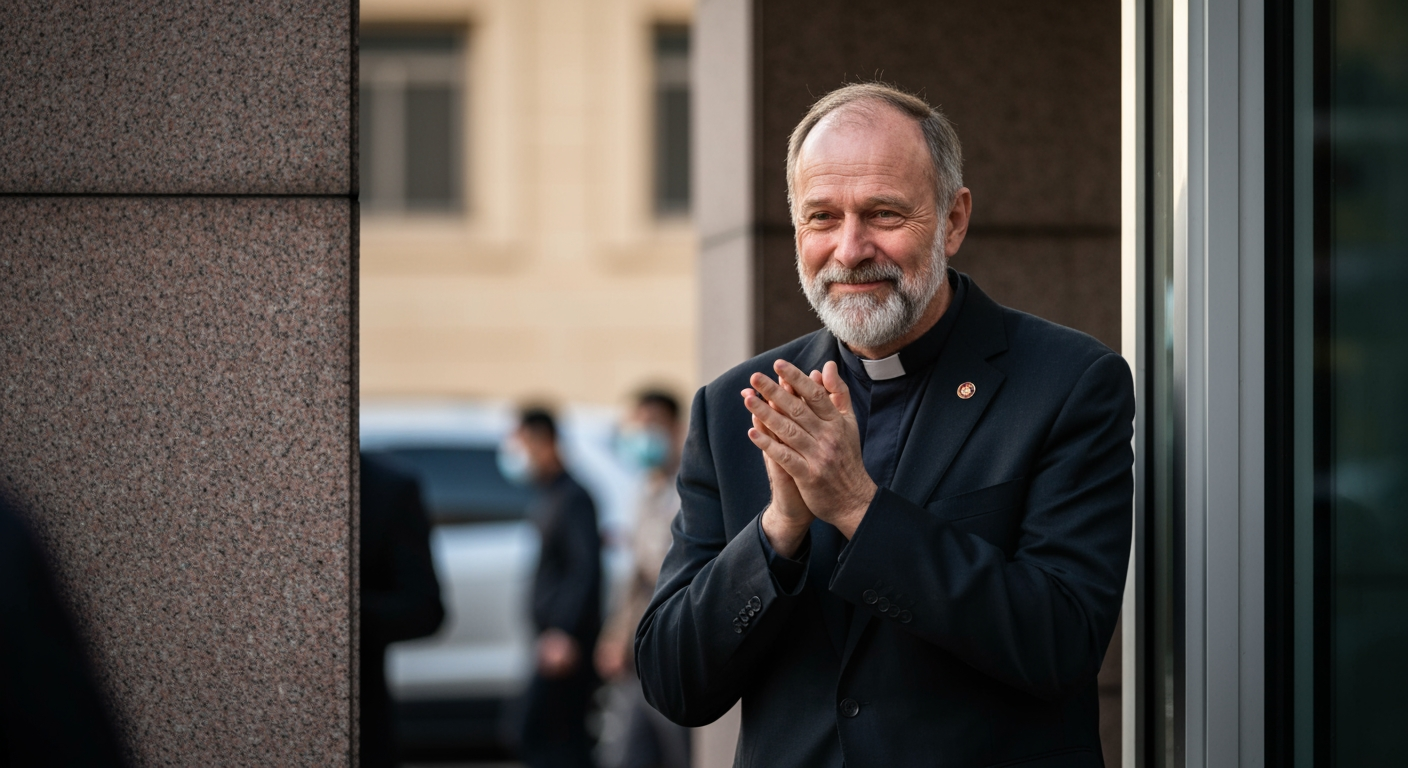
Beijing, China – In a significant diplomatic maneuver, Pastor Ezra Jin Mingri, a leading figure of China's unregistered Zion Church, has been released from detention and arrived in Los Angeles, less than two months after U.S. President Donald Trump personally raised his case with Chinese President Xi Jinping during a high-stakes state visit to Beijing. This development, confirmed by Jin's family and human rights advocates, marks a rare instance of a high-profile religious prisoner's release following direct U.S. presidential intervention, adding a nuanced layer to the complex and often fraught relationship between Washington and Beijing.
Jin's release culminates months of international advocacy and spotlights the ongoing tensions surrounding religious freedom in China. While his family expressed profound gratitude for the diplomatic push, the move has drawn cautious optimism from activists who continue to monitor Beijing's broader crackdown on religious communities.
Diplomatic Intervention Paves Way for Release
The timeline of Pastor Jin's release underscores the direct impact of top-level diplomacy. Jin, 57, was initially detained in October along with 17 other leaders of the underground Zion Church, in what was described as one of China's most extensive crackdowns on a single religious institution in decades. His case garnered international attention, culminating in U.S. President Donald Trump raising the issue with Chinese President Xi Jinping during a state visit to Beijing in May.
Following his meetings with Xi, President Trump publicly stated that the Chinese leader had promised to give "serious consideration" to Pastor Jin's release. Less than two months later, in early July, Jin was freed and successfully traveled to the United States, where he was reunited with his family in Los Angeles.
A statement from Jin's family, released shortly after his arrival, conveyed overwhelming joy and explicit thanks to President Trump, further acknowledging that the release "could not have happened without Xi's direct intervention." They voiced hope that this gesture might signal "a positive turn for people of faith in China and relations between our two nations." Neither the White House nor China's Foreign Ministry immediately offered official comments on the specifics or conditions surrounding Jin's release, maintaining the diplomatic silence typical of such sensitive cases.
Zion Church and China's Widening Crackdown on Faith
Pastor Ezra Jin Mingri founded the Zion Church in Beijing, which grew to become one of the largest "house churches" — unregistered congregations operating outside the strict control of state-sanctioned religious bodies. For years, Jin led his ministry from the heart of Beijing, even as the Chinese government intensified its efforts to regulate and restrict religious practices.
Chinese law theoretically guarantees freedom of religion, but in practice, it mandates that all religious groups must register with the state and operate under strict political oversight. The officially atheist Communist Party views independent religious activity as a potential threat to its authority. Those unwilling to comply with these regulations are often compelled to worship underground, facing significant risks.
Jin's detention in October, alongside 17 other church leaders, was a stark illustration of Beijing's "Sinicization of religion" policy, a campaign spearheaded by President Xi Jinping. This policy aims to bring all religions under the direct control of the Communist Party, requiring them to align with Chinese culture as interpreted by the party. Human rights groups have documented a severe escalation in the government's curtailment of religious freedom, including the destruction of crosses, the burning of Bibles, the closure of churches, and pressure on believers to renounce their faith. The crackdown on Zion Church, therefore, was not an isolated incident but part of a broader, systemic effort to consolidate state control over religious life.
Persistent Advocacy and International Pressure
The path to Pastor Jin's freedom was paved by relentless advocacy, both domestically and internationally. His daughter, Grace Jin Drexel, a U.S. citizen, played a pivotal role, campaigning tirelessly for her father's release. Her efforts ensured that Jin's plight remained visible on the global stage.
In the United States, bipartisan support emerged for Jin's case. Ahead of President Trump's visit to China, the U.S. Commission on International Religious Freedom (USCIRF) explicitly urged the President to advocate for greater religious freedom in China and to insist on the release of prisoners detained for their beliefs, specifically naming Pastor Jin. USCIRF underscored that religious freedom had "worsened to a horrific degree" under Xi Jinping and encouraged Trump to convey that his administration would not tolerate the "mass repression of China's beleaguered religious communities."
Numerous U.S. lawmakers also weighed in, sending bipartisan letters to President Trump that detailed abuses against Christians in China, such as arbitrary detentions and lengthy prison sentences, and urged him to advocate for Jin and other Christians. Organizations like ChinaAid, a U.S.-based group dedicated to promoting religious freedom in China, also actively campaigned for Jin's release and documented the worsening conditions for believers. This concerted international pressure, culminating in the direct presidential appeal, created the diplomatic leverage necessary for Jin's eventual release.
Implications for US-China Relations and Religious Communities
Pastor Jin's release represents a complex interplay of human rights concerns, diplomatic negotiations, and geopolitical considerations. While the immediate catalyst appears to be President Trump's direct intervention, the move also comes at a time when the U.S. and China are navigating a delicate relationship marked by trade disputes, geopolitical rivalries, and human rights criticisms. Beijing may have viewed Jin's release as a strategic "gesture of goodwill" intended to ease tensions or signal a willingness to engage on certain issues, even as it continues its broader policies.
Advocates for religious freedom, while celebrating Jin's newfound liberty, remain cautiously optimistic. Maya Wang from Human Rights Watch highlighted that "at least eight members of Zion Church remain detained in China" and called for their immediate release. Bob Fu, founder of ChinaAid, reiterated that "true progress in U.S.-China relations must include freedom for those imprisoned simply because they choose to believe."
The incident underscores the persistent challenge of religious freedom in China, where the Communist Party continues its efforts to control all aspects of civil society, including faith. While high-level diplomatic interventions can yield individual successes, they do not fundamentally alter the systemic pressures faced by millions of religious adherents in China. The release of Pastor Ezra Jin offers a moment of hope and a testament to the power of international advocacy, yet it also serves as a poignant reminder of the ongoing struggle for freedom of belief within China's borders.
Related Articles

Klopp's Homecoming? German Football Eyes Long-Awaited Partnership After World Cup Debacle
Frankfurt, Germany – A seismic shift is underway in German football following the national team's premature exit from the 2026 FIFA World Cup. Julian Nagelsmann has resigned as head coach, and in a move that has...


Germany Grapples with Deep-Seated Voter Skepticism Amid Sweeping Reform Push
BERLIN – Germany's governing coalition, led by Chancellor Friedrich Merz, is pushing forward with a comprehensive package of reforms designed to invigorate the nation's sluggish economy and address critical societal...