Germany Grapples with Deep-Seated Voter Skepticism Amid Sweeping Reform Push


BERLIN – Germany's governing coalition, led by Chancellor Friedrich Merz, is pushing forward with a comprehensive package of reforms designed to invigorate the nation's sluggish economy and address critical societal challenges. However, these ambitious proposals are navigating a landscape of profound public skepticism and declining trust in political institutions, threatening to impede the very changes deemed essential for the country's future prosperity and stability. The government's efforts to modernize Germany, Europe's largest economy, face considerable headwinds as a significant portion of the electorate views the reform agenda with distrust, fueled by perceived political infighting and a reluctance to accept the necessary concessions.
An Economy in Need, a Government Under Pressure
Germany's economy has faced a period of stagnation, with modest growth projected for the current year after shrinking for two consecutive years. Deep-seated issues, including high production costs, lagging private investment, and the increasing burden of an aging population on health and pension systems, necessitate urgent action. In response, Chancellor Friedrich Merz's coalition, comprising the Christian Democratic Union (CDU), its Bavarian sister party Christian Social Union (CSU), and the Social Democratic Party (SPD), unveiled a 34-point reform package. Despite the acknowledged need for change, the government itself is deeply unpopular, with low approval ratings stemming from perceptions of internal divisions and limited achievements since taking office just over a year ago. Chancellor Merz's chancellorship began with weak parliamentary confidence and a slim majority, further exacerbating the challenges of implementing a coherent reform agenda.
The Core of the Reform Package: Balancing Interests
The recently announced reform package tackles a broad spectrum of economic and social issues. Key proposals include an estimated €10 billion in annual income tax relief for low- and middle-income families, funded in part by raising the top tax rate for the highest earners. Significant overhauls are planned for the pension system, incorporating a gradual increase in the retirement age and a capital markets-based element to stabilize long-term financing. In the labor market, the government seeks to introduce more flexible fixed-term employment contracts and revise sick leave rules, including a requirement for medical certificates from the first day of illness. Other measures aim to reduce bureaucracy, support key industries like automotive and clean technology, and establish a federally backed housing corporation to expand affordable housing options.
Reactions to these proposals have been diverse. While business organizations generally welcomed the package as a crucial step towards strengthening competitiveness, some emphasized the need for further structural reforms, such as reductions in social security contributions. Economists and banking leaders, including Deutsche Bank's CEO Christian Sewing, lauded the reforms as a "successful opening move" with the potential to boost Germany's growth trajectory. Conversely, labor organizations expressed mixed assessments, with some criticizing the expansion of fixed-term contracts and stricter sick leave rules as unfair or indicative of a "culture of mistrust" against workers. The Left party also condemned the package, arguing that minor tax relief would not offset rising living costs, insecure pensions, and healthcare burdens. Furthermore, family doctors described the proposed changes to sick leave as "absolutely catastrophic" for already overburdened medical practices.
Roots of Public Distrust: A Crisis of Confidence
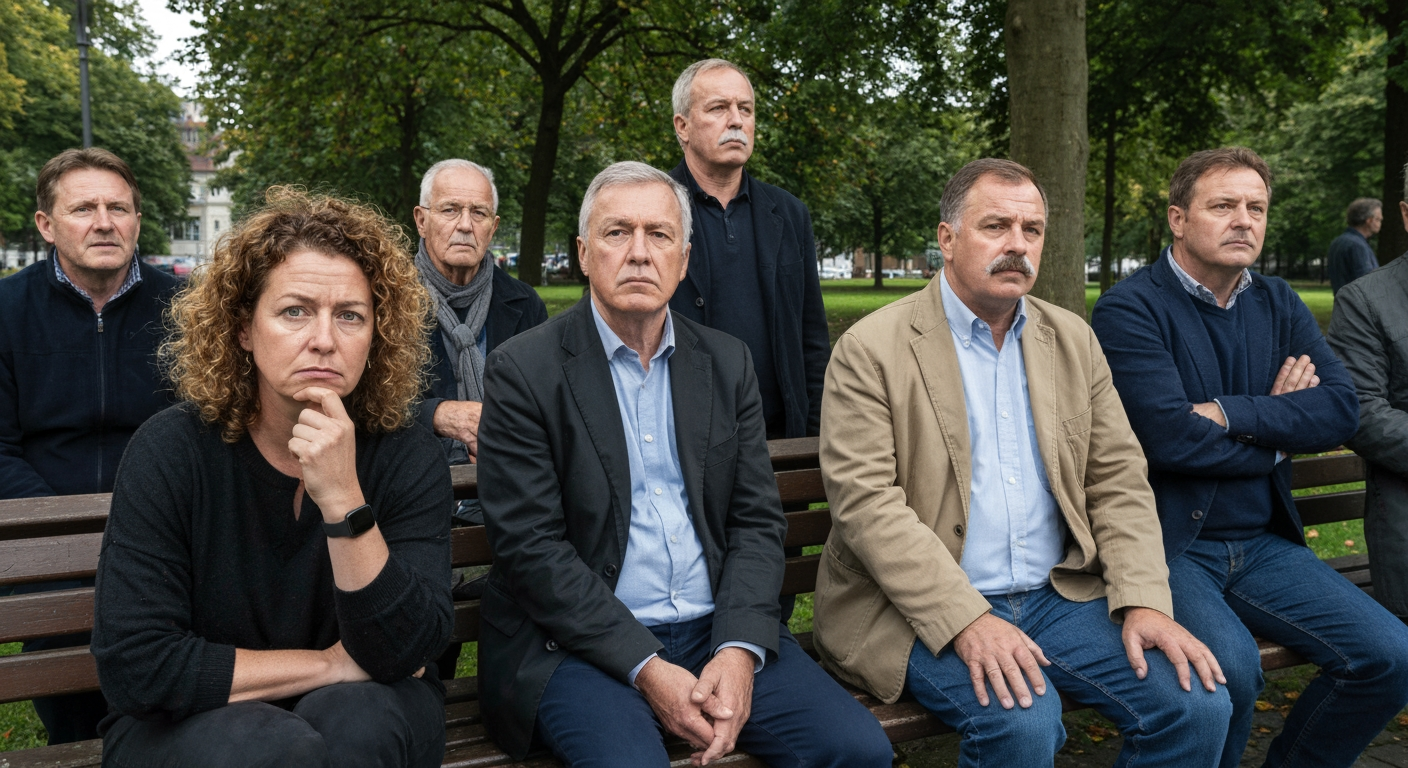
The widespread public skepticism towards these reform proposals is not merely a reaction to specific policies but stems from a deeper crisis of confidence in Germany's political class and institutions. Public trust has emerged as a significant obstacle, with recent surveys indicating that 73% of respondents feel misled by Chancellor Merz, and only 44% believe he is fit to lead the country. This distrust is exacerbated by the perception of political missteps and controversial decisions, such as shifts in national debt brake policy.
Beyond specific policy concerns, Germans are particularly sensitive to perceived political dishonesty and a lack of candor, linking it to a deeper corruption of public power. When political language appears evasive or lacking in substance, it can erode the credibility of officeholders, a sensitivity rooted in Germany's post-war history. While a majority (71%) of Germans express a desire for reforms, a significant 55% are unwilling to make personal sacrifices for them, highlighting a challenging paradox for policymakers. Public officials themselves share concerns about the sluggish pace of digitalization and the need to reduce bureaucracy, suggesting dissatisfaction extends within the system. This confluence of factors creates an environment where even well-intentioned reforms struggle to gain broad public acceptance and support.
The Political Fallout: Rise of the Populists
The prevailing skepticism and dissatisfaction with the government's performance have created fertile ground for populist movements, most notably the far-right Alternative for Germany (AfD). The AfD has capitalized on government unpopularity and public frustration, achieving its best showing by a far-right party since World War II in last year's national election, becoming the biggest opposition party nationally and the strongest political force in Germany's formerly communist east. Recent assessments indicate the party's support has climbed, with some polls placing it in the lead nationally.
The AfD's success is driven by a platform that combines anti-immigration, nationalist, and euroskeptic rhetoric, resonating with voters disillusioned by mainstream politics. This surge in support poses a significant challenge to the established parties and could complicate coalition formation in upcoming state elections, where the AfD is poised for strong showings. The political landscape is becoming increasingly polarized, with internal divisions within the ruling coalition contributing to slow policymaking and further eroding public confidence in Berlin's ability to deliver structural economic reforms. Failure to effectively address the underlying causes of public frustration and deliver tangible results from the reform agenda risks further strengthening the AfD and intensifying political instability.
A Critical Juncture for Germany
Germany stands at a critical juncture, facing the dual imperative of implementing necessary structural reforms while simultaneously rebuilding eroding public trust. The comprehensive reform package presented by Chancellor Merz's coalition aims to revitalize the economy and address long-standing issues, yet its success hinges on gaining broader public acceptance. The deep-seated skepticism among voters, fueled by perceptions of government inefficiency, internal discord, and an unwillingness to make personal sacrifices for the greater good, presents a formidable hurdle.
The rise of populist movements, particularly the AfD, underscores the urgency of this challenge. If the government fails to convince the electorate of the reforms' necessity and effectiveness, the current political instability and public dissatisfaction could deepen, with profound implications for Germany's economic trajectory and democratic resilience. Navigating this complex environment will require not only effective policy implementation but also a renewed focus on transparent communication and fostering a sense of shared purpose to bridge the widening gap between political leadership and a skeptical populace.
Related Articles


Australia and Vanuatu Ink Landmark Security Pact, Barring Foreign Military Bases
CANBERRA, Australia – Australia and Vanuatu have formalized a sweeping bilateral security and economic agreement, a pact that explicitly prohibits any foreign military base or infrastructure from being established on...

South Africa Braces for Escalating Anti-Migrant Tensions as Protests Loom
South Africa Braces for Escalating Anti-Migrant Tensions as Protests Loom JOHANNESBURG – South Africa is on high alert as anti-migrant groups prepare for a series of nationwide protests, culminating in a looming...