South Korea Grapples with Unprecedented Turmoil as Ex-President Yoon Suk Yeol Receives Prison Sentence
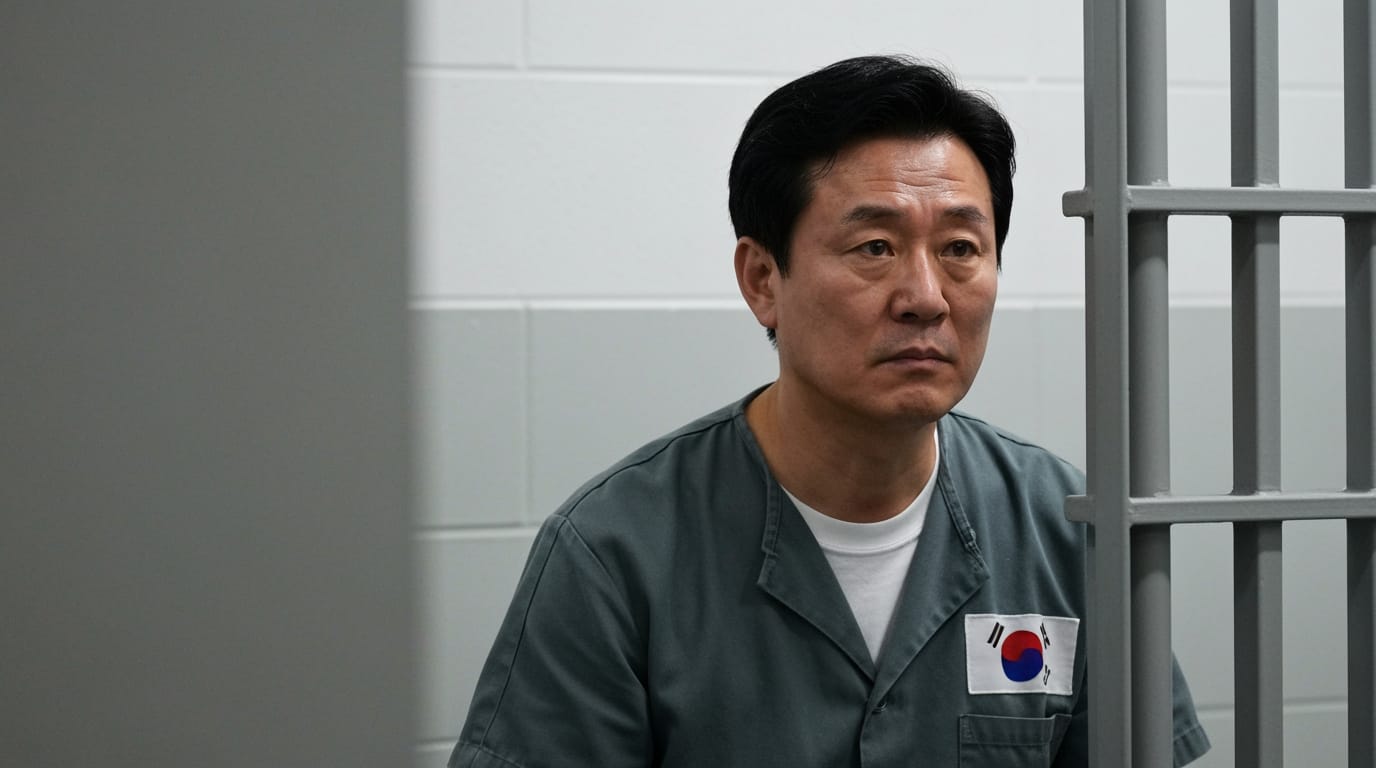
SEOUL, South Korea – Former South Korean President Yoon Suk Yeol was sentenced to five years in prison today for obstruction of justice and other charges stemming from his controversial martial law declaration and subsequent efforts to evade detention. The landmark ruling marks a somber, yet pivotal, moment in the nation’s political history, as South Korea navigates the profound implications of an ex-president's incarceration and seeks to restore stability after months of constitutional crisis. This initial verdict, handed down by the Seoul Central District Court, is the first in a series of eight trials Yoon faces, including a capital offense charge of insurrection for which prosecutors have demanded the death penalty.
The Descent from Power: Martial Law and Impeachment
The dramatic fall of Yoon Suk Yeol began on December 3, 2024, when he unilaterally declared martial law. Citing a severe budget dispute with the opposition, Yoon asserted the drastic measure was necessary to safeguard South Korea's liberal order, controversially alleging that the opposition was infiltrated by communist elements with ties to China and North Korea. The declaration, which lasted merely six hours before being overturned by the National Assembly, plunged the nation into immediate crisis, evoking painful memories of past military rule.
The National Assembly swiftly responded to the presidential decree. On December 14, 2024, lawmakers moved to impeach Yoon, successfully passing the bill with a significant majority of 204 out of 300 votes. This action immediately suspended his presidential powers, with Prime Minister Han Duck-soo stepping in as acting president. However, the political turmoil deepened when Han Duck-soo himself faced impeachment on December 27, 2024, leading to Choi Sang-mok assuming the acting presidential role. The ultimate decision on Yoon’s removal rested with the Constitutional Court.
A President Arrested: The Unfolding Legal Battle
As the nation reeled, the legal noose around Yoon Suk Yeol tightened. On January 15, 2025, in an unprecedented move, law enforcement apprehended Yoon at the presidential compound after weeks of his defiance and resistance. This marked a historic first, as no sitting president in South Korean history had ever faced an arrest warrant or been taken into custody. He was detained and began investigation on charges of insurrection, directly linked to his martial law declaration.
Despite the initial detention, the legal proceedings saw further twists. On March 7, 2025, a South Korean court ordered Yoon's release from jail, allowing him to stand trial while not physically detained. The decision was based on the expiration of the legal period for his formal arrest and concerns about the investigative agency's jurisdiction over the rebellion charges. However, this freedom was temporary.
The Constitutional Court delivered its final and unanimous judgment on April 4, 2025, upholding Yoon's impeachment and officially terminating his presidency. This ruling solidified his removal from office, making him the shortest-serving directly elected president in South Korea's democratic history since 1987. Following further resignations within the acting presidential chain, a snap presidential election was called, resulting in the election of Lee Jae-myung as the new president on June 3, 2025. Yoon's legal troubles continued, leading to his rearrest in July 2025, where he has remained in detention ever since.
The Verdict and the Specter of Further Judgments
Today’s sentencing delivers the first concrete legal consequence for the former head of state. The Seoul Central District Court found Yoon Suk Yeol guilty of several offenses, including obstruction of justice by hindering attempts to detain him, fabricating the martial law proclamation, and circumventing a legally mandated full Cabinet meeting. Judge Baek Dae-hyun emphasized the gravity of Yoon's actions, stating that imposing "a heavy punishment" was necessary due to his lack of remorse and "hard-to-comprehend excuses." The court also highlighted the need to restore the legal systems damaged by his conduct.
This five-year prison term is merely the beginning of Yoon’s legal challenges. He faces a total of eight trials, encompassing a wide array of accusations. Most significantly, prosecutors in a separate case have sought the death penalty for the insurrection charge, arguing that Yoon acted as the "ringleader of an insurrection" and showed "no remorse" for actions that threatened "constitutional order and democracy." A verdict in this high-stakes trial is anticipated on February 19, 2026. Other ongoing trials involve allegations of his wife's corruption and issues related to the 2023 death of a marine officer. In addition to his criminal convictions, Yoon has been disqualified from holding any public office in South Korea for five years.
Turning the Page: A Nation's Quest for Stability
The imprisonment of a former president marks a defining moment for South Korean democracy. It underscores the nation's commitment to the rule of law, even for its highest officeholders, and its rejection of any attempts to subvert constitutional processes. The speed and decisiveness with which the National Assembly, the Constitutional Court, and the judiciary acted demonstrate the resilience of South Korea's democratic institutions in the face of an unprecedented crisis.
The new administration under President Lee Jae-myung now bears the responsibility of guiding the country forward, aiming to heal political divisions and restore public trust in governance. The events have undoubtedly shaken public confidence and generated significant international concern, particularly given South Korea's crucial role in regional stability and its economic standing. While some of Yoon's supporters have rallied in protest, viewing the proceedings as politically motivated, the overwhelming sentiment reflected in the legal outcomes suggests a national desire to uphold democratic principles.
However, the path to fully "turning the page" remains complex. The impending verdict on the insurrection charge, with the possibility of a death sentence demand, ensures that Yoon Suk Yeol's legal saga will continue to dominate headlines and public discourse. While South Korea has maintained a de facto moratorium on executions since 1997, the very demand for capital punishment highlights the extreme gravity with which his actions are viewed. The nation's history includes instances of pardoning former presidents jailed for various crimes, often in the name of promoting national unity. Whether such a precedent will influence Yoon's ultimate fate remains to be seen, but for now, South Korea stands at a critical juncture, determined to reinforce its democratic foundations through due process and accountability.
The long shadow of Yoon Suk Yeol’s presidency, characterized by its dramatic beginning and even more dramatic end, serves as a stark reminder of the fragile nature of democratic institutions and the constant vigilance required to preserve them. As the legal proceedings unfold, the nation continues its journey, striving to find equilibrium and chart a stable course for its future.


