South Korea Narrows Border Buffer for Civilian Development Amid Escalating Tensions
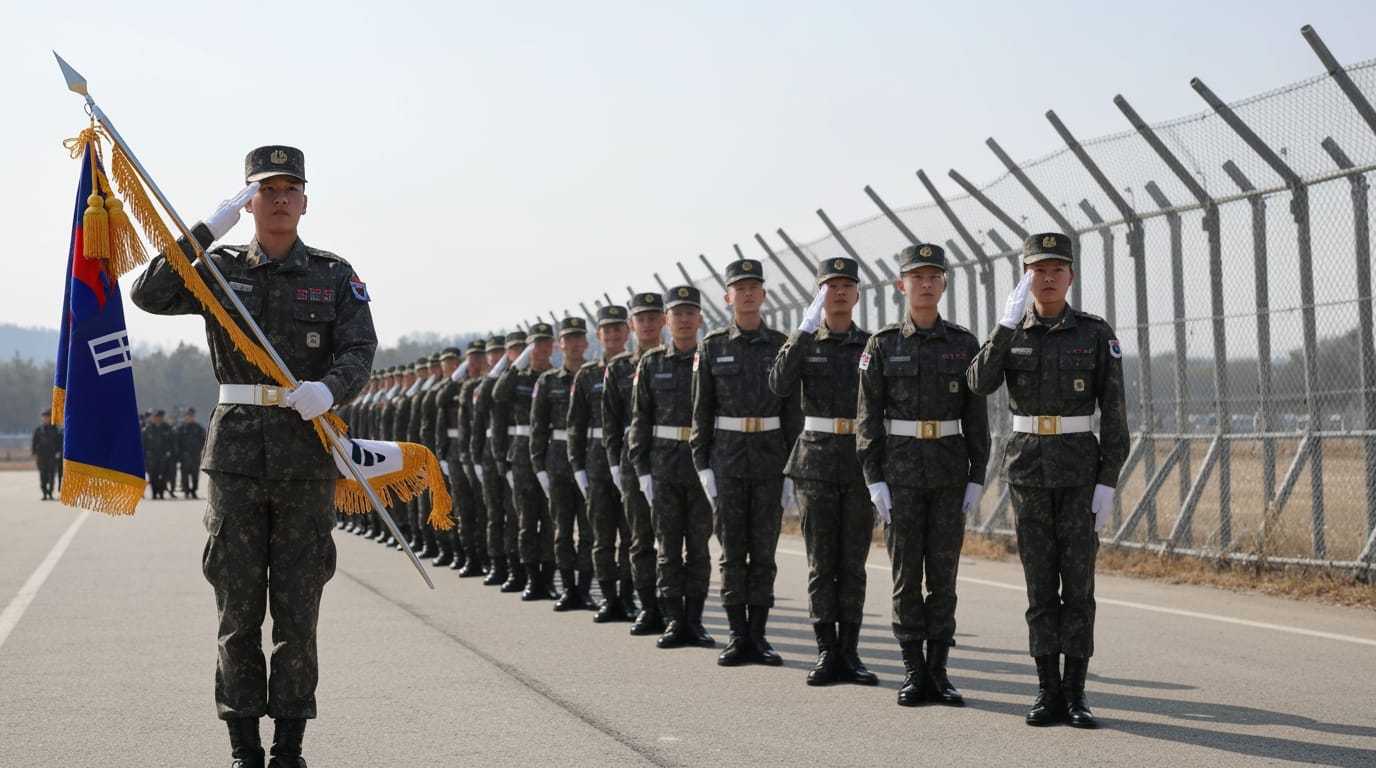
SEOUL – In a significant recalibration of its border policy, South Korea announced plans on Wednesday to shrink its Civilian Control Line (CCL) along the heavily fortified border with North Korea, aiming to foster economic development and expand civilian access in long-restricted frontier regions. This move, which will reduce the average width of the civilian buffer zone from up to 10 kilometers to approximately 6 kilometers, comes amidst a backdrop of severely heightened inter-Korean tensions following the complete suspension of a landmark 2018 military agreement.
Defense Minister Ahn Gyu-back stated that the adjustment, slated to begin in phases from 2027, is a response to years of requests from local residents and reflects an evolving security environment combined with improved defense readiness. While designed to enhance daily life and unlock economic potential for border communities, this decision contrasts sharply with the earlier complete dismantling of military buffer zones, signaling Seoul's complex strategy of balancing internal development with an assertive posture against Pyongyang's continued provocations.
Redrawing the Civilian Frontier: A Leap for Border Communities
The Civilian Control Line (CCL) is a restrictive boundary established in 1954, immediately following the Korean War armistice, to limit civilian movement and protect military facilities near the Demilitarized Zone (DMZ). For decades, residents and landowners within this area have faced stringent limitations on construction, development, and even farming activities, necessitating military authorization for basic access and land use.
Under the newly unveiled plans by South Korea's Defense Ministry, the CCL will be moved closer to the Military Demarcation Line (MDL), the de facto border dividing the two Koreas. This adjustment is projected to reclassify approximately 270 square kilometers of land for potential construction and development projects, with restrictions eased on an additional 450 square kilometers. This vast expanse, nearly half the size of Seoul, holds the promise of revitalizing border economies and improving the quality of life for the estimated 20,000 residents living within the zone.
Defense Minister Ahn Gyu-back emphasized that this initiative reflects a modern approach to border management, acknowledging that traditional, manpower-intensive patrols are being supplemented by advanced technologies such as CCTV and mobile applications to secure front-line areas. The government also plans to remove tactically obsolete military structures, including anti-tank barriers, at 23 locations and simplify civilian access procedures through mobile applications, including for agricultural drone use. This move is seen as part of the current liberal administration's broader push for civil-military coexistence, seeking to alleviate long-standing burdens on communities while ensuring effective military operations.
The Erosion of Military Buffer Zones and the 2018 Agreement
The decision to shrink the civilian buffer zone unfolds against the backdrop of a more profound shift in inter-Korean military relations: the effective collapse of the 2018 Comprehensive Military Agreement (CMA). Signed during a period of diplomatic rapprochement between then-President Moon Jae-in and North Korean leader Kim Jong Un, the CMA established buffer zones on land, sea, and air to reduce border tensions and prevent accidental clashes. These zones prohibited live artillery drills and outdoor exercises by large units within 5 kilometers of the MDL and banned live-fire artillery shells along maritime boundaries. No-fly zones were also designated near the border to prevent aircraft incidents.
However, the pact began to unravel in late 2023. North Korea repeatedly violated the agreement through a series of provocations, including missile launches, drone incursions into South Korean airspace, and artillery fire into maritime buffer zones. In November 2023, following North Korea's successful launch of a military spy satellite, South Korea partially suspended the CMA, specifically parts that barred reconnaissance and surveillance activities along the border. North Korea swiftly retaliated, declaring it would no longer abide by the agreement and pledging to deploy "more powerful armed forces" and "new-type military hardware" along the MDL, effectively nullifying the pact from its side.
The full suspension by South Korea came on June 4, 2024, in response to North Korea's recent campaign of sending nearly 1,000 trash-filled balloons across the border and jamming GPS signals. This decisive action freed the South Korean military to resume all previously restricted activities along the border, including live-fire drills, field maneuvers, and even propaganda loudspeaker broadcasts into the North, a potent tool of psychological warfare. South Korean officials stated that the responsibility for the situation lies entirely with the North Korean regime and vowed a "firm retaliation" against any further provocations.
Balancing Security Needs with Economic Aspirations
The current initiatives by South Korea present a nuanced approach to an enduring and volatile geopolitical reality. On one hand, the government is demonstrating a commitment to protecting its citizens and interests by fully suspending military agreements that North Korea routinely flouted. This allows for increased vigilance and readiness along the border, particularly given North Korea's continued military buildup.
On the other hand, the shrinking of the Civilian Control Line reflects a domestic focus on improving the lives of citizens residing in border areas. These communities have historically borne the brunt of security restrictions, hindering their economic growth and limiting property rights. By moving the CCL northward, Seoul aims to unlock economic opportunities and integrate these areas more fully into the national economy, demonstrating a shift in how it perceives and manages its civilian frontier.
The challenge for South Korea lies in effectively managing both dimensions simultaneously. While the easing of civilian restrictions is unlikely to be perceived as a military threat by Pyongyang, the complete abrogation of the 2018 military agreement has significantly raised the risk of accidental clashes, as the mechanisms for de-escalation are no longer in place.
The Path Forward Amidst Lingering Tensions
President Lee Jae Myung's administration is navigating a complex period marked by North Korea's persistent pursuit of nuclear weapons and ballistic missile technology, coupled with its deepening ties with Russia. The recent actions by Seoul indicate a pivot towards a more robust defense posture, alongside efforts to address long-standing domestic issues related to border communities.
The decision to shrink the CCL is a tangible step towards improving civil-military relations domestically and fostering development in underserved regions. However, the wider context of inter-Korean relations remains fraught with uncertainty. The absence of the 2018 military agreement, once a symbol of hope for de-escalation, means that military activities along the border can now resume unhindered by previous constraints, potentially leading to a new cycle of tit-for-tat actions.
As South Korea moves to implement these changes, the international community will keenly observe how this strategic recalibration impacts stability on the Korean Peninsula. The dual initiatives underscore Seoul's determination to adapt to an evolving threat landscape while simultaneously striving for internal growth and the well-being of its citizens, even in the shadow of its unpredictable northern neighbor.


