South Korean Court Reinstates Prime Minister Han Duck-soo, Dismissing Impeachment
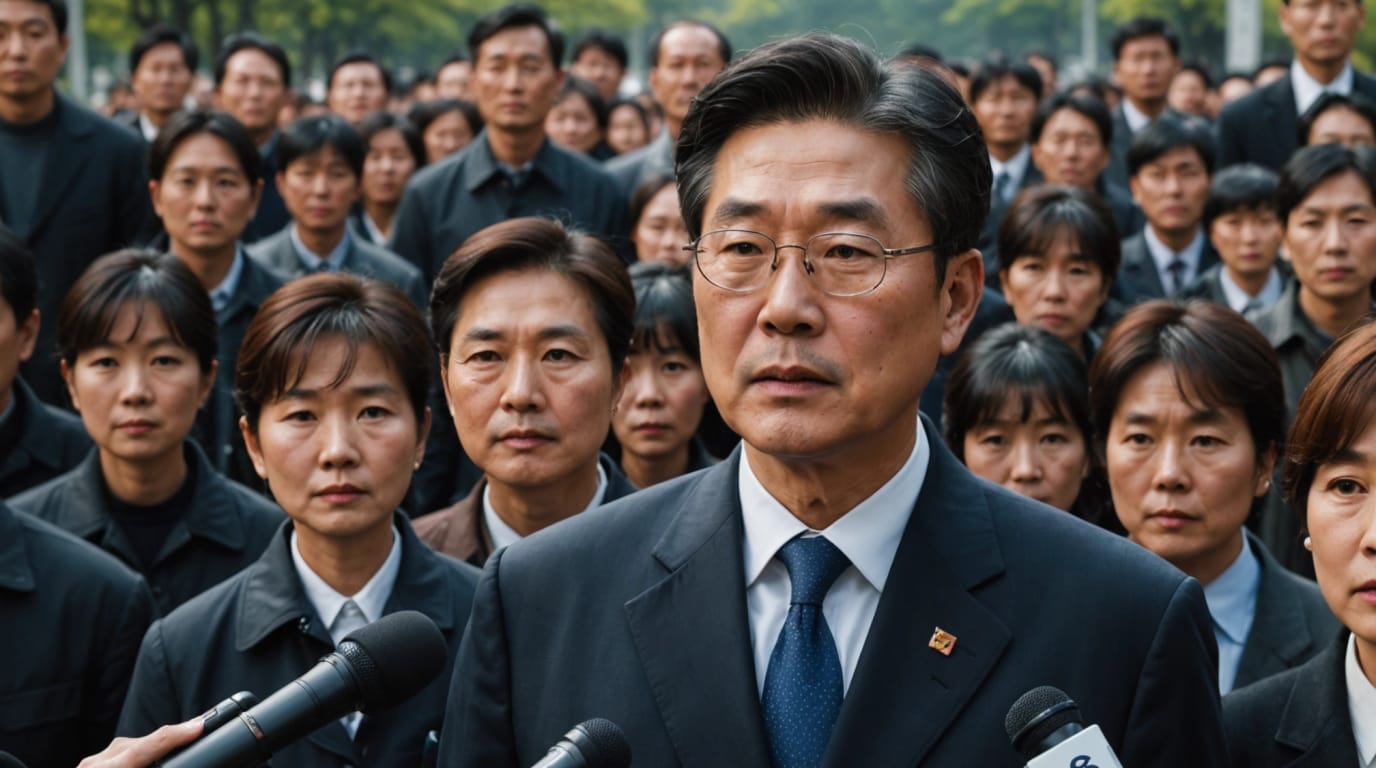
SEOUL – South Korea's Constitutional Court on Monday overturned the impeachment of Prime Minister Han Duck-soo, reinstating him as acting president amid the continuing political crisis triggered by President Yoon Suk Yeol's earlier imposition of martial law. The court's decision comes at a critical juncture, as the nation grapples with unprecedented political turmoil and uncertainty surrounding its leadership.
The impeachment motion against Han was initially brought forth by the opposition-controlled National Assembly in late December, following a period of intense political strife. This move came on the heels of President Yoon's own impeachment, creating a situation where the country's top two leaders were simultaneously suspended from their duties. The successive impeachments plunged South Korea into deeper division and raised concerns about the nation's diplomatic and economic stability.
The Constitutional Court's decision to reinstate Han was based on the determination that the accusations against him did not warrant his removal from office. Of the eight justices currently serving on the nine-member bench, five voted to dismiss the impeachment, one upheld it, and two expressed dismissal opinions. The court found that there was insufficient evidence to prove Han's direct involvement in President Yoon's controversial decision to impose martial law. While the court acknowledged that Han's refusal to appoint constitutional court justices was unconstitutional, they stated that there was no evidence to suggest that he intended to influence the deliberation on Yoon's impeachment.
Han's reinstatement as prime minister and acting president took immediate effect following the court's ruling. Upon his return to office, Han addressed reporters, stating that he would prioritize addressing the nation's most pressing issues, including the rapidly evolving global trade landscape. His focus will likely be on stabilizing the government and navigating the complex political environment.
The dismissal of Han's impeachment does not necessarily signal the outcome of the separate impeachment case against President Yoon. Many observers believe that the two cases are distinct and that the court's decision on Han does not provide a clear indication of how they will rule on Yoon's impeachment. However, the ruling could embolden Yoon's supporters and intensify their political offensive against the opposition.
The political crisis began with President Yoon's imposition of martial law on December 3, a move that sparked widespread protests and condemnation from opposition parties. The National Assembly subsequently voted to impeach Yoon, leading to his suspension from office and Han's assumption of the role of acting president. The impeachment motion cited concerns about Yoon's leadership style and his handling of various political issues.
The deputy prime minister and finance minister, Choi Sang-mok, had been serving as acting president in Han's absence. With Han's reinstatement, Choi will resume his duties as finance minister. The government now faces the challenge of restoring stability and addressing the deep divisions within the country.
The Constitutional Court's decision marks a significant development in South Korea's ongoing political crisis. While it provides some clarity regarding the leadership situation, the future remains uncertain as the court continues to deliberate on President Yoon's impeachment. The coming weeks will be crucial in determining the direction of South Korean politics and the fate of its impeached president. The country now faces the challenge of navigating a complex political landscape while addressing pressing economic and social issues.


