South Korean Ex-First Lady Receives Harsher Four-Year Graft Sentence in Landmark Appeals Ruling
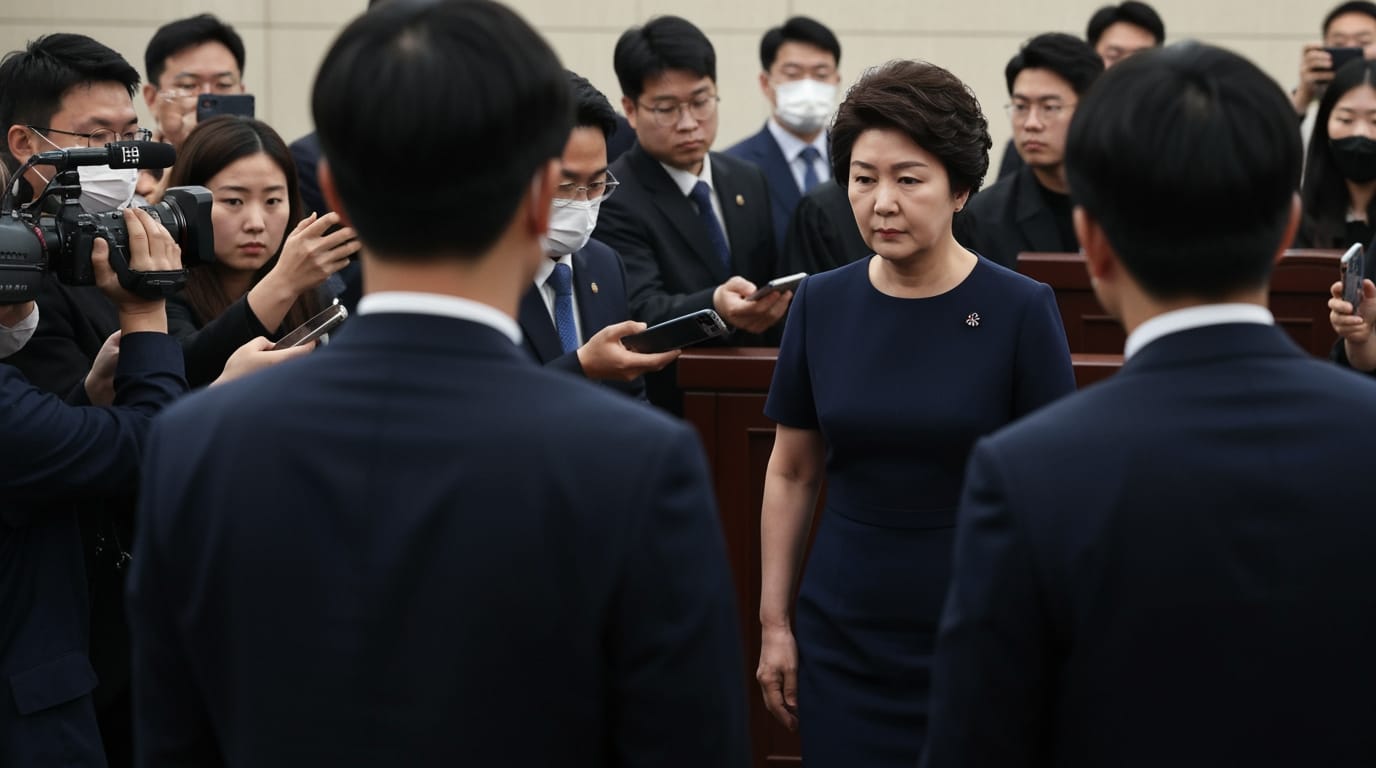
SEOUL, South Korea – Former South Korean First Lady Kim Keon-hee was sentenced to four years in prison on Tuesday by an appeals court, a significantly longer term than her initial 20-month conviction. The Seoul High Court overturned a previous acquittal on charges of stock price manipulation, solidifying her guilt in a case that has further rocked the nation's political landscape and highlighted its persistent struggle with high-level corruption. The ruling marks a dramatic escalation in the legal woes of the former first couple, coming months after her husband, former President Yoon Suk-yeol, was himself handed a life sentence.
The appellate court's decision fundamentally altered the legal trajectory of Kim Keon-hee's case. While she was initially sentenced to 20 months in jail in January for accepting luxury bribes, the Seoul Central District Court had acquitted her of the more severe charge of stock price manipulation due to insufficient evidence. However, the Seoul High Court, in a televised verdict, revisited and reversed this key acquittal, finding Kim guilty of actively participating in a scheme to manipulate the share price of Deutsch Motors, a local car dealership. In addition to the four-year imprisonment, the court imposed a 50 million won (approximately US$34,000) fine and maintained the forfeiture of a diamond necklace previously ordered. This enhanced sentence underscores the judiciary's stricter interpretation of her involvement, moving beyond merely accepting gifts to direct engagement in financial misconduct.
Allegations of Financial Deception and Influence Peddling
The charges against the former first lady centered on two primary areas: stock price manipulation and bribery. The stock manipulation allegations stemmed from her involvement with Deutsch Motors between 2010 and 2012. Special counsel prosecutors had accused Kim of making 810 million won (approximately US$549,000) in illicit profits by manipulating the company's share price. The appeals court determined that Kim was not merely a passive investor or an unwitting accomplice, but rather a "co-principal" who actively engaged in "collusive trading acts constituting market manipulation." This finding suggests a more direct and intentional role in inflating stock values for personal gain. On the bribery front, the court upheld her conviction for accepting luxury items, including two Chanel handbags and a Graff diamond necklace, from individuals linked to the Unification Church. These gifts, valued at around 80 million won (approximately US$54,257), were found to have been accepted with the implicit understanding of political favors in return, further damaging public trust in the transparency of state affairs.
An Unprecedented Downfall for a Presidential Couple
The legal travails of Kim Keon-hee are inextricably linked to the dramatic downfall of her husband, former President Yoon Suk-yeol. Their combined legal challenges represent an unprecedented situation in South Korean political history, marking the first time a presidential couple has both faced and received prison sentences for corruption and other serious offenses. Yoon Suk-yeol's presidency concluded abruptly following his impeachment and removal from office after his declaration of martial law in December 2024. He was subsequently sentenced to five years in prison for defying authorities' attempts to detain him and other charges related to the martial law decree, later receiving a life sentence for insurrection. The investigations into the martial law declaration and other scandals have continued to unfold, creating a complex web of legal proceedings that have ensnared several high-profile figures from the former administration. While investigators stated Kim Keon-hee was not involved in her husband's martial law enforcement, her conviction on graft and stock manipulation charges contributes to the deepening legal fallout from the administration's collapse.
Legal Appeals and Public Scrutiny
The appeals court's decision was met with immediate reactions from both sides of the legal battle. Kim Keon-hee's lawyers indicated their intent to appeal the four-year sentence to the Supreme Court, signaling a continuation of the protracted legal process. In their initial appeal against the 20-month sentence, prosecutors had argued that the punishment was too lenient and that the acquittals on other charges were wrongful, a stance largely vindicated by the Seoul High Court's latest ruling. Conversely, Kim's legal team had appealed the initial verdict hoping to clear her name entirely. The appeals court, in delivering its judgment, noted that Kim had "failed to acknowledge her culpability and has instead consistently resorted to excuses," a statement reflecting a judicial perception of unrepentance. Such remarks, coupled with the severity of the charges, have intensified public scrutiny and fueled discussions about accountability among the nation's elite. The case continues to be a test of South Korea's judicial system and its commitment to upholding the rule of law, even against its most powerful figures.
South Korea's Enduring Battle Against Corruption
The current scandal involving former First Lady Kim Keon-hee is not an isolated incident but rather the latest in a long line of corruption cases that have plagued South Korean politics for decades. The nation has a history of high-profile political scandals, often involving presidents and their families, or close associates, and powerful business conglomerates known as chaebols. From the Koreagate scandal in the 1970s to the Furgate in the late 1990s, and the impeachment of President Park Geun-hye in 2017, South Korean political leaders have frequently faced accusations of bribery, abuse of power, and illicit financial dealings. Former presidents Chun Doo-hwan, Roh Tae-woo, Lee Myung-bak, and Park Geun-hye all faced convictions for corruption-related offenses after leaving office. This recurring pattern has historically eroded public trust in government and institutions. While the country has made significant strides in combating corruption, as reflected in its improved ranking in Transparency International's Corruption Perceptions Index, the consistent emergence of such scandals underscores the deep-seated challenges that remain in ensuring ethical governance and complete accountability at the highest levels of power. The ongoing legal battles against Kim Keon-hee and Yoon Suk-yeol serve as a stark reminder of this enduring struggle.
The increased prison sentence for Kim Keon-hee marks a pivotal moment in South Korea's efforts to hold powerful individuals accountable. It sends a strong message that those in positions of influence are not above the law, even if their cases involve complex financial maneuvers and high-stakes political implications. As the legal process is expected to continue with a potential appeal to the Supreme Court, the outcome will undoubtedly shape public discourse on political ethics and judicial impartiality in the years to come, reflecting the nation's persistent commitment to rooting out corruption at its highest echelons.


