Ukraine Threatens Sanctions as Diplomatic Rift Widens Over Alleged Russian Grain Shipments to Israel

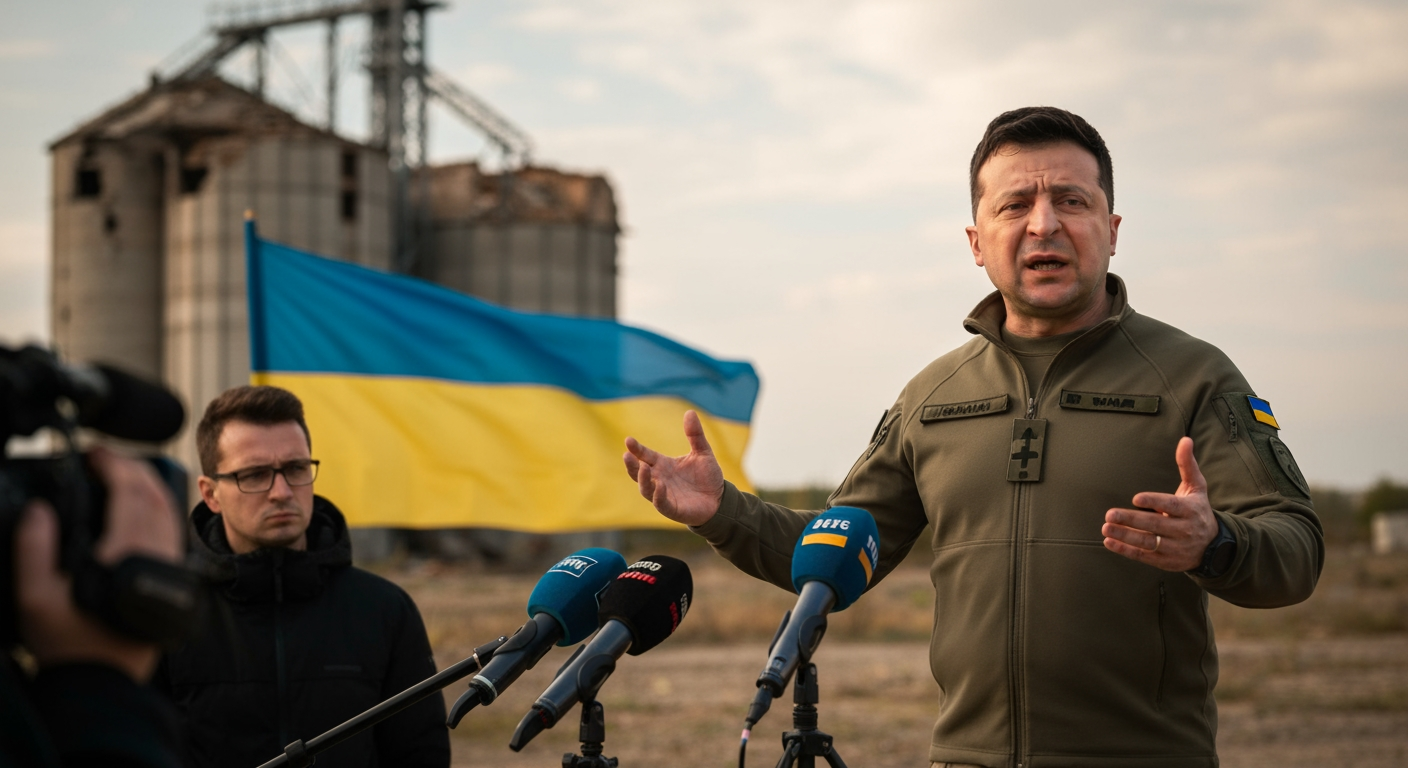
Kyiv, Ukraine — Ukrainian President Volodymyr Zelenskyy has issued a strong rebuke against Israel, accusing the nation of purchasing grain allegedly stolen by Russia from occupied Ukrainian territories and warning of impending sanctions. The accusation marks a significant escalation in diplomatic tensions between the two countries, coming after reports of multiple vessels docking in Israeli ports with cargo Ukraine asserts is illicit.
The controversy centers on recent maritime traffic, including the Panama-flagged bulk carrier Panormitis, which reportedly entered Haifa Bay last week, and the Russian bulk carrier Abinsk, which docked in Haifa earlier in April with nearly 44,000 tons of what Kyiv claims is stolen Ukrainian wheat. An investigation by the Israeli newspaper Haaretz suggests that at least four such shipments have already been unloaded in Israel this year, fueling Ukraine's outrage. Zelenskyy has unequivocally stated that the acquisition of such grain "cannot be legitimate business," asserting that Israeli authorities are "not unaware" of the origin of these cargoes.
The Stolen Harvest and Israeli Ports
President Zelenskyy's recent condemnation underscores Ukraine's growing frustration with Israel's stance on alleged Russian illicit trade. His announcement, made on April 28, details Kyiv's intent to prepare a comprehensive sanctions package. This package is designed to target not only entities directly involved in transporting the grain but also individuals and legal entities profiting from what Ukraine describes as a "criminal scheme." Ukraine plans to coordinate with European partners to ensure these individuals and entities are included in broader European sanctions regimes, amplifying the potential international repercussions.
The immediate catalyst for the renewed diplomatic friction was the arrival of the Panormitis, reportedly carrying over 6,200 tonnes of wheat and 19,000 tonnes of barley sourced from occupied Berdyansk. This incident follows closely on the heels of the Abinsk's docking, which had already prompted a stern rebuke from Kyiv. Ukraine's Foreign Minister Andrii Sybiha highlighted the difficulty in comprehending Israel's perceived lack of response to previous legitimate requests concerning vessels delivering stolen goods to Haifa, signaling a pattern of concern for Ukrainian officials.
Diplomatic Fallout and Contrasting Narratives
In response to the escalating situation, Ukraine summoned Israeli Ambassador Michael Brodsky to Kyiv, formally presenting a protest note and demanding action. Ukrainian Foreign Minister Sybiha emphasized that while "friendly Ukrainian-Israeli relations have the potential to benefit both countries," Russia's illicit trade in stolen Ukrainian grain should not undermine these ties. Kyiv contends that it has taken all necessary diplomatic steps to prevent such incidents, yet "another such vessel has not been stopped."
Conversely, Israeli Foreign Minister Gideon Sa'ar publicly rejected Kyiv's accusations. He argued that diplomatic relations, particularly between friendly nations, should not be conducted through social media or the press. Sa'ar asserted that allegations are not evidence and that Ukraine had not provided sufficient substantiation for its claims. He also reportedly stated that Israel had not received a formal request for legal assistance before Ukraine publicized the issue, though a community note on a social media platform disputed this, indicating that Ukraine had, in fact, provided evidence and legal requests since March. Sa'ar reiterated Israel's commitment to the rule of law, promising that authorities would act in accordance with legal principles.
Russia's Systematic Grain Theft and Global Implications
The dispute over grain shipments to Israel is part of a much larger and systemic issue of Russia's alleged theft of Ukrainian agricultural products since the full-scale invasion began in February 2022. Ukrainian officials assert that Russia systematically seizes grain from occupied territories, including Crimea and the four regions claimed by Moscow, and organizes its export through networks connected to the occupying administration. Kyiv estimates that Russia has stolen at least 15 million metric tons of grain from Ukraine since 2022.
This systematic appropriation not only violates international law and Ukraine's territorial sovereignty but also has severe implications for Ukraine's economy, which relies heavily on agricultural exports. The war has profoundly impacted Ukraine's agricultural sector, with projections indicating a significant reduction in grain exports compared to pre-war levels. Beyond Israel, Ukrainian officials have identified other nations, including Turkey, Egypt, and Algeria, as recipients of what they deem stolen grain, indicating the wide reach of these alleged illicit trade networks. The European Commission has taken note of these reports, warning that actions contributing to funding Russia's illegal war effort and circumventing EU sanctions could lead to sanctions against individuals and entities in third countries.
A Strained Relationship
The current diplomatic confrontation highlights the delicate and often strained relationship between Ukraine and Israel since Russia's full-scale invasion. Early in the conflict, President Zelenskyy notably criticized Israel's perceived lack of robust support for Ukraine. In a March 2022 virtual address to the Knesset, he questioned Israel's "indifference" and its hesitation to provide military aid or impose stronger sanctions against Russia. That earlier address sparked mixed reactions among Israeli lawmakers, particularly concerning Zelenskyy's historical comparisons.
Throughout the war, Israel has maintained a complex balancing act, seeking to preserve its security interests and freedom of operation while providing humanitarian aid to Ukraine. This diplomatic tightrope walk has often frustrated Kyiv, which has consistently called for stronger, more overt support against Russian aggression. The issue of alleged stolen grain directly challenges this fragile balance, forcing Israel to confront accusations of implicitly aiding Russia's war economy through trade, even if inadvertently.
Conclusion
The unfolding situation surrounding alleged stolen Ukrainian grain arriving in Israeli ports represents a critical juncture in Ukraine-Israel relations. President Zelenskyy's firm stance and the threat of sanctions underscore the deep-seated anger and economic damage Ukraine attributes to Russia's actions in its occupied territories. The international community, including the European Union, is closely monitoring these developments, signaling a potential for wider implications if concrete evidence of illicit trade is established and acted upon.
The dilemma for Israel is multifaceted: balancing its diplomatic relationships and national interests with international legal and ethical obligations. As Ukraine continues to advocate for its sovereignty and economic integrity, the pressure on all nations to scrutinize the origins of goods from war-torn regions intensifies. The episode serves as a stark reminder of the far-reaching economic and political ripple effects of the conflict in Ukraine, extending beyond battlefields to global supply chains and international diplomacy.
Related Articles

Ratko Mladić, "Butcher of Bosnia" and Convicted War Criminal, Dies at 84
THE HAGUE, Netherlands – Ratko Mladić, the former Bosnian Serb military commander known as the "Butcher of Bosnia" and convicted of genocide, war crimes, and crimes against humanity, has died at the age of 84. Serbian...


Long-Awaited 9/11 Mastermind Trial Set for 2028, Decades After Attacks
GUANTANAMO BAY, Cuba – Nearly a quarter-century after the devastating terror attacks of September 11, 2001, a military judge has finally set a trial date for Khalid Sheikh Mohammed, the alleged mastermind behind the...