South Korea's Constitutional Court to Rule on Impeachment of President Yoon Suk Yeol
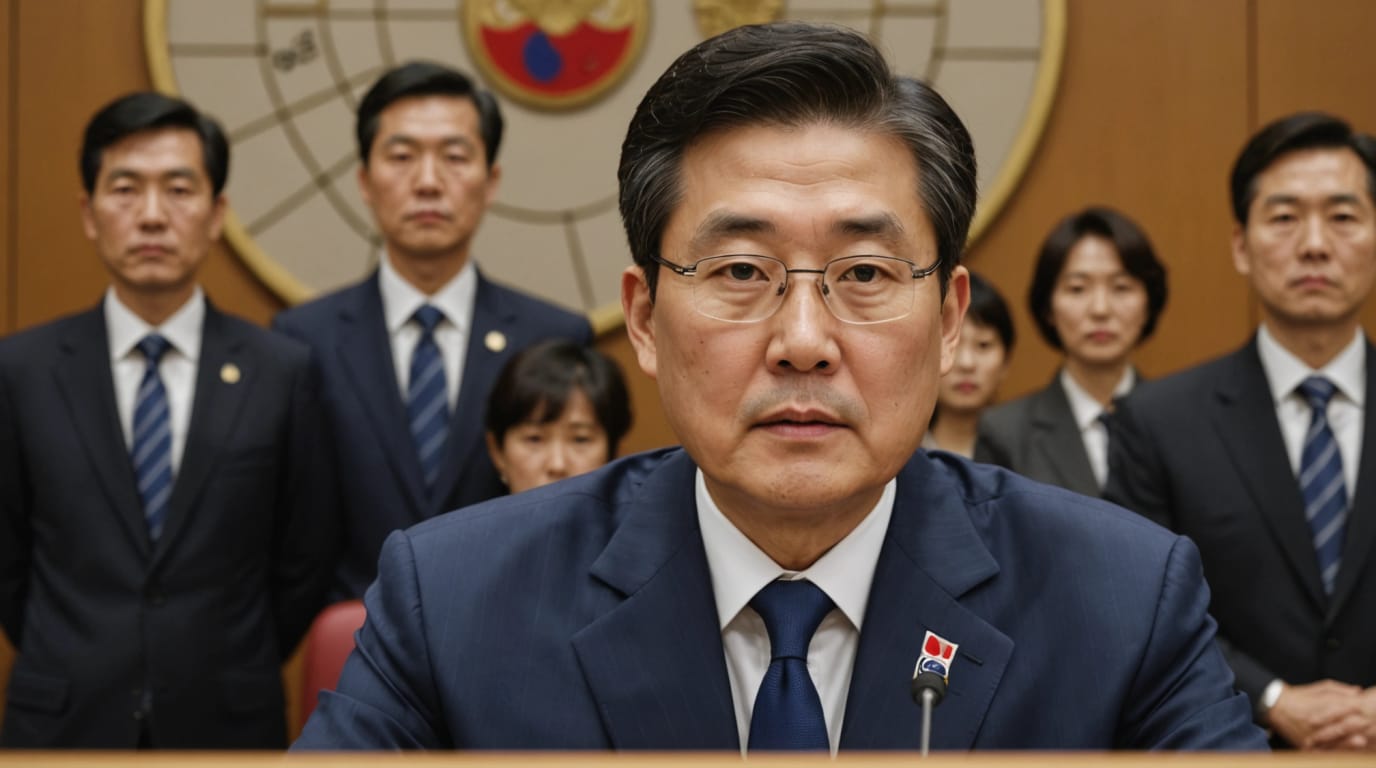
SEOUL, South Korea — South Korea stands on the precipice of a pivotal moment in its political history as the Constitutional Court is set to rule Friday on the impeachment of President Yoon Suk Yeol. The decision, which will either remove him from office or reinstate his powers, comes four months after Yoon's controversial declaration of martial law plunged the nation into turmoil. The ruling, scheduled for 11 a.m. (0200 GMT), will be broadcast live nationwide, with the potential to further deepen the country's already significant political divisions.
The Impeachment and Martial Law Declaration
The impeachment proceedings against Yoon stem from his declaration of martial law on Dec. 3 of last year. The declaration, which lasted only six hours before being overturned by the National Assembly, saw the deployment of troops and police officers to the National Assembly, election offices, and other key locations. Yoon defended his actions as necessary to maintain order amid what he described as obstructionism from the opposition Democratic Party and their perceived sympathetic stance toward North Korea.
However, the opposition-controlled legislature viewed the declaration as a violation of the constitution and an attempt to suppress assembly activities and detain politicians. They swiftly voted to impeach Yoon, suspending his presidential powers and sending the case to the Constitutional Court. The impeachment motion accuses Yoon of undermining peace across the country.
The Constitutional Court's Decision
The Constitutional Court is composed of eight justices, and at least six of them must vote in favor of removing Yoon for the impeachment to be upheld. If the court upholds the impeachment, a national election must be held within 60 days to elect a new president. If the court rejects the impeachment, Yoon will be immediately reinstated to his position, ending the suspension of his presidential duties that began in mid-December.
The court's decision is not only a judgment on Yoon's actions but also a reflection of the deep-seated political divisions within South Korea. Experts predict that the verdict, regardless of the outcome, will likely exacerbate these divisions, which have been on full display in recent months as millions of citizens have taken to the streets to either denounce or support Yoon.
Security Measures and Public Response
Anticipating potential unrest, authorities have implemented heightened security measures in Seoul. More than 14,000 police officers have been mobilized to maintain order, and a "vacuum zone" has been established around the Constitutional Court, using police buses to prevent people from getting too close. Several schools in the vicinity have suspended classes, and the closest subway station will be closed to manage congestion. Petrol stations near the court will also be temporarily closed.
The public response to the impeachment has been divided, with large-scale protests both for and against Yoon taking place in recent months. Supporters of Yoon view the impeachment as a politically motivated attack, while opponents see it as a necessary measure to hold him accountable for his actions. Opinion polls reflect this division, with some surveys indicating a majority support Yoon's removal.
Implications of the Ruling
The Constitutional Court's ruling carries significant implications for South Korea's political landscape. If Yoon is removed from office, it would mark a historic moment of political upheaval, triggering a snap election and potentially shifting the balance of power. The Democratic Party leader, Lee Jae-myung, is considered a strong contender in a potential election.
Conversely, if Yoon is reinstated, it would be a major victory for the conservative leader and his supporters. However, it would also likely lead to continued political gridlock and further polarization of the electorate. Yoon also faces separate criminal charges of insurrection over the martial law decree, adding another layer of uncertainty to his future.
A Nation Divided Awaits
As South Korea awaits the Constitutional Court's decision, the nation remains deeply divided. The impeachment trial has exposed the fragility of the country's political system and the deep-seated ideological differences that separate its citizens. Regardless of the outcome, the ruling will undoubtedly have a lasting impact on South Korea's democracy and its future trajectory. The world watches as South Korea navigates this critical juncture in its history.


