South Korea's Military Faces Dual Crisis: Leadership Vacuum and Demographic Challenges
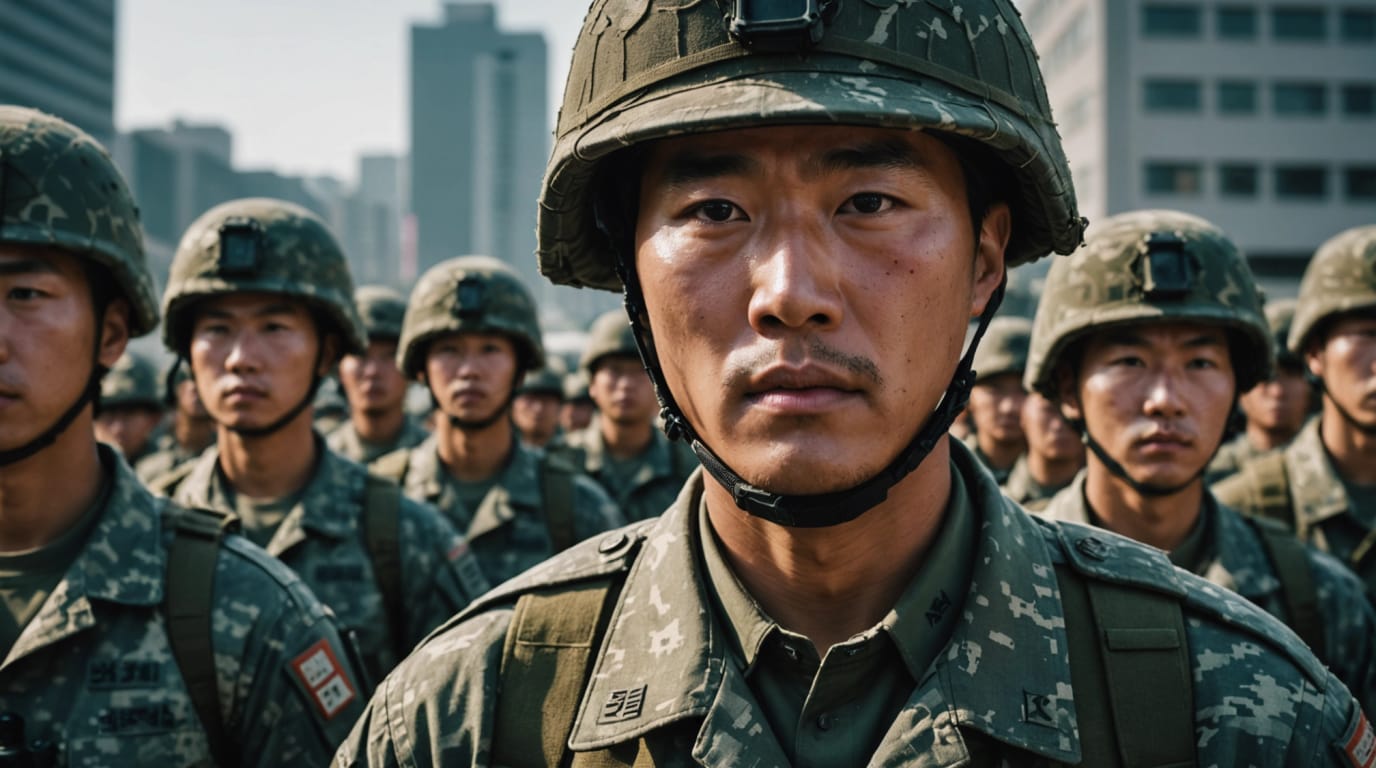
South Korea's military is currently navigating a complex and multifaceted crisis, raising concerns about national security and regional stability. The challenges stem from both internal leadership turmoil and long-term demographic trends, threatening the readiness and effectiveness of the Republic of Korea (ROK) Armed Forces.
Leadership in Disarray
In December 2024, South Korea experienced a period of intense political upheaval following President Yoon Suk Yeol's declaration of martial law. This controversial decision led to widespread protests, Yoon's subsequent impeachment, and a leadership vacuum within key government and military positions. Sixteen senior military leaders were either dismissed or placed under investigation, including the former Defense Minister Kim Yong-hyun, who was detained after resigning.
The absence of leadership extended to critical units responsible for countering North Korean threats, such as the Capital Defense Command, Special Warfare Command, Counterintelligence Command, and Intelligence Command. This created uncertainty within the ranks, with one military official stating that frontline units were unsure of whose orders to follow in an emergency. The Army Chief of Staff, Park An-su, who served as the martial law commander, also faced investigation and potential suspension.
This leadership crisis has raised serious questions about the military's ability to function effectively, particularly in the event of a North Korean attack or other security crisis. Experts have warned that the chain of command may not function properly during an emergency, potentially leaving South Korea vulnerable. The political turmoil also cast a shadow over joint military drills with the U.S., with some exercises being postponed.
The Demographic Time Bomb
Beyond the immediate leadership crisis, South Korea's military faces a long-term threat stemming from the nation's alarmingly low birth rate. With a fertility rate of just 0.76 children per woman in the first quarter of 2024, South Korea has the lowest birth rate in the world. This demographic decline is creating a looming shortage of young men available for mandatory military service.
South Korea maintains a conscription system, requiring all able-bodied men over 19 to serve in the military for at least 18 months. However, the shrinking pool of eligible conscripts is casting doubt on the military's ability to maintain its current force strength of approximately 500,000 troops. Data from the ROK indicates that the number of 20-year-old men subject to conscription is expected to decrease from 334,000 in 2020 to 236,000 in 2025, and then plummet to 130,000 in 2040.
Experts predict that maintaining the Korean Army's goal of 365,000 troops is becoming increasingly unlikely, as the military needs to enlist or conscript 200,000 soldiers annually to sustain current levels. In 2022, fewer than 250,000 babies were born, implying that only about 125,000 men will be available for military service in 20 years. This demographic reality is forcing the military to consider drastic measures to address the manpower shortage.
Addressing the Shortage
The South Korean Ministry of National Defense is exploring several options to mitigate the impact of the declining birth rate on military readiness. These include:
- Expanding recruitment eligibility: Proposals have been introduced to expand recruitment eligibility for lower-level service positions, including the possibility of mandating military service for women.
- Enhancing the reserve system: Prioritizing the expansion of the reserve system to create a larger, more experienced force. The number of short-term reservists increased from 79 in 2014 to 3,804 in December 2022.
- Modernizing military technology: Investing in advanced weaponry and technology to partially replace manpower. This includes integrating artificial intelligence-based surveillance and reconnaissance systems, hyper-connected intelligent command and control, and combined manned and unmanned combat systems.
- Raising the age ceiling: The ROK Ministry of National Defense has raised the age ceiling for entering military service from 27 to 29 years old to increase the available pool for officers and noncommissioned officers.
- Recruiting diverse populations: Considering recruiting women, orphans, and North Korean defectors to fill the ranks.
Morale and Cultural Challenges
In addition to the leadership and demographic challenges, the South Korean military is also grappling with issues of morale and outdated military culture. Modest salaries, poor working conditions, and a rigid hierarchical structure have made military careers less appealing to younger generations.
President Yoon's pledge to increase conscript salaries to $1,500 per month has ironically exacerbated recruitment difficulties for career soldiers, who start with salaries around $1,300. This potential inverted salary structure dissuades young professionals from applying. The current personnel shortage further intensifies the burden and workload on those who remain, contributing to the departure of young career soldiers and exacerbating the military's overall manpower crisis.
Bullying and hazing have also been long-standing problems within the South Korean armed forces, contributing to suicides and shooting incidents. While the military has made efforts to tackle bullying, referred to as "distorted military culture," these issues persist.
Defense Reform and Future Outlook
South Korea has been implementing a series of defense reforms to address these challenges and enhance its military capabilities. "Defense Reform 2.0," launched by the Moon Jae-in administration, aims to transform the ROK Armed Forces into a more mobile and lethal force, with a focus on preparing for future challenges and reducing dependence on foreign defense imports.
The reforms also emphasize improving the well-being of military personnel and developing capabilities to address non-traditional threats, such as cyber warfare and chemical and biological weapons. South Korea is also striving to achieve wartime operational control of its defenses, which is currently held by the United States.
Despite the challenges, South Korea remains a formidable military power, with strengths in training, reserve mobilization, industrial capability, technology, and alliances, particularly with the United States. However, the leadership crisis and demographic decline pose significant threats to the long-term readiness and effectiveness of the ROK Armed Forces.
Conclusion
South Korea's military is at a critical crossroads, facing a confluence of challenges that demand immediate and sustained attention. The leadership vacuum created by the recent political turmoil must be addressed to restore stability and ensure a clear chain of command. Simultaneously, the long-term demographic crisis requires innovative solutions to maintain adequate troop levels and adapt to a shrinking pool of eligible conscripts. Addressing issues of morale and modernizing military culture are also essential to attract and retain talented personnel. By confronting these challenges head-on, South Korea can safeguard its national security and maintain its role as a key player in regional stability.


