South Korea's Top Court Finalizes Ex-President Yoon Suk Yeol's Seven-Year Sentence for Obstruction
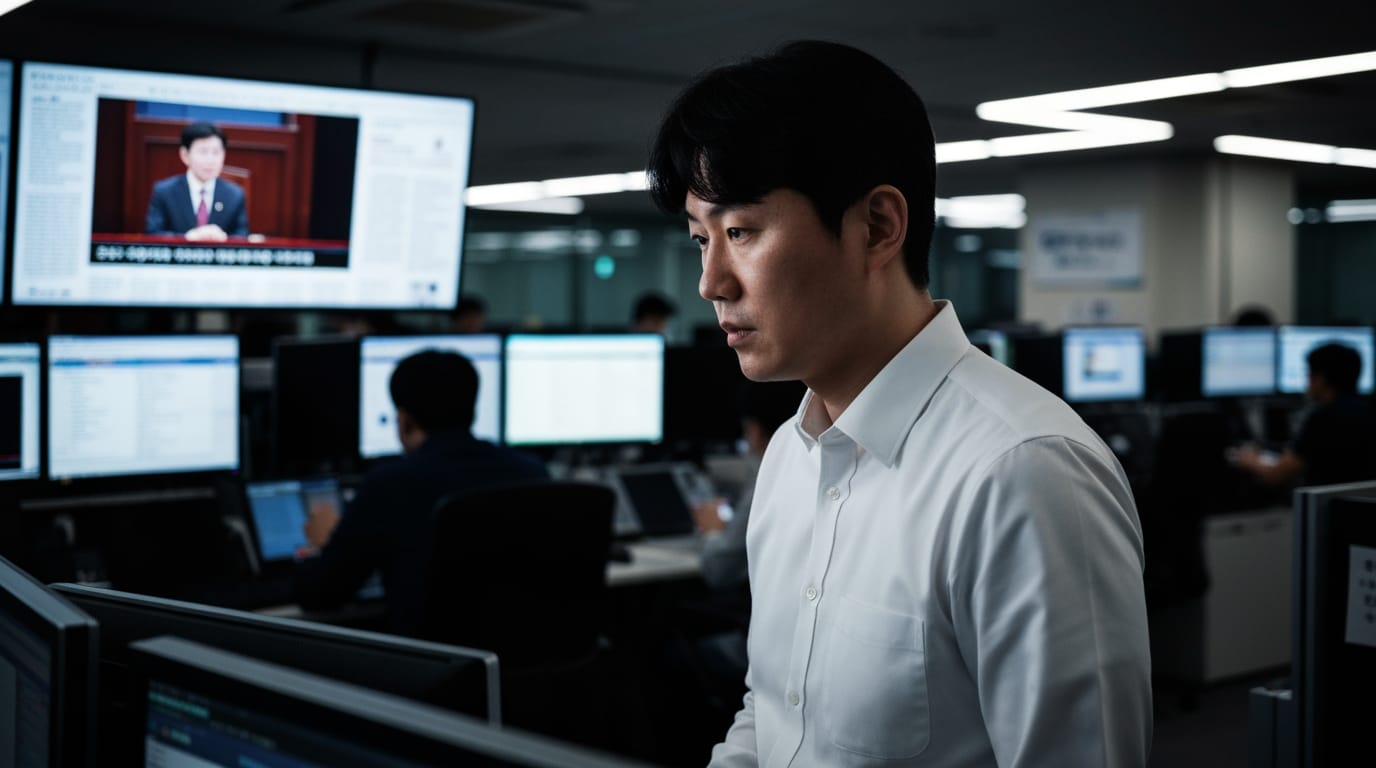
SEOUL – South Korea's Supreme Court on Thursday upheld a seven-year prison sentence against former President Yoon Suk Yeol, finalizing a conviction for obstructing justice and resisting arrest related to his tumultuous martial law declaration in December 2024. The ruling marks a significant moment in South Korea's ongoing efforts to hold its highest officials accountable, reinforcing the nation's commitment to the rule of law amidst a politically charged climate. This decision follows a protracted legal battle that saw Yoon, once the nation's leader, face multiple severe charges since his ousting in April 2025.
Supreme Court Affirms Seven-Year Term
The Supreme Court's decision, announced today, confirms the appellate court's earlier ruling that had increased Yoon's sentence from an initial five years to seven. The charges central to this particular conviction revolve around Yoon's actions surrounding his brief imposition of martial law. Specifically, he was found guilty of obstructing authorities' attempts to arrest him, bypassing legally required cabinet meetings, and falsifying documents. These actions, according to the court, constituted a severe breach of presidential duties and an affront to the democratic process. The verdict underscores the judiciary's independence and its role in maintaining constitutional order, even when confronted with the actions of a former head of state.
A Trajectory of Transgressions and Judicial Scrutiny
The path to this seven-year sentence began with Yoon's declaration of martial law in December 2024, an event that plunged the nation into a constitutional crisis. His administration was accused of obstructing deliberations by convening only a select group of ministers for a meeting shortly before the declaration, thereby bypassing full cabinet approval. Further allegations included the creation and destruction of a false martial law decree bearing forged signatures from the prime minister, as well as ordering officials to distribute a misleading press release to foreign media. He also directed an army commander to delete records from secure military phones.
Following his ousting in April 2025, legal proceedings commenced swiftly. A lower court initially sentenced Yoon to five years in prison, though it cleared him of some abuse of power charges. However, an appeals court in April of the current year overturned part of that initial ruling, finding him guilty on additional counts, including the misleading press release, and consequently raised the sentence to seven years. Both prosecutors and Yoon's legal team subsequently appealed to the Supreme Court, whose rulings are final, leading to today's definitive judgment.
A President's Downfall: Martial Law, Insurrection, and Geopolitical Misadventures
The seven-year sentence for obstruction is but one component of the formidable legal repercussions Yoon Suk Yeol has faced. His downfall began with the controversial martial law declaration, which he had insisted was "solely for the sake of the nation" and necessary to root out "anti-state forces" and quell perceived threats from North Korea. This declaration ultimately led to his ousting in April 2025, paving the way for elections that saw Lee Jae Myung of the centre-left Democratic Party assume the presidency.
Beyond the obstruction charges, Yoon has been confronted with even graver accusations. In February, a separate court handed down a life imprisonment sentence for masterminding an insurrection directly tied to his martial law declaration. Additionally, he received a 30-year prison sentence in another case for orchestrating a plan to send drones into North Korea, a move prosecutors argued was an attempt to "manufacture" a crisis in the lead-up to his martial law bid. These multiple convictions paint a comprehensive picture of a presidency that ended in severe legal and political disrepute, with Yoon currently appealing the life sentence for insurrection.
Upholding Rule of Law in a Politically Charged Landscape
The Supreme Court's final decision on the seven-year sentence reaffirms South Korea's robust judicial system and its capacity to hold even its most powerful figures accountable. The nation has a history of its former leaders facing legal consequences post-presidency, a pattern often attributed to fierce political rivalries and rigorous anti-corruption campaigns. This ruling serves as a stark reminder that no individual, regardless of their past office, is above the law. It reinforces the principles of transparency and constitutional adherence, critical for maintaining public trust in democratic institutions. The case has been closely watched, both domestically and internationally, as a barometer of South Korea's democratic health and its commitment to legal integrity.
Conclusion: A Precedent Set for Future Leadership
Today's Supreme Court verdict, finalizing former President Yoon Suk Yeol's seven-year imprisonment for obstruction, concludes a significant chapter in South Korean political history. It not only seals the legal fate of a former head of state but also sends an unequivocal message about the unwavering application of justice. The cumulative sentences against Yoon, including life imprisonment and another 30-year term, underscore the profound seriousness with which the judiciary has addressed the allegations of abuse of power and constitutional overreach. This definitive outcome sets a powerful precedent for future leaders, emphasizing that their actions will be subject to rigorous legal scrutiny and that accountability remains a cornerstone of South Korean democracy.


