South Sudan on Edge: Political Tensions and Humanitarian Crisis Threaten Fragile Peace
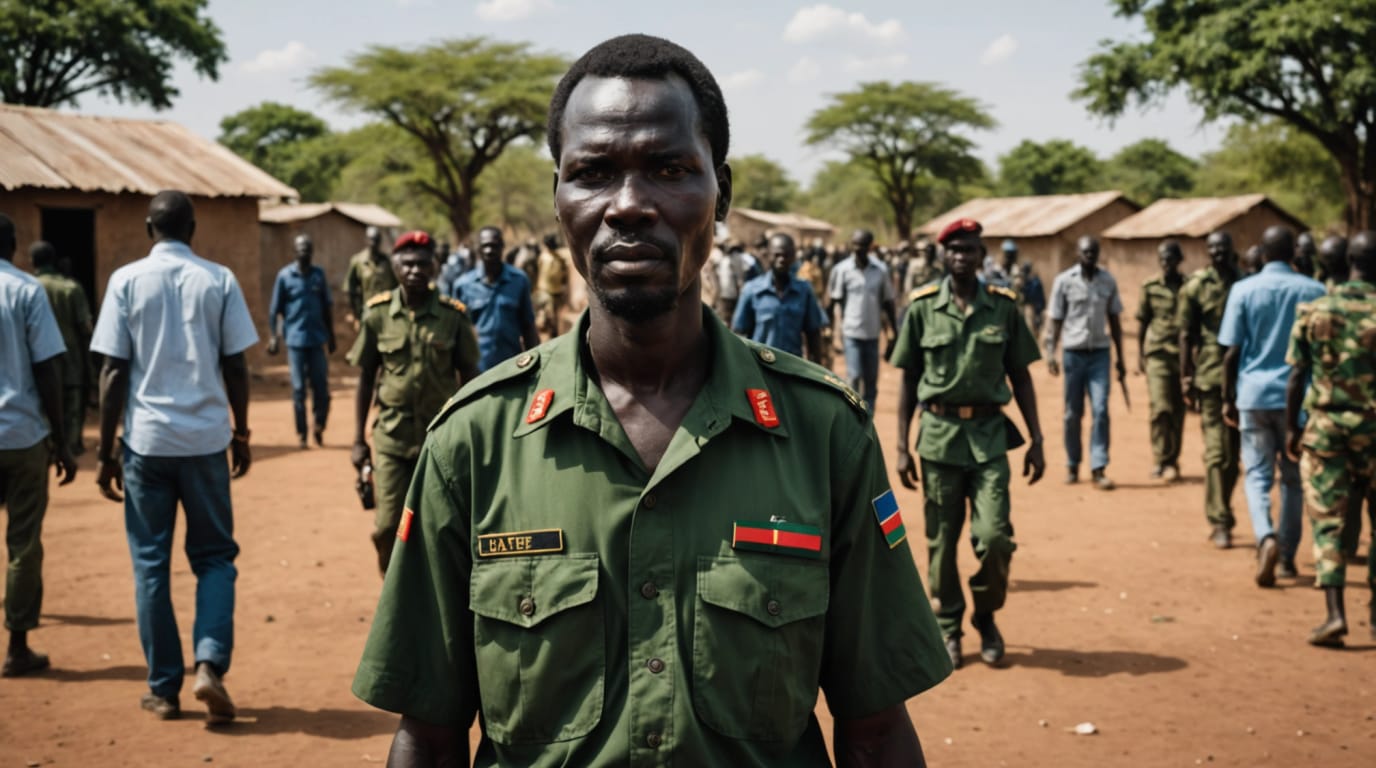
South Sudan, the world's youngest nation, is teetering on the brink of renewed conflict and faces a deepening humanitarian crisis, threatening to undo years of painstakingly slow progress since its independence in 2011. Mounting political tensions between President Salva Kiir and First Vice President Riek Machar, coupled with a surge in violence, economic hardship, and climate shocks, have created a volatile environment that jeopardizes the fragile 2018 peace agreement and the prospects for a stable, democratic future.
A Peace Agreement in Peril
The 2018 Revitalized Agreement on the Resolution of the Conflict in South Sudan (R-ARCSS) was intended to end the country's bloody civil war, which claimed hundreds of thousands of lives and displaced millions. The agreement led to a cease-fire and the formation of a unity government in 2020, with Kiir and Machar, the heads of the two main opposing political coalitions, sharing power. However, implementation of the agreement has been slow and fraught with challenges.
Recent events have raised serious concerns about the agreement's viability. In early March 2025, a Nuer militia with ties to Vice President Machar captured an army base in Nasir, a town on the border with Ethiopia, leading to violent clashes with government forces loyal to President Kiir. This incident, along with a cabinet reshuffle by Kiir that saw the dismissal of three ministers, has further heightened political tensions and fueled mistrust between the two leaders.
Analysts say a deepening lack of trust between Kiir and Machar is at the heart of South Sudan's ongoing instability. The two leaders have repeatedly accused each other of lacking the political will and commitment to implement the peace agreement. The power-sharing deal itself has been fraught with problems, with Kiir holding the authority to appoint and dismiss officials but requiring consent from opposition leaders when removing their representatives.
The United Nations Commission on Human Rights in South Sudan has warned that the surge in violence, escalating political tensions, and instability in Juba threaten to derail the 2018 peace agreement. The commission's chair, Yasmin Sooka, stated that South Sudan is witnessing an alarming regression that could erase years of hard-won progress.
Economic Collapse and Humanitarian Catastrophe
South Sudan is facing a severe economic crisis, exacerbated by the ongoing conflict in neighboring Sudan. Almost all of South Sudan's government income comes from oil, which must be exported through Sudan. Damage to a pipeline in Sudan has disrupted oil exports for months, severely impacting South Sudan's economy. The drop in oil revenue has left the government unable to pay its workers, and families are struggling with hyperinflation and soaring food prices.
The disruption of oil exports has had a devastating impact on South Sudan's economy. Export volumes plummeted in 2024, and the government now aims to ramp up production in 2025. The resumption of oil exports is expected to drive economic growth, increase government spending, and strengthen the South Sudanese pound. However, the country remains at high risk of debt distress, and poverty levels remain alarmingly high.
The economic crisis has contributed to a worsening humanitarian situation. In 2023, more than 7.7 million people, or two-thirds of the population, faced severe food insecurity. An estimated 2.1 million children are projected to endure acute malnutrition in 2025, and thousands face starvation.
The humanitarian crisis has been further compounded by the influx of refugees and returnees fleeing the conflict in Sudan. Since April 2023, over 900,000 people have crossed into South Sudan, with projections suggesting an additional 337,000 arrivals in 2025. This influx has created urgent needs for basic assistance and has sparked tensions, particularly land disputes, around urban areas.
Climate Shocks and Inter-communal Violence
South Sudan is highly vulnerable to climate change, ranking as the second most vulnerable country to climate risks. The country has experienced consecutive years of flooding, which have devastated villages and farmland, exacerbating the hunger crisis and displacing communities. Above-normal rainfall is predicted to continue through 2025, leading to prolonged flooding and further straining already scarce resources.
Climate change also exacerbates inter-communal violence, as communities compete for dwindling resources such as grazing land and water. Localized violence, fueled by long-standing cultural practices and communal tensions, continues to be a major source of insecurity, posing access challenges for humanitarian operations and triggering population displacement across South Sudan.
The Greater Upper Nile region, consisting of Unity, Upper Nile, and Jonglei states, has been a particular hotspot for violence. Since 2018, tens of thousands of South Sudanese civilians have been killed, injured, or abducted by political factions, communal militias, or criminal gangs.
Delayed Elections and Uncertain Future
South Sudan's first elections have been repeatedly delayed, further fueling political tensions and uncertainty. The long-delayed elections, initially scheduled for December 2024, have been postponed to December 2026. The extension of the transitional period has been met with disappointment by citizens eager for a peaceful transition through elections.
The implementation of the electoral road map is critical for ensuring credible elections. However, challenges remain, including low political will, a trust deficit among the parties to the peace agreement, and a lack of predictable funding. Election laws stipulate that parties with armed forces cannot be registered until they relinquish their forces, underscoring the need to hasten the unification of forces so that these parties can participate in the elections.
A Call for Urgent Action
South Sudan stands at a critical juncture. The country faces a confluence of crises that threaten to plunge it back into conflict and deepen its humanitarian woes. Urgent action is needed to address the root causes of instability, including political tensions, economic hardship, climate change, and inter-communal violence.
Regional leaders and the international community must press Kiir and Machar to calm the situation and refocus on the peace process. The implementation of the 2018 peace agreement must be accelerated, with a focus on security arrangements, institutional reforms, and electoral preparations.
Increased humanitarian assistance is urgently needed to address the growing needs of the population, including food insecurity, malnutrition, and displacement. Support for climate adaptation is also crucial to help communities cope with the impacts of climate change and reduce the risk of conflict over resources.
The future of South Sudan hangs in the balance. Without urgent action, the country risks sliding back into conflict and further deepening its humanitarian crisis. The people of South Sudan deserve a chance to build a peaceful, stable, and prosperous future.


