South Sudan Vice President Arrested, Raising Fears of Renewed Conflict
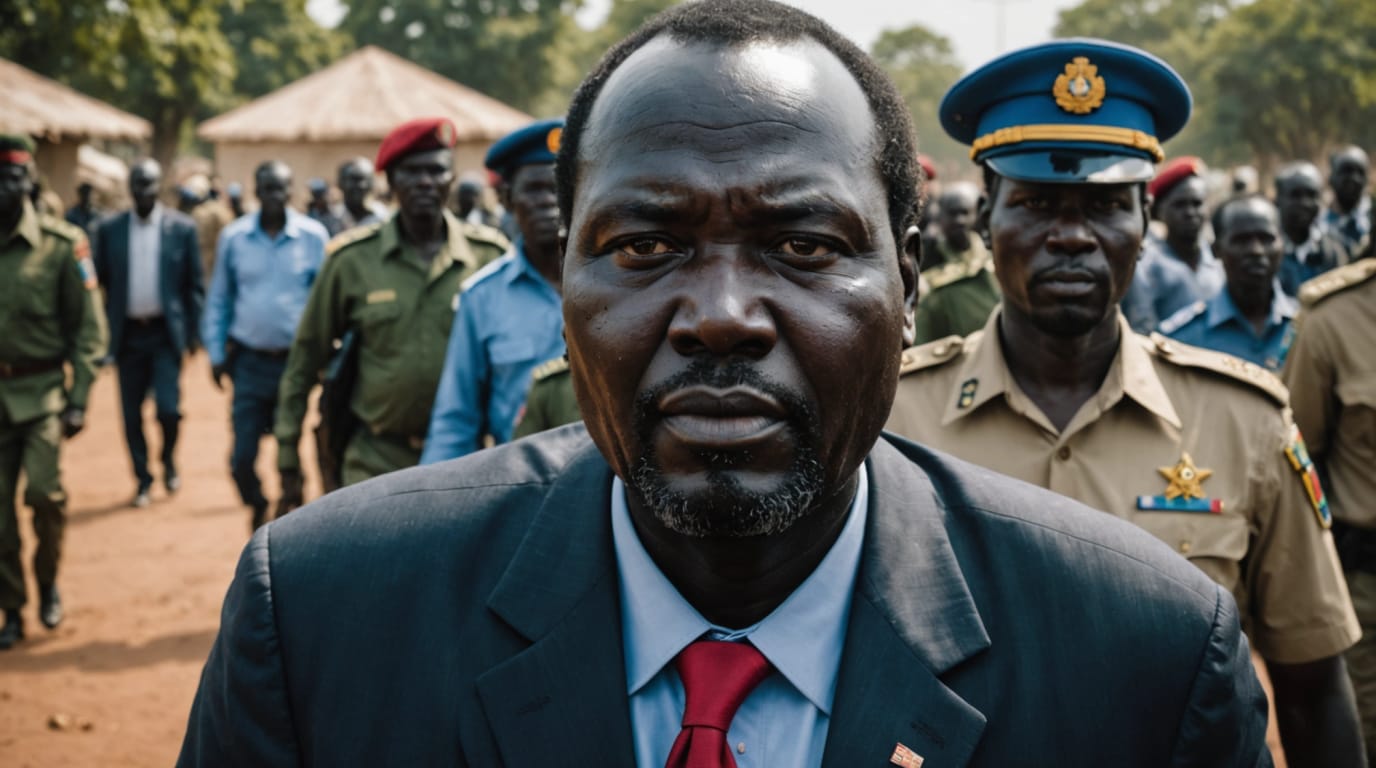
JUBA, South Sudan – South Sudan's First Vice President Riek Machar was arrested Wednesday at his compound in Juba, sparking concerns of escalating violence and a potential return to civil war in the world's youngest country. The arrest, condemned by Machar's party as unconstitutional, comes amid rising tensions between Machar and President Salva Kiir, threatening the fragile peace agreement that ended a five-year civil war.
Details of the Arrest
According to a statement released by Reath Muoch Tang, chairman of Machar's party's foreign relations committee, the arrest was carried out by the Minister of Defense and the Chief of National Security. More than 20 heavily armed vehicles reportedly entered Machar's residence, disarming his bodyguards before delivering an arrest warrant with unclear charges. The statement was shared on Facebook. Attempts are reportedly being made to relocate him. The United Nations Mission in South Sudan (UNMISS) has expressed grave concern, stating that the arrest has placed the country on the brink of widespread conflict and urging all parties to exercise restraint.
Political Rivalry and Power Struggle
Machar, a long-time rival of President Kiir, has served as First Vice President in a tenuous power-sharing arrangement designed to bring stability to South Sudan. However, analysts suggest that Kiir, 73, has been working to consolidate his power and sideline Machar, fueling political instability. This has manifested in recent cabinet reshuffles and the arrest of more than 20 of Machar's political and military allies since February. Many of those arrested have been held incommunicado, raising concerns about due process and human rights.
Recent Clashes and Escalating Violence
The arrest follows weeks of violent clashes between forces loyal to Kiir and Machar, particularly in the northeastern Nasir County of Upper Nile State. Machar's party claims that government forces have attacked a military base and two military training centers around Juba since Monday. The International Crisis Group's South Sudan senior analyst, Daniel Akech, warned that the violence that began in March in Nasir appears to be spreading across several states. These clashes have involved the so-called White Army, a militia with ties to Machar, further complicating the security situation. The UN mission in South Sudan reported increased fighting between the army and armed youth in Nasir County in Upper Nile last month, involving heavy weaponry and resulting in deaths and injuries to civilians and armed personnel.
International Response and Concerns
The international community has reacted with alarm to Machar's arrest. UNMISS has called on all parties to exercise restraint and refrain from actions that could further destabilize the country. Human Rights Watch has condemned the arrests of opposition leaders and called on the South Sudanese government to reveal the whereabouts of detainees and ensure their due process rights. The arrests have raised concerns about the commitment of the South Sudanese government to the 2018 peace agreement, which aimed to end the civil war and establish a unified government.
Background of Conflict
South Sudan gained independence from Sudan in 2011, but descended into civil war in 2013 after Kiir sacked Machar as his vice president. The conflict, largely fought along ethnic lines, resulted in a humanitarian crisis, with millions displaced and widespread reports of human rights abuses. A peace agreement was signed in 2018, leading to the formation of a unity government, but tensions between Kiir and Machar have persisted, undermining the stability of the country. The 2018 peace deal ended a five-year civil war in which more than 400,000 people were killed. Water Minister Pal Mai Deng, spokesman for Machar's SPLM-IO party, said Lam's arrest “puts the entire peace agreement at risk”.
Uncertain Future
The arrest of Vice President Machar has plunged South Sudan into a precarious situation. The potential for renewed conflict is high, and the fragile peace agreement is in jeopardy. The coming days and weeks will be critical in determining whether South Sudan can avert a return to civil war and continue on the path towards stability and development. The international community's role in mediating the crisis and ensuring the protection of civilians will be crucial.


