South Sudan's Unfolding Crisis: Climate Change Transforms Water into a Toxic Threat
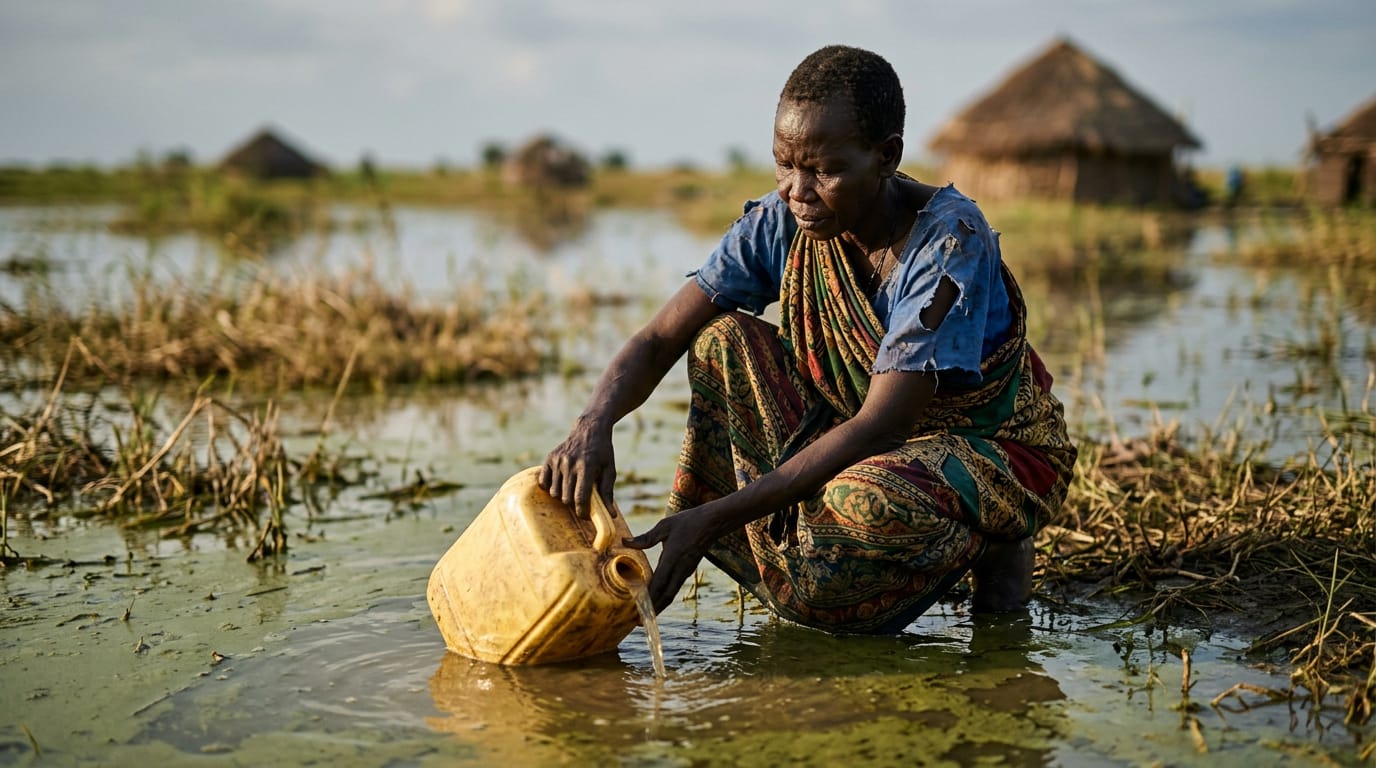
Juba, South Sudan – A devastating convergence of climate change and industrial negligence is turning South Sudan's life-sustaining water into a perilous source of illness and death, particularly in regions grappling with persistent flooding. Years of unprecedented deluges, intensified by a changing climate, are not only displacing millions but also spreading toxic pollutants from poorly managed oil facilities into vital drinking water sources, creating a public health emergency with profound long-term implications for one of the world's most vulnerable nations.
The Deluge of Contamination: When Floodwaters Meet Oil
South Sudan, already reeling from decades of conflict and underdevelopment, has been gripped by consecutive years of severe flooding since 2019, with 2022 marking the fourth such year. This relentless inundation, largely attributed to climate change, has submerged vast areas, particularly in Unity State, where up to 70% of the state was underwater at the peak of the 2022 floods. The consequences extend far beyond displacement; these floodwaters are acting as carriers for toxic runoff from the region's numerous oil fields.
Reports indicate that floods have spread pollution from nearby oil facilities into local water sources relied upon by residents for drinking and livestock. Oil spills, untreated waste, and outdated infrastructure, including ruptured pipelines and unsecured oil waste pits, contribute to this contamination. Unity State, a major oil-producing region, has seen floodwaters carrying oil pollution spread across its landscape, impacting areas like Rubkona and Bentiu, which have been submerged or isolated on small islands since 2021. The sheer scale of flooding in 2021, for instance, not only led to significant livestock deaths and displacement but also dispersed oil, war debris, and animal carcasses across the land, further compromising water quality. An analysis using satellite imagery and hydrological modeling revealed that approximately 40% of the oil wells in Unity State were flooded between 2021 and 2022, highlighting the direct interaction between climate events and industrial pollution.
A Silent Killer: Health Impacts and Human Cost
The implications of this toxic cocktail are dire for human and animal health. Communities residing in affected areas report a surge in health issues, including birth defects in infants and deformities or stillbirths among livestock, which they attribute directly to the contaminated water. The former engineer for the Greater Pioneer Operating Company (GPOC), David Bojo Leju, described the pollutants seeping into soil and groundwater as a "silent killer."
The immediate and widespread threat comes in the form of waterborne diseases. Without access to clean water, communities face an increased risk of cholera, typhoid fever, dysentery, intestinal worms, and even the resurgence of Guinea worm disease. Cholera, in particular, spreads rapidly and can be deadly within hours if untreated, with children, the elderly, and those weakened by malnutrition being particularly vulnerable. Tens of thousands of cholera cases were reported between 2016 and 2018. The lack of proper sanitation, with only about 10% of the population having access to improved facilities, exacerbates the crisis, creating breeding grounds for disease.
Women and girls bear a disproportionate burden, as they are often responsible for collecting water and face heightened risks of infection, as well as violence and abduction while traveling to distant, often contaminated, water points. Displacement into overcrowded camps, a common consequence of flooding, further compounds these health risks due to unsanitary conditions and limited access to medical care. Despite concerns being raised for over a decade, systematic data collection on the precise health impacts is lacking, and government action on pollution control remains slow.
The Dual Threat: Drought and Scarcity
While floods dominate the headlines, South Sudan also grapples with increased frequency and intensity of droughts, another critical manifestation of climate change. Rising temperatures lead to increased evaporation, further reducing water availability during dry spells. These droughts, particularly in the southeastern and northeastern regions, compel communities to rely on even more precarious and often contaminated water sources.
The alternating cycles of extreme floods and droughts severely impact the country's agricultural sector, which employs an estimated 95% of the population. Crop failures and livestock losses contribute to widespread food insecurity, forcing people to abandon their traditional livelihoods and intensifying competition over dwindling resources, which can fuel local conflicts. The decrease in both the quantity and quality of water has been observed over the past two decades, with rivers and streams becoming smaller and more seasonal.
Systemic Vulnerabilities and Delayed Action
South Sudan's extreme vulnerability to climate change, ranking among the top five countries globally, is exacerbated by its fragile political landscape and ongoing humanitarian crises. Decades of civil conflict have decimated infrastructure, leaving water wells and pipelines destroyed or neglected, and recovery efforts are continuously hampered by instability.
A significant barrier to addressing the toxic water crisis is the country's heavy dependence on oil revenues. This reliance has historically delayed the implementation of environmental reforms and robust pollution control measures. Despite calls for an environmental audit of the oil industry's impact, findings have often been delayed or unreleased, reflecting the challenges in prioritizing environmental protection over economic interests. The inadequate water management infrastructure and a general lack of resources further complicate efforts to provide safe drinking water to the population, an estimated 59% of whom lack access to safe water. This systemic vulnerability creates a vicious cycle where climate-induced disasters and pollution perpetuate humanitarian suffering.
Conclusion
South Sudan stands at a critical juncture, facing a complex and escalating crisis where climate change, industrial pollution, and societal vulnerabilities converge to contaminate its most fundamental resource: water. The devastating floods, while a natural phenomenon, are amplified by a warming climate and weaponized by toxic runoff from oil operations, leading to widespread disease, displacement, and a profound human cost. The challenges are multifaceted, encompassing inadequate infrastructure, a struggling economy, and slow governance in environmental protection. Addressing this ticking time bomb requires a concerted, multi-pronged approach that includes urgent humanitarian assistance, robust climate adaptation strategies, strict environmental regulations for the oil industry, and sustained investment in water and sanitation infrastructure. Without immediate and comprehensive action, the silent killer of toxic water will continue to claim lives and undermine the future of South Sudan.


