Southeast Asia Grapples with Mounting Household Debt as Families Struggle to Stay Afloat
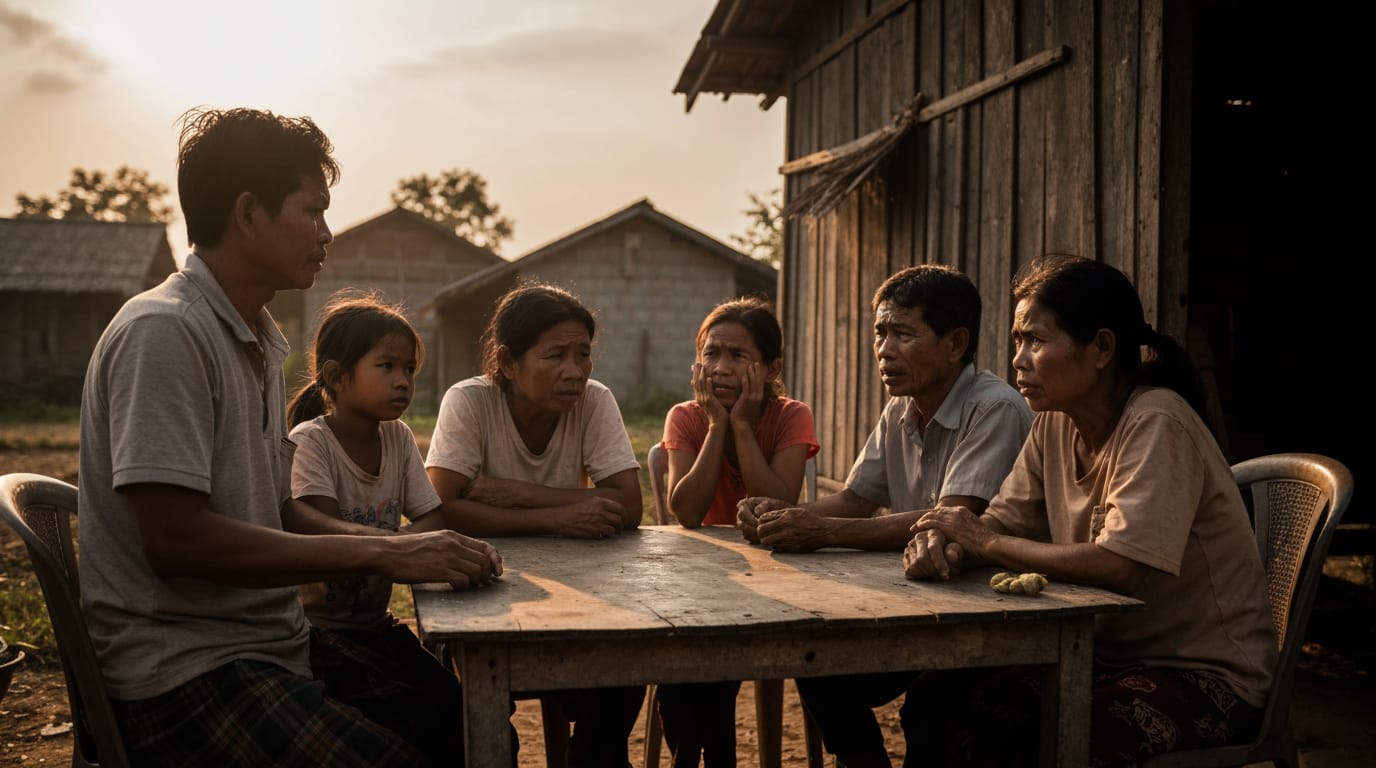
Bangkok, Thailand – A silent economic crisis is quietly tightening its grip across Southeast Asia, as an increasing number of families find themselves ensnared in a spiraling web of household debt. What was once seen as a pathway to financial inclusion has, for millions, devolved into profound financial stress, threatening to undermine regional stability and long-term economic growth. From the bustling streets of Bangkok to the rural villages of Cambodia, households are borrowing not for investment or wealth creation, but often simply to cover basic living expenses, signaling a worrying shift in the region's economic landscape.
The alarm bells are ringing across multiple nations, with analysts cautioning that years of easy credit, stagnant wage growth, and insufficient public services have left millions dangerously exposed. This vulnerability has been acutely highlighted in the post-pandemic era, where economic recovery remains uneven and external shocks continue to impact living costs. The escalating debt burden is not merely an individual problem; it carries significant implications for national economies, banking sectors, and social cohesion.
The Alarming Scale of Indebtedness
The numbers paint a stark picture of the debt crisis unfolding across Southeast Asia. Thailand consistently registers among the highest household debt-to-GDP ratios in the region, with figures reaching 86.8% in 2025 and 91.6% in the fourth quarter of 2023, equating to nearly the entire national economy. This staggering level, valued at approximately $482 billion, positions Thailand behind only South Korea in Asia for household indebtedness. In 2025, Thai debtors were allocating over half of their monthly income to debt servicing, a clear indicator of severe financial strain.
Cambodia, too, faces a particularly acute situation. Its private debt-to-GDP ratio exploded from 24.2% in 2010 to an alarming 134.5% in 2023, representing one of the sharpest expansions in the region. As of December 2025, the average outstanding personal loan per borrower in Cambodia stood around $6,500, a figure drastically out of sync with the garment-sector minimum wage of $208 per month. This rapid credit boom is now colliding with a softer property sector and other economic disruptions.
Other nations are also feeling the pinch. Malaysia's debt-to-GDP ratio reached 84.3% by mid-2025, although housing and car loans constitute about three-quarters of this borrowing, suggesting a different composition of debt compared to Thailand where personal consumption loans are more prevalent. Myanmar is reportedly struggling with chronic household debt, and a study found that over 60% of Southeast Asians generally carry outstanding debt, with Malaysia and Vietnam showing the highest levels of individual indebtedness.
Driving Forces Behind the Debt Spiral
Several interconnected factors are propelling families deeper into debt across the region. A significant driver is the increasing necessity for households to borrow simply to cover basic living expenses. As incomes struggle to keep pace with rising costs of living, many families are forced to turn to credit for essential needs. The lingering economic effects of the COVID-19 pandemic, including job losses and reduced incomes, compelled many to borrow for basic necessities and healthcare. In Malaysia, government-authorized withdrawals from the Employees Provident Fund (EPF) during the pandemic provided immediate relief but significantly depleted retirement savings, potentially forcing individuals to take on more debt later in life.
Improved financial inclusion, while generally a positive development, has also contributed to the rise in household debt. The increased digitalization of banking services has made credit more accessible, particularly in countries like the Philippines, Indonesia, and Vietnam. However, this access has not always been matched by a corresponding increase in financial literacy, with roughly one in four Southeast Asians lacking personal finance education. This disparity can lead to over-borrowing and a misunderstanding of repayment obligations. In Thailand, for instance, a lack of a comprehensive credit registry has enabled "overborrowing" as banks may not be fully aware of a borrower's total liabilities, including informal loans.
Microfinance, intended to uplift the poor, has in some cases become a trap. In Cambodia, 3.8 million households held over 3.1 million microloans worth more than $18 billion. Many of these loans were taken to cover essential healthcare services, highlighting a gap in public welfare provisions. Similarly, a 2025 UN study in urban Myanmar noted that 23% of households borrowed to cover medical costs.
Cultural values also play a role. The strong desire to own property in many Southeast Asian cultures, viewed as a symbol of success and stability, often leads individuals to take on substantial debt. Additionally, families are increasingly incurring debt for educational purposes, aiming to secure a better future for their children. However, the mismatch between educational loan debt and often low starting salaries for graduates can create a heavy financial burden early in their careers. Small and medium-sized enterprises (SMEs), which form the backbone of many Southeast Asian economies, have also increased their borrowing to sustain businesses amidst geopolitical tensions and rising inflation, risking higher debt stress if interest rates climb.
Macroeconomic factors further complicate the situation. While lower inflation can allow for larger borrowing amounts due to reduced real value of debt, elevated interest rates, like those seen after the Philippines' central bank raised borrowing costs, strain repayment capacity. Structural economic changes, such as deindustrialization in Malaysia leading to job precarity and a reliance on consumption-led services, also contribute to unstable incomes and increased dependence on credit.
The Human Cost and Economic Ripple Effects
The growing debt burden has profound human and economic consequences. On a personal level, families face reduced quality of life, increased mental health challenges, and social instability. The vulnerability of heavily indebted households to interest rate hikes or job losses can trigger a cascade of defaults. This means less savings for education, healthcare, or retirement, potentially hindering intergenerational upward mobility. Desperate individuals might even be forced into dangerous activities like working in brick kilns or scam centers to repay debts, as seen in Cambodia, or become more susceptible to scams.
Economically, high household debt acts as a significant drag on consumption and investment, impeding national economic recovery. In Thailand, this has led to chronically weak consumption, prompting repeated government stimulus attempts. The International Monetary Fund (IMF) has warned that Thailand's soaring household debt is significantly impeding its post-pandemic recovery and dampening consumer spending. The risk of widespread defaults can also weaken banks' balance sheets, leading to a tightening of credit availability and creating a vicious cycle of financial distress and economic contraction. This concern is underscored by the rise in non-performing loans (NPLs) in the retail segment, increasing from 1.9% to 2.3% across ASEAN economies from 2019 to 2023, with Vietnam and the Philippines experiencing significant deterioration.
Navigating the Debt Crisis: Policy Responses and Outlook
Governments and financial institutions across Southeast Asia are beginning to acknowledge the severity of the household debt crisis and are implementing measures to mitigate its impact. Thailand, in particular, has launched several initiatives. Its cabinet approved debt support measures including interest suspensions and reduced principal payments, aiming to benefit approximately 1.9 million borrowers with about 890 billion Thai Baht ($26.28 billion USD) in outstanding loans. The "Quick Debt Settlement for a Fresh Start" scheme, involving asset management companies purchasing bad loans from banks and restructuring them with favorable terms, seeks to clear up to two million debtor accounts. The Thai government also proposed a 20 billion Thai Baht bailout fund to purchase small-scale non-performing loans (under 100,000 Thai Baht). These efforts are part of a broader project named "You Fight, We Help," which emphasizes both debtor responsibility and institutional support.
In Malaysia, amidst rising personal bankruptcies, particularly among young adults and seniors due to personal loans, the central bank (Bank Negara Malaysia) is tightening lending rules and plans to require financial education for large loans. This aims to foster more responsible borrowing and reduce future debt problems.
Analysts emphasize that a comprehensive, multi-pronged approach is essential. This includes not only immediate debt relief measures but also addressing the underlying causes. Strengthening social protection measures, enhancing financial literacy, ensuring responsible lending guidelines, and stimulating the creation of stable, higher-paying jobs are crucial for long-term solutions. Learning from international examples, such as Brazil's successful debt negotiation facilitation and Malaysia's post-2008 financial crisis implementation of responsible lending guidelines, could provide valuable lessons.
Conclusion
The rising tide of household debt in Southeast Asia presents a complex and urgent challenge. While improved financial access has connected more people to formal credit systems, it has also, in the absence of robust financial literacy and sufficient income growth, pushed many families into precarious financial positions. The human stories behind the statistics reveal struggles to afford basic necessities, healthcare, and education, often leading to a cycle of poverty and vulnerability. As regional economies strive for sustained growth and resilience, effectively managing and reducing this burgeoning household debt will be paramount to ensure inclusive development and prevent widespread financial instability. The collaborative efforts of governments, financial institutions, and individuals will be critical in steering Southeast Asia away from this potential crisis and towards a future of greater economic security for its citizens.


