Southeast Asia Navigates Geopolitical Tides: Boosting Defense Ties While Upholding Strategic Autonomy
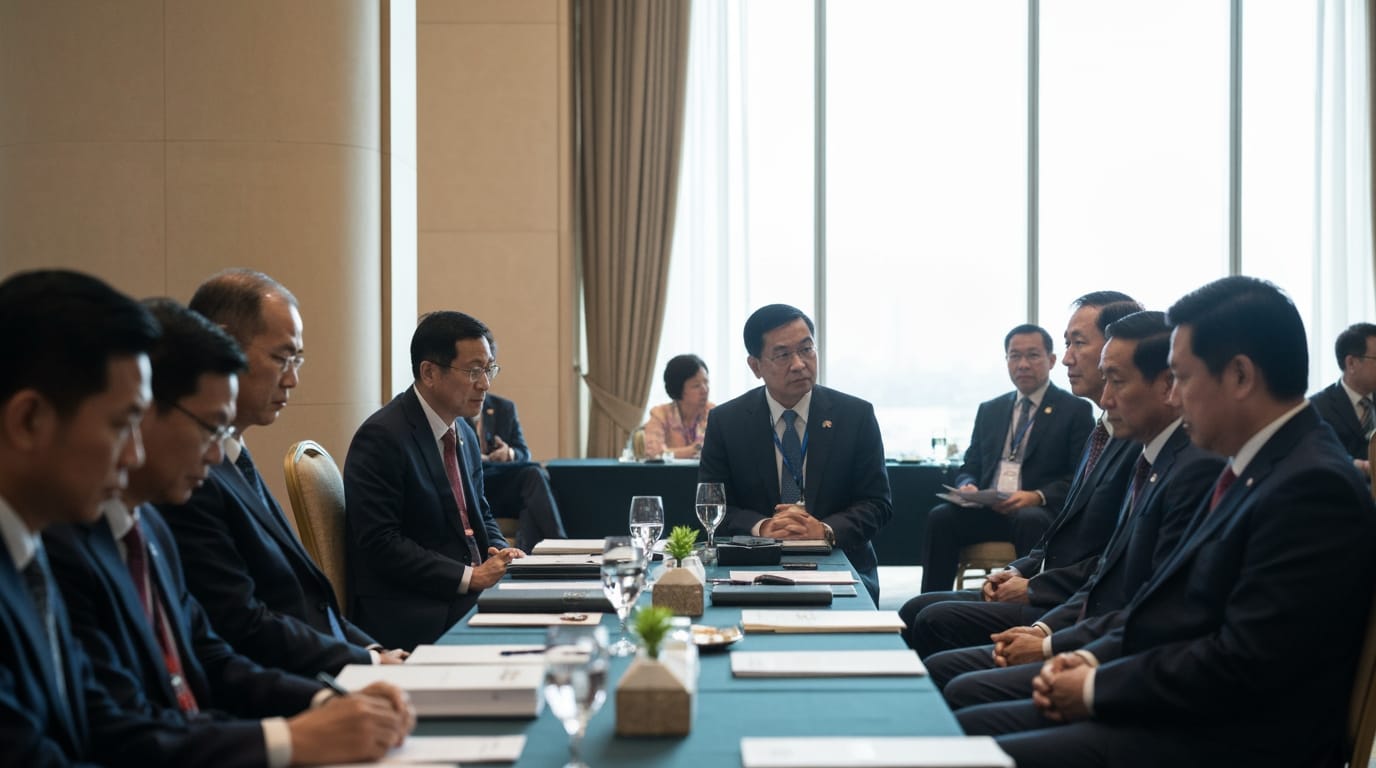
SINGAPORE – In an increasingly volatile geopolitical landscape marked by escalating great power competition, nations across Southeast Asia are engaged in a delicate balancing act, significantly enhancing their defense capabilities and deepening security cooperation with various partners while steadfastly avoiding formal military alliances. This strategic posture, rooted in a long-standing commitment to non-alignment, aims to safeguard national interests, maintain regional stability, and preserve independence amid the competing influences of global powers.
The approach reflects a pragmatic recognition of complex regional challenges, from persistent maritime disputes in the South China Sea to the growing imperative for humanitarian assistance and disaster relief. Rather than committing exclusively to one bloc, Southeast Asian states are diversifying their defense partnerships, engaging with a wide array of external actors including the United States, China, Australia, Japan, India, and South Korea, to build resilience and enhance their military modernization efforts. This nuanced strategy allows countries to access advanced military technology, foster interoperability, and strengthen defense capacities through joint training and logistical support, without compromising their strategic autonomy.
The Enduring Principle of Non-Alignment
The Association of Southeast Asian Nations (ASEAN), founded in 1967, has consistently abstained from forming a formal defense or security alliance, distinguishing itself from blocs like NATO. This principle is deeply embedded in the region's diplomatic history, tracing back to the Non-Aligned Movement of the Cold War era, where countries sought independence from the US-led and Soviet-led blocs. For many Southeast Asian nations, particularly Indonesia with its "bebas-aktif" (independent and active) foreign policy doctrine, avoiding exclusive alignments remains a cornerstone of national policy, rejecting overt commitments to competing geopolitical forces.
This non-alliance stance is driven by several critical factors. A primary concern is to prevent being drawn into the direct rivalry between the United States and China, which dominates contemporary global power dynamics. Forming a binding alliance with either superpower could provoke the other, destabilizing the region and limiting a nation's policy options. Furthermore, many ASEAN member states prioritize economic development and trade, viewing deep military alliances as potentially disruptive to these crucial national objectives. The historical sensitivities and occasional internal conflicts among ASEAN members also make a unified military pact challenging to achieve.
Diversifying Partners and Practical Cooperation
While eschewing formal alliances, Southeast Asian nations are actively forging robust defense cooperation agreements that allow for flexibility and mutual benefit. These arrangements typically involve joint exercises, military training, intelligence sharing, and defense procurement, without legally binding participants to mutual defense obligations. The goal is to build trust, enhance interoperability, and address shared security concerns collaboratively.
Examples of this diversified engagement are abundant. Maritime states like the Philippines, Indonesia, and Singapore have been particularly active in new defense cooperation initiatives since 2017, reflecting the strategic importance of the maritime domain. The Philippines, a treaty ally of the United States, has also sought greater assistance from partners like Japan, Australia, and South Korea to bolster its naval capabilities in the face of escalating tensions in the South China Sea. Indonesia and Vietnam, for instance, have strengthened bilateral defense ties, agreeing on Exclusive Economic Zone (EEZ) boundaries and conducting joint coast guard exercises. Similarly, Malaysia conducts joint military exercises with Australia and the United States, even as it maintains multifaceted ties with China.
Middle powers such as Australia, India, and Japan have emerged as significant defense partners, collectively signing more defense agreements with Southeast Asian countries than the United States and China combined in recent years. These partnerships often focus on capacity-building, training, and technology cooperation, driven by shared interests in maintaining freedom of navigation and overflight, and concerns over China's growing influence. Even Russia has seen an expansion of ties, with ASEAN members engaging in diplomatic and economic relations while carefully managing their positions on broader international issues.
Geopolitical Pressures and Regional Responses
The heightened defense cooperation is largely a direct response to intensifying regional security challenges. China's increasing assertiveness in the South China Sea, particularly its expansive maritime claims and militarization of artificial islands, remains a primary concern for several Southeast Asian nations, including Vietnam, the Philippines, Malaysia, and Brunei. These actions have prompted affected states to seek external partners to bolster their strategic position and deter aggression, while still trying to avoid direct confrontation.
Beyond the South China Sea, broader geopolitical competition between the United States and China influences regional defense strategies. Southeast Asian countries find themselves strategically important due to their economic relevance and geographic proximity to China. The pursuit of multi-alignment allows them to engage with both superpowers and other significant players, enhancing their own capabilities without becoming proxies in a larger power struggle.
Regional initiatives also play a crucial role. The ASEAN Outlook on the Indo-Pacific (AOIP) provides a framework for enhancing cooperation and stability, guiding member states to adopt a coordinated approach to complex security challenges. The first-ever ASEAN Solidarity Exercise (ASEX 2023), led by Indonesia, exemplified this approach, focusing on non-combat activities such as humanitarian assistance, disaster relief, maritime security, search and rescue, and anti-piracy operations, rather than traditional warfare. These exercises foster trust and capability building among ASEAN militaries without external involvement, signaling the bloc's collective agency in regional security.
The Future of Southeast Asian Security
The current trajectory suggests that Southeast Asia will continue to navigate its security landscape through a strategy of multi-alignment and diversified partnerships. This approach provides a crucial mechanism for maintaining strategic flexibility and autonomy in an era of intense great power rivalry. While some nations, particularly maritime states like the Philippines, Indonesia, and Singapore, are deepening ties with the United States and its allies, others in mainland Southeast Asia might find themselves leaning more towards China and Russia. This potential divergence could risk exacerbating divisions within ASEAN.
Ultimately, the goal for Southeast Asian nations is to create a resilient regional order grounded in international law and sustained through diverse partnerships, rather than through exclusive alliances. By actively engaging with multiple partners, these countries aim to maximize their access to technology, training, and diplomatic support, thereby strengthening their individual and collective security without ceding their independent foreign policy. This complex, yet pragmatic, strategy allows them to pursue their national interests while contributing to the overall stability of one of the world's most dynamic and strategically vital regions.


