Southern Yemen Charts Course for Independence by 2028 Amid Escalating Tensions
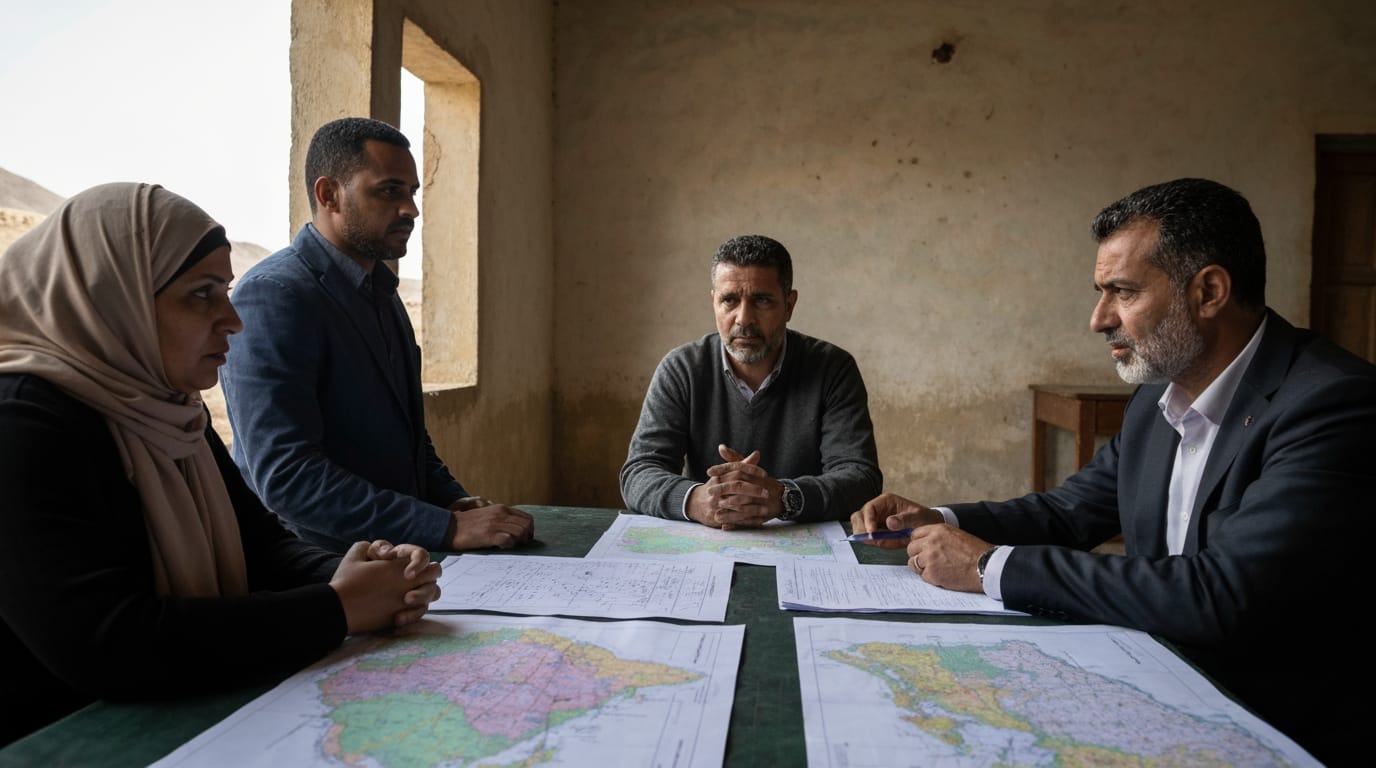
ADEN, Yemen – Southern Yemen's aspirations for self-rule have entered a critical new phase, as the Emirati-backed Southern Transitional Council (STC) formally announced a two-year transitional period leading to a referendum on independence and a constitutional declaration of a sovereign "State of South Yemen" by January 2, 2028. This bold pronouncement, delivered by STC President Aidarous Al-Zubaidi, follows a rapid military offensive that has seen the separatists consolidate control over vast swathes of the country's south, dramatically reshaping the complex landscape of Yemen's decade-long conflict. The move, however, has ignited fresh regional and international concerns, exacerbating fissures within the anti-Houthi coalition and portending a new chapter of uncertainty for the war-torn nation.
A Decades-Old Dream Ignites
The push for southern independence is rooted in a history of distinct identity and political grievances. Prior to 1990, Yemen was divided into two states: the Yemen Arab Republic (North Yemen) and the People's Democratic Republic of Yemen (South Yemen). South Yemen, a socialist state formed after British withdrawal in 1967, maintained a separate political and social trajectory until its unification with the north. However, the subsequent years were marked by perceived marginalization and northern dominance, fueling a resurgence of separatist sentiment that culminated in the formation of the Southern Movement (al-Hirak) in 2007. The Southern Transitional Council, established in May 2017 under the leadership of Aidarous al-Zubaidi, emerged as the most prominent political and military force advocating for the restoration of an independent southern state, often referred to as "South Arabia."
The STC's latest declaration is not an isolated event but rather the culmination of years of strategic maneuvering and military consolidation. The Council has steadily built parallel governing bodies, military, security, and intelligence institutions in areas under its control, primarily centered around the interim capital of Aden. Its influence significantly increased after it formally joined the Presidential Leadership Council (PLC) in April 2022, a body created to govern non-Houthi areas after the resignation of former President Abdrabbuh Mansur Hadi. STC head Aidarous al-Zubaidi holds the position of Vice President within the PLC.
The Path to 2028: A Two-Year Transition
In his televised address on January 2, 2026, Al-Zubaidi outlined a precise timeline for achieving self-determination. The next two years are designated as a transitional period during which the STC will administer southern areas. This phase is designed to conclude with a constitutional declaration on January 2, 2028, establishing an independent South Yemen. Following this, a popular referendum on self-determination is planned, aiming to be conducted through peaceful and transparent mechanisms in line with international standards.
However, Al-Zubaidi also warned that the constitutional declaration could take effect even earlier if the STC's "calls go unheeded, or if the people, territory or forces of southern Yemen are subjected to any military aggression." This caveat underscores the volatile security environment and the STC's determination to press ahead with its agenda, regardless of external pressure. The STC views its vision of a unified South, shielded from Houthi influence and capable of harnessing oil and gas revenues, as the only realistic future for the region.
Recent Gains and Regional Rifts
The STC's announcement comes on the heels of a significant military offensive in December 2025, which saw its forces seize control of key territories, including the resource-rich Hadramout and Mahra provinces in eastern Yemen. This "lightning offensive" effectively brought most of the former South Yemen under STC control, solidifying its de facto authority over approximately 52% of Yemen's territory and much of its oil production. The operation was widely seen as a significant setback for Saudi ambitions in the region, with reports suggesting that the advance often resembled a "handover" rather than intense fighting, as some government-affiliated tribal forces ceded control.
This rapid expansion has deeply strained relations between Saudi Arabia and the United Arab Emirates, nominal allies in the broader anti-Houthi coalition. Saudi Arabia, which backs Yemen's internationally recognized government, has condemned the STC's unilateral actions as a "blatant violation" of transitional frameworks and a threat to its national security. Riyadh responded with airstrikes on STC positions in Hadramout and has demanded the withdrawal of separatist forces from newly seized areas, advocating for a return to dialogue. Conversely, the UAE has been a steadfast supporter of the STC, with Saudi Arabia accusing Abu Dhabi of supplying weapons to the separatists, a charge that has widened the rift between the Gulf powers. The ongoing dispute has the potential to create further civil strife within southern Yemen and destabilize the broader region.
Challenges on the Path to Statehood
Despite the STC's advancements and clear roadmap, the path to an independent South Yemen is fraught with significant challenges. Internally, the STC faces historical tensions and rivalries among various southern factions and tribal leaders, particularly in Hadramout and Mahra, where its authority is not universally accepted. Some local leaders have objected to the STC's takeover, raising doubts about the stability and continuity of its rule without broad local support. An independent South would also inherit an economy devastated by more than a decade of conflict, characterized by an empty treasury, collapsing currency, rampant inflation, and insufficient public services.
Furthermore, the STC's ambition confronts considerable regional and international opposition. The United Nations Security Council has consistently reiterated its strong commitment to Yemen's unity, sovereignty, and territorial integrity, indicating a reluctance among global powers to recognize a fragmented state. Achieving international recognition for an independent South Yemen would likely require navigating complex diplomatic channels and securing the approval of key regional and global actors, a process that extends beyond mere military control on the ground. The presence of extremist groups like Al-Qaeda in the Arabian Peninsula (AQAP) and ISIS, alongside the ongoing conflict with the Houthi movement in the north, further complicates the security landscape and raises concerns about regional stability.
Conclusion
The Southern Transitional Council's declaration of a two-year roadmap to independence by 2028 marks a pivotal moment in Yemen's tumultuous history. While the STC has demonstrated its resolve and significantly expanded its territorial control, the journey toward establishing a sovereign South Yemen faces formidable political, economic, and security hurdles. The escalating tensions with Saudi Arabia, the humanitarian crisis gripping the nation, and the absence of broad international endorsement paint a complex picture for the region's future. As the STC presses forward, the coming years will determine whether its long-held dream of independence can translate into a stable, internationally recognized state amidst the enduring fragmentation of Yemen.