SpaceX Starship Explodes Minutes After Launch, Scattering Debris
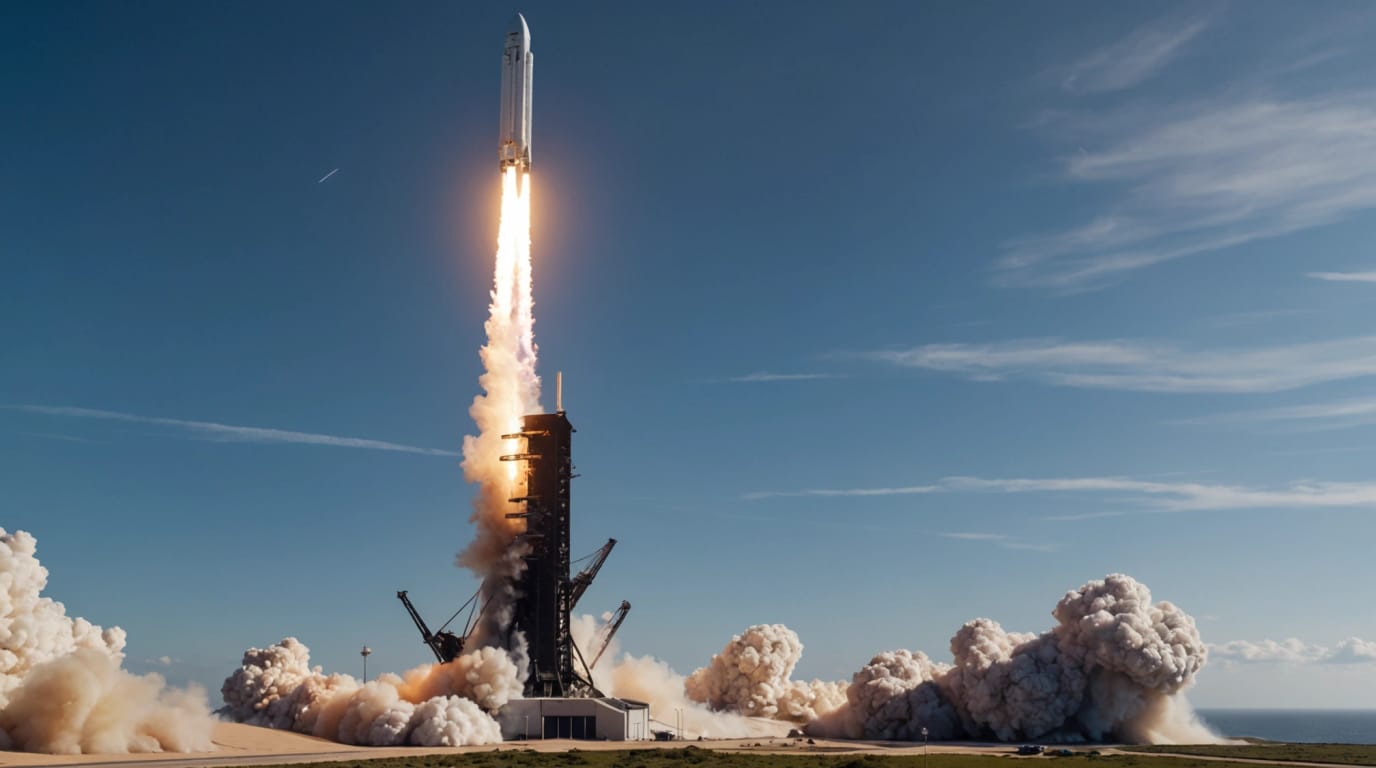
SpaceX's Starship, the world's largest and most powerful rocket, experienced a "rapid unscheduled disassembly" minutes after its launch on Thursday, marking another setback for Elon Musk's ambitious interplanetary program. The failure occurred during the ascent burn, resulting in a spectacular explosion and scattering debris across the skies of South Florida and the Bahamas. This incident follows a similar outcome in January, raising concerns about the vehicle's reliability and its critical role in NASA's future lunar missions.
The Eighth Integrated Flight Test
The launch, designated as the eighth integrated flight test (IFT-8), aimed to release mock satellites into space. The 403-foot (123-meter) rocket lifted off from SpaceX's launch site in Boca Chica, Texas. Initial stages of the flight appeared successful, with the first-stage booster separating and returning to the launch pad, where it was caught by the giant mechanical arms, also known as "chopsticks," for the third time. This successful booster recovery was a positive milestone in the test.
However, shortly after stage separation, problems began to emerge. SpaceX's livestream showed the Starship spacecraft tumbling uncontrollably in space. According to SpaceX communications manager Dan Huot, the vehicle lost attitude control due to the shutdown of several engines. "You can see we've lost several engines and we've lost attitude control for the vehicle," Huot stated during the livestream. "Once you lose enough of those center engines, you're going to lose attitude control." Contact with the ship was subsequently lost.
Rapid Unscheduled Disassembly
The loss of control culminated in a dramatic explosion. Videos circulating on social media captured fiery debris streaking across the sky as the remnants of the spacecraft re-entered the Earth's atmosphere. SpaceX officially acknowledged the incident, stating that the vehicle "experienced a rapid unscheduled disassembly" during its ascent burn. The company also said that it immediately began coordinating with safety officials to implement pre-planned contingency responses.
The Federal Aviation Administration (FAA) has launched a mishap investigation to determine the root cause of the explosion and identify corrective actions to prevent future incidents. As a precautionary measure, the FAA issued temporary ground stops at several Florida airports, including Miami International Airport and Fort Lauderdale–Hollywood International Airport, due to the risk of falling debris. These ground stops have since been lifted, but departure delays of approximately 45 minutes were reported. Palm Beach International Airport and Orlando International Airport were also affected.
Implications for Future Missions
The Starship program is central to NASA's plans to return astronauts to the moon in the coming years under the Artemis program. Starship is intended to serve as the lunar lander for the Artemis III mission, currently scheduled for late 2025. The repeated failures of the Starship upper stage raise concerns about the feasibility of meeting this timeline.
Despite the setbacks, SpaceX remains optimistic. In a statement, the company emphasized that "success comes from what we learn, and today's flight will offer additional lessons to improve Starship's reliability." SpaceX plans to review the data from the flight test to understand the root cause of the failure and implement necessary improvements.
Echoes of the January Test Flight
Thursday's incident bears similarities to the seventh integrated flight test conducted in January. During that test, a fire developed above the Super Heavy first-stage engines, and contact was lost approximately eight minutes and 20 seconds after launch. The rocket's self-destruct system was triggered three minutes later, resulting in an explosion that scattered debris along the flight path.
An investigation into the January failure revealed that leaking fuel caused fires, which led to the shutdown of the spacecraft's engines. SpaceX implemented several upgrades to the spacecraft following the incident, and the FAA subsequently cleared Starship for another launch.
A Pattern of Explosions
SpaceX's Starship program has faced a series of challenges and setbacks, with several previous test flights ending in explosions. While these failures are part of the iterative development process for complex space vehicles, they highlight the inherent risks and difficulties of space exploration.
In December 2020, a Starship prototype exploded upon landing after a high-altitude test flight. In February 2021, another prototype exploded during a landing attempt. And in May 2021, a Starship prototype exploded after a successful landing.
Despite these setbacks, SpaceX has consistently learned from each failure and implemented improvements to the Starship design. The company's rapid iteration and testing approach has been instrumental in its success in other areas of spaceflight, such as the development of the Falcon 9 rocket.
The Path Forward
The latest Starship explosion represents a significant challenge for SpaceX and NASA. The FAA's mishap investigation will be crucial in identifying the root cause of the failure and determining the necessary corrective actions. SpaceX will need to address the reliability issues with the Starship upper stage to ensure the success of future missions, including NASA's Artemis program.
Despite the setbacks, Elon Musk remains committed to the Starship program and its ambitious goals of interplanetary travel. In a tweet following the explosion, Musk stated that SpaceX will "be right back here in the not-too-distant future" to continue testing and development. The company's determination and its track record of overcoming challenges suggest that the Starship program will continue to evolve and push the boundaries of space exploration.
Conclusion
The explosion of SpaceX's Starship minutes after launch marks another significant setback for the program. While the successful recovery of the first-stage booster represents a positive step, the failure of the upper stage raises concerns about the vehicle's reliability and its impact on future missions, particularly NASA's Artemis program. The FAA's investigation will be critical in determining the cause of the explosion and guiding the necessary corrective actions. Despite the challenges, SpaceX remains committed to the Starship program and its ambitious goals of revolutionizing space travel. The road to Mars may be long and fraught with difficulties, but SpaceX's unwavering determination suggests that it will continue to push the boundaries of what is possible in space exploration.


