Spain Reels from Dual Rail Disasters as Calls for Safety Mount
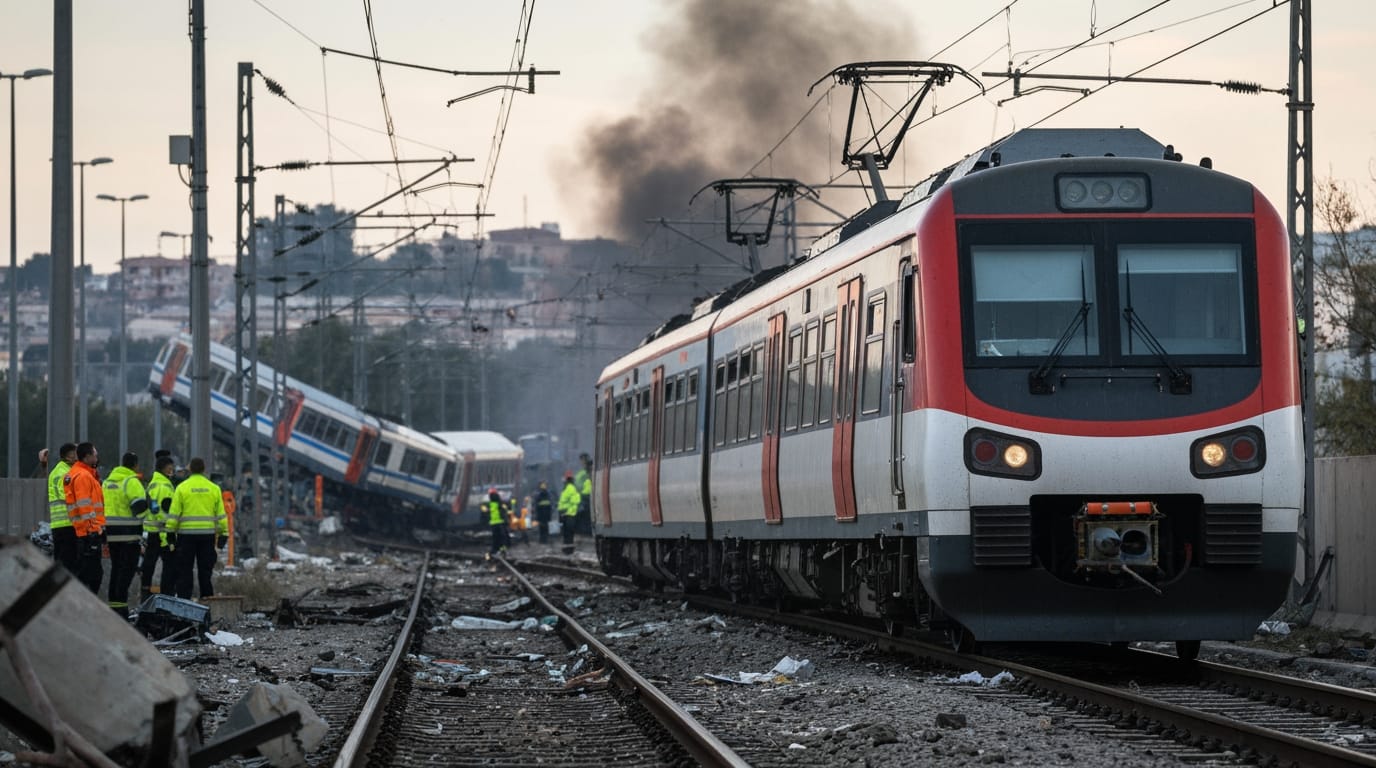
MADRID – Spain is confronting a somber period of national mourning and intense scrutiny following two devastating train accidents within days, which have claimed dozens of lives and left scores injured. The tragedies, occurring on January 18 and January 20, have shaken public confidence in the nation's advanced rail network and prompted urgent calls for comprehensive safety reviews. The incidents underscore a critical moment for Spanish railway authorities as they grapple with the aftermath and the pressing need to prevent future catastrophes.
Adamuz: A High-Speed Collision Shakes the Nation
The series of devastating events began on Sunday, January 18, when a high-speed passenger train derailed near Adamuz, in the province of Córdoba, Andalusia. The train, an Iryo 6189 traveling from Malaga to Madrid with approximately 300 passengers, reportedly went off the rails, leading to a catastrophic collision with an incoming Renfe train, set number 2384, traveling from Madrid to Huelva. Initial reports indicated at least 39 fatalities, with the death toll later rising to 43, making it Spain's deadliest rail accident in over a decade. Additionally, 292 individuals were injured, 15 of whom remained in critical condition.
The collision occurred at approximately 7:45 p.m. on a straight section of track that had undergone refurbishment in May 2025. The tail end of the Malaga-bound train derailed, subsequently being struck by the head of the Madrid-bound train. Spanish Transport Minister Óscar Puente noted that the head of the second train, carrying nearly 200 passengers, bore the brunt of the impact, with its first two carriages knocked off the track and sent plummeting down a 13-foot slope. Emergency services faced immense challenges, with the accident site located in rolling, olive-growing countryside accessible only by a single-track road, complicating the deployment of heavy machinery for rescue and recovery efforts. Cranes were utilized in the days following the crash to access the most severely damaged carriages and recover remains, with some bodies discovered hundreds of feet from the impact site amidst a mass of twisted metal. Both trains were reportedly traveling below the speed limit of 250 kilometers per hour, leading officials to initially rule out human error in this specific incident.
Gelida: Commuter Train Hits Collapsed Wall Amidst Storms
Just two days later, on Tuesday, January 20, Spain was struck by a second fatal rail incident. A commuter train operating on the Rodalies network in Gelida, Catalonia, approximately 32 kilometers west of Barcelona, derailed after striking a retaining wall that had collapsed onto the tracks. The incident, which occurred shortly after 8:00 p.m. GMT, claimed the life of the train's driver and injured at least 37 other individuals, with five reported to be in serious condition. Heavy storms battering northeastern Spain, including coastal areas under high alert, are believed to have contributed to the collapse of the wall.
The derailment caused significant damage to the first carriage, where the majority of the injured passengers were traveling. Among the deceased was a trainee driver, with two other trainees in the cab at the time also sustaining serious injuries. Rescue teams worked through the night, taking nearly an hour to extricate one survivor trapped in the damaged carriage. In the wake of this accident, all services across Catalonia's Rodalies commuter rail network were suspended to allow for safety checks, affecting an estimated 400,000 commuters. Spanish railroad operator ADIF confirmed the suspension, stating that services would not resume until lines were deemed safe following comprehensive infrastructure inspections. A separate, minor derailment involving another Barcelona commuter train with no serious injuries was also reported on Tuesday.
A Nation in Anguish and Demands for Accountability
The back-to-back tragedies have plunged Spain into a period of profound grief and sparked a national debate about the safety and maintenance of its extensive railway system. The country had just entered a three-day period of national mourning for the Adamuz victims when the Gelida accident occurred. The European Union and various European governments expressed their condolences, with leaders like Ursula von der Leyen and António Costa conveying their dismay.
Public reaction has been one of shock and growing concern. The Spanish train drivers' union, Semaf, announced a three-day nationwide strike for February 9-11, demanding immediate measures to guarantee railway safety for both staff and passengers. The union stated that the two disasters "represent a turning point" and highlighted previous unanswered reports about the "poor state of the tracks" that had been made over "months, even years."
Transport Minister Óscar Puente acknowledged the drivers' concerns but disagreed with the general strike, vowing to negotiate to avert it. He maintained that the two accidents were "completely unrelated," attributing the Barcelona-area incident to weather conditions. However, the conservative opposition Popular Party has called for an "immediate clarification" from the government, reflecting growing political pressure. Passengers, like Raluca Maria Pasca, a 45-year-old waitress, have noted that high-speed trains "have been shaking lately," echoing broader anxieties.
The Path Forward: Investigations and Restoring Trust
Investigations into both accidents are ongoing. For the Adamuz collision, early indications suggest a faulty rail joint might be a key factor in the derailment that precipitated the collision. The Spanish Union of Railway Drivers had, in August, sent a letter to the rail operator requesting investigations into flaws on train lines due to increased usage and recommending speed reductions until repairs were completed, including on high-speed lines. The Iryo train involved in the Adamuz crash was relatively new, manufactured in 2022, and had passed a safety check on January 15, just days before the disaster.
The confluence of these tragic events poses a significant challenge to Spain, a nation proud of its modern and extensive high-speed rail network, the second-largest globally. The accidents not only represent immense human cost but also deal a severe blow to Spain's image as a high-tech railway nation. The outcomes of the ongoing investigations will be crucial in determining the precise causes and in shaping future safety protocols. The government and railway operators face the monumental task of restoring public confidence and ensuring that the necessary improvements are implemented across the national rail infrastructure.
The immediate focus remains on supporting the victims and their families, with emergency response centers established and efforts to identify victims continuing. Beyond the immediate aftermath, the country confronts a critical juncture for its railway system, where comprehensive safety audits, infrastructure upgrades, and transparent accountability will be paramount to prevent further loss of life and to reaffirm the integrity of Spain's rail transport.


