Spanish Prime Minister's Wife Formally Charged in Sprawling Corruption Probe
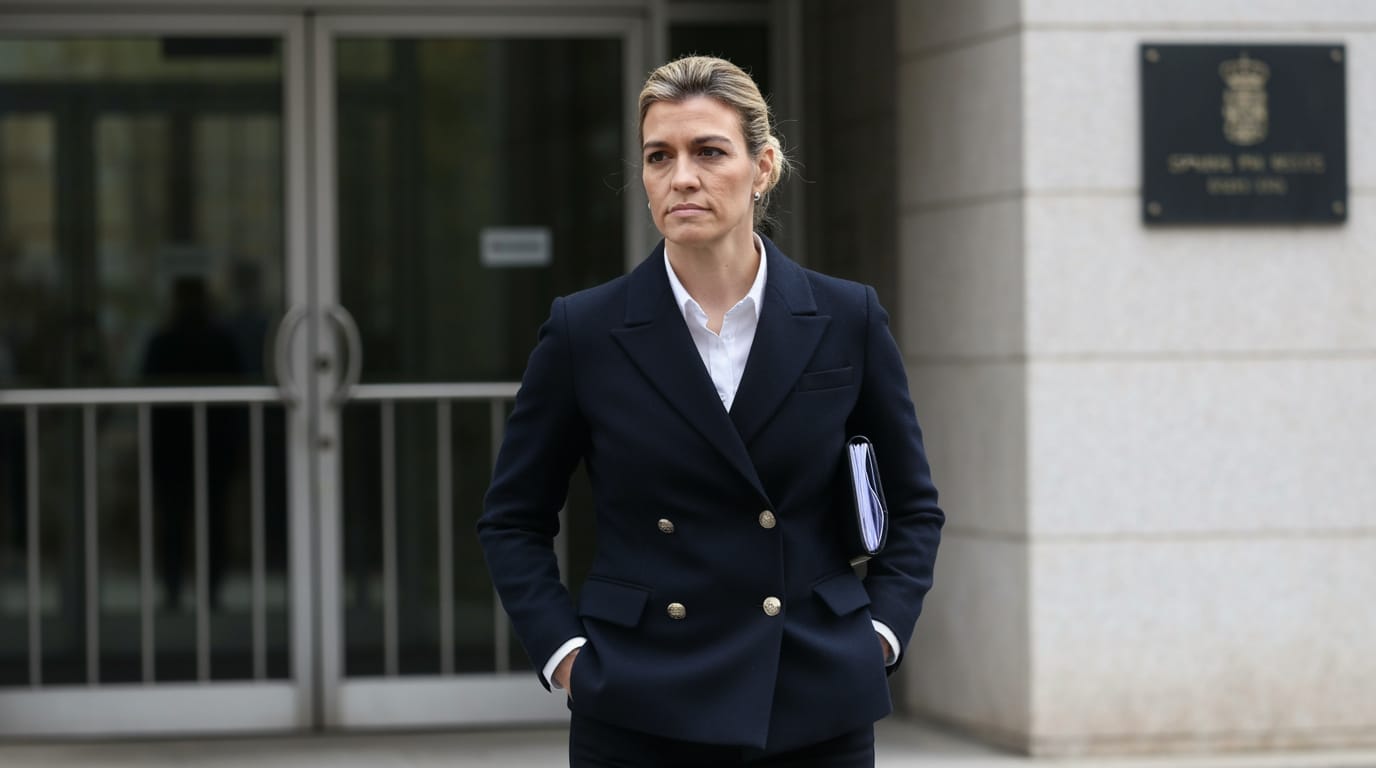
MADRID, Spain – Begoña Gómez, the wife of Spanish Prime Minister Pedro Sánchez, has been formally charged with corruption, influence peddling, embezzlement, and misappropriation of funds, a development that significantly escalates a years-long criminal investigation and injects fresh instability into Spain's political landscape. The charges, made public in a court ruling on Monday, April 13, 2026, follow an extensive probe into whether Gómez leveraged her position as the prime minister's spouse for private financial gain. The ruling moves the case closer to a full trial, marking a critical moment for Sánchez's Socialist-led minority government already grappling with a series of high-profile corruption allegations involving his inner circle.
The Allegations: Exploiting Influence for Private Gain
Judge Juan Carlos Peinado opened the investigation into Gómez in April 2024, aiming to determine if she had exploited her unique relational position for personal benefit. The core of the judicial inquiry centers on her involvement with a chair at Madrid's Complutense University. According to the judge, this academic position served as a "facade" for "concealed remuneration for future benefits" linked to the Spanish government, further noting Gómez's alleged "lack of relevant qualifications" for the role. Investigators allege Gómez used public resources and her personal connections to advance private interests, offering companies a competitive advantage due to her proximity to the government.
Specific allegations include her ties to companies that subsequently received public support. Notably, her interactions with Globalia, the Spanish tourism group that owns Air Europa, have come under scrutiny. Gómez reportedly met with Javier Hidalgo, Air Europa's chief executive, while the airline was in discussions with the government for a substantial €475 million pandemic bailout. The embezzlement charge also scrutinizes whether Cristina Álvarez, an official in the premier's office, performed duties for Gómez related to her academic work at Complutense University, potentially at the expense of her public responsibilities. Judge Peinado cited emails sent by Álvarez to third parties that "clearly seem to exceed her duties" and indicated that Álvarez's appointment was due to her "personal friendship" with Gómez, representing a "diversion of public resources in favour of private interests."
Origin of the Complaint and Judicial Process
The initial complaint against Gómez was filed by Manos Limpias, or "Clean Hands," an anti-corruption group with documented ties to the far-right. The group later acknowledged that its accusations were based solely on media reports, conceding that these journalistic accounts "could be false." Despite these admissions and a request from Madrid's prosecuting authority to dismiss the case due to a lack of evidence, Judge Peinado overruled the appeal and proceeded with the investigation.
After a two-year inquiry, Judge Peinado concluded there were "sufficient indications of criminal conduct" by Gómez, 55, leading to the formal charges and the decision to send the case to trial. The judge's ruling, dated April 11, 2026, details the specific counts of embezzlement, influence peddling, corruption in business dealings, and misappropriation of funds. The next phase will involve the courts determining if Gómez will stand trial, potentially before a jury, as is customary for serious offenses under Spanish law. Gómez has consistently denied any wrongdoing, and her legal team is expected to appeal the judge's decision.
Political Fallout and Premier Sánchez's Defense
The formal charges against Begoña Gómez have intensified political pressure on Prime Minister Pedro Sánchez and his government. The timing of the announcement, coinciding with Sánchez and Gómez's official visit to China, drew strong criticism from the government, which described it as "deliberate and politically motivated." Sánchez himself has vehemently defended his wife, dismissing the allegations as a "mud-slinging campaign" orchestrated by the right-wing and far-right to undermine his administration.
This is not the first time the investigation has tested Sánchez's political resolve. When the probe was initially launched in April 2024, Sánchez suspended his public duties for five days to "stop and reflect" on his future, even considering resignation. Ultimately, he chose to remain in office, asserting that the accusations were unfounded and politically driven. He has also controversially accused Spanish judges of political bias. Justice Minister Félix Bolaños echoed this sentiment, stating that the investigation had "embarrassed many citizens and judges" and warned of "irreparable" damage to the judiciary's reputation.
Broader Implications and Related Probes
The case against Begoña Gómez is unfolding amidst a turbulent political climate in Spain, with Sánchez's Socialist-led minority government already facing multiple corruption inquiries involving his family and former close allies. His brother, David Sánchez, is also under investigation for alleged influence peddling related to his hiring by a regional government. Furthermore, José Luis Ábalos, Sánchez's former right-hand man and transport minister, went on trial earlier this month over alleged kickbacks linked to public contracts for sanitary equipment during the COVID-19 pandemic.
Opposition parties have seized on these developments, consistently calling for Sánchez's resignation and highlighting the perceived ethical breaches within his administration. The current charges against the prime minister's wife come after a series of electoral setbacks for the Socialist party in regional elections, further intensifying the political stakes ahead of next year's general election. The situation has drawn comparisons to other politically charged corruption cases in Europe, underscoring the deep impact such probes can have on public trust and governmental stability.
Conclusion: Awaiting Legal Resolution
The formal charges against Begoña Gómez mark a significant escalation in a case that has captivated and polarized Spanish public opinion. While Gómez and Prime Minister Sánchez maintain her innocence, attributing the allegations to a politically motivated smear campaign, the judicial system has deemed there are sufficient grounds for a potential trial. The coming months will likely see a vigorous legal battle as Gómez's defense challenges the charges, while the prosecution prepares its case. Regardless of the ultimate legal outcome, the ongoing investigation and the political turbulence it has generated are poised to leave a lasting imprint on Spain's political landscape, potentially reshaping public confidence in its institutions and setting the stage for an intensely contested electoral cycle.


