States Unite: 25 Challenge Trump Administration's Latest Tariffs in Federal Court
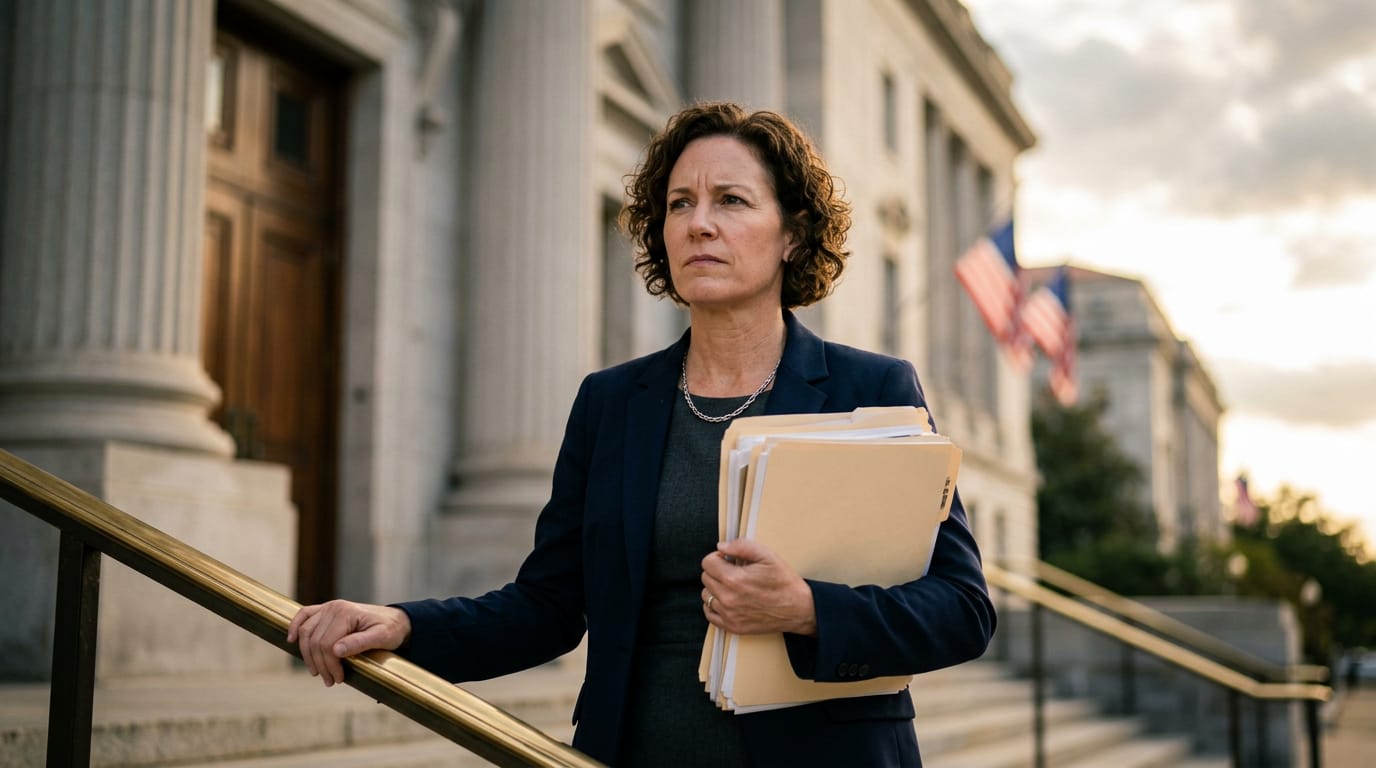
A formidable coalition of 25 U.S. states launched a new legal offensive against the Trump administration on Monday, August 3, filing a lawsuit in the U.S. Court of International Trade. The states contend that the administration's recently imposed tariffs, targeting 60 economies with duties ranging from 10% to 12.5%, represent an unlawful overreach of presidential authority. This legal action marks the third time states have challenged the administration's broad tariff policies, which they argue are a "pretext" for reinstating import taxes previously struck down by federal courts.
The comprehensive lawsuit seeks to halt the implementation of these new duties, declare them unlawful, and mandate refunds for any tariffs already collected. State attorneys general and governors involved in the challenge assert that the tariffs, enacted under Section 301 of the Trade Act of 1974, are not genuinely aimed at combating forced labor—the administration's stated justification—but rather serve as an end-run around prior judicial defeats. The legal battle underscores a persistent constitutional dispute over the executive branch's power to unilaterally impose significant taxes on imported goods.
A Pattern of Presidential Overreach, States Allege
This latest legal confrontation is rooted in a series of judicial setbacks for the Trump administration's tariff agenda. In February 2026, the U.S. Supreme Court delivered a decisive blow, ruling that the International Emergency Economic Powers Act (IEEPA), which President Trump had previously invoked, did not grant the president the authority to unilaterally impose such wide-ranging tariffs. This ruling necessitated the administration to refund importers for duties collected under the IEEPA.
Undeterred, President Trump subsequently implemented temporary 10% tariffs worldwide, citing Section 122 of the Trade Act of 1974 as the legal basis. However, this move also faced swift legal challenges from state attorneys general. In May 2026, the U.S. Court of International Trade ruled that these Section 122 tariffs were unlawful, specifically blocking their application for states like Washington. These temporary tariffs expired in July, setting the stage for the administration's current strategy. California Attorney General Rob Bonta emphasized the repeated nature of these challenges, stating, "This is President Trump's third attempt to illegally impose tariffs that would make life more expensive for American families and small businesses, and this is the third time we're taking the administration to court over this misuse of power."
The states' current lawsuit specifically targets the administration's use of Section 301 of the Trade Act of 1974. While Section 301 does authorize the president to impose tariffs and other sanctions against countries engaged in unfair trade practices, the plaintiff states argue that the administration's investigation led by the Office of the U.S. Trade Representative was "rushed and overly broad" in its justification for these new levies. They assert that the forced labor rationale is merely a pretext for a broader effort to impose tariffs that courts have repeatedly deemed beyond the president's constitutional authority.
Broad Economic Impact and Administration's Defense
The new tariffs, which became effective in July, cast a wide net, encompassing 60 economies and covering an estimated 99.4% of all U.S. imports. Among the targeted trading partners are major global economies such as the European Union, Canada, Japan, China, South Korea, Mexico, Taiwan, and Norway, facing duties between 10% and 12.5%.
The Trump administration has defended these tariffs by arguing they are a necessary measure to address what it describes as inadequate efforts by trading partners to curb imports produced with forced labor. White House spokesman Kush Desai stated that the U.S. is "using its lawful authority to obtain the elimination of unreasonable acts, policies and practices that burden U.S. commerce." Desai further added that "A foreign country's failure to impose and effectively enforce a prohibition on the importation of goods produced with forced labor is unreasonable and burdens U.S. commerce, including American workers, and must be addressed. Section 301 tariffs have proven to be a legally durable tool since the President's first term, and they remain so now."
However, critics, including the coalition of states, strongly dispute the economic justification and impact of these tariffs. A central tenet of their argument is that "tariffs are taxes," a burden ultimately borne by American consumers and businesses. Analyses support this claim, with the Federal Reserve Bank of New York concluding that nearly 90% of the costs of tariffs in 2025 were absorbed by American consumers and businesses. The Penn Wharton Budget Model in April 2025 projected that Trump's tariffs could lead to a long-run reduction in GDP by approximately 6% and wages by 5%, with a middle-income household facing a potential $22,000 lifetime loss.
Individual states have also quantified the projected economic harm. For instance, Virginia's Attorney General Jay Jones highlighted estimates suggesting tariffs could increase household costs in the state by $400 to $3,000 annually and elevate unemployment by 0.3 percentage points. In Wisconsin, importers reportedly paid $3.5 billion in tariff taxes between March and December 2025 alone. An analysis from Washington state indicated that previous tariff rounds put 30,000 jobs at risk, particularly in agriculture and aircraft manufacturing, threatening to slow the state's economic growth and reduce state and local tax revenue. Delaware Attorney General Kathy Jennings underscored the burden on everyday citizens, stating, "Americans have already borne 90% of the cost of tariffs in 2025 and can stand no more. This is bad policy, bad economics, and an insult to the hardworking people of this country who still struggle to buy basic necessities."
A United Front: The Coalition's Diverse Voices
The lawsuit brings together a diverse group of 25 states, many with Democratic attorneys general or governors, reflecting a widespread concern across various regions of the country. The states joining California in the legal challenge include Arizona, Colorado, Connecticut, Delaware, Hawaii, Illinois, Kentucky, Massachusetts, Maryland, Maine, Michigan, Minnesota, Nevada, New Jersey, New Mexico, New York, North Carolina, Oregon, Pennsylvania, Rhode Island, Virginia, Vermont, Washington, and Wisconsin. The governors of Kentucky and Pennsylvania are also explicitly listed among the plaintiffs.
These state leaders have vocally expressed their opposition to the tariffs. New York Attorney General Letitia James asserted, "After losing at the Supreme Court, the administration is once again trying to illegally raise taxes on families and businesses with a new round of tariffs. No matter how the administration tries to justify it, the law and our Constitution are clear that the president does not have the power to impose sweeping tariffs on whatever countries he wants." Maryland Attorney General Anthony Brown echoed this sentiment, noting, "Every time a court strikes down these tariffs, this Administration comes back with a new scheme to impose unlawful costs on Maryland families." Oregon Attorney General Dan Rayfield criticized the administration for "tripling down on failed economic policies" that "inflict more chaos on working families." Washington Attorney General Nick Brown highlighted the need for economic stability, stating, "Washington consumers and businesses deserve economic stability from their federal government, not constant whiplash."
Broader Implications and Ongoing Uncertainty
The current lawsuit is not an isolated incident. Beyond the states, several small businesses have also filed separate lawsuits challenging the legitimacy of these newly imposed tariffs, making similar arguments regarding the administration's alleged overreach and the tariffs' lack of specificity or effectiveness in addressing forced labor.
The broader implications of this ongoing legal and economic struggle are significant. President Trump's trade policy philosophy centers on the belief that high tariffs are essential to rejuvenate American manufacturing, reduce the nation's trade deficit, and generate federal revenue. This approach marks a distinct departure from decades of U.S. policy that largely favored lower tariffs and increasingly free trade.
The outcome of this latest lawsuit in the U.S. Court of International Trade will have profound ramifications for the U.S. economy, international trade relations, and the balance of power between the executive and judicial branches. Should the states prevail, it would reinforce judicial checks on presidential authority regarding trade policy and potentially lead to another round of tariff refunds and policy adjustments. Conversely, a ruling in favor of the administration could embolden future executive actions on trade. The legal battle is expected to be protracted, contributing to continued uncertainty for businesses and consumers grappling with fluctuating import costs and an unpredictable global trade landscape.
The coalition of states, by pooling their legal resources and amplifying their collective voice, is sending a clear message: they are prepared to defend what they view as constitutional boundaries and protect their residents from what they describe as economically damaging and unlawful federal policies. The stage is set for another high-stakes legal showdown over the fundamental principles of American trade law and economic governance.


