Student Protesters Block Serbian Public TV Station Amid Rising Tensions
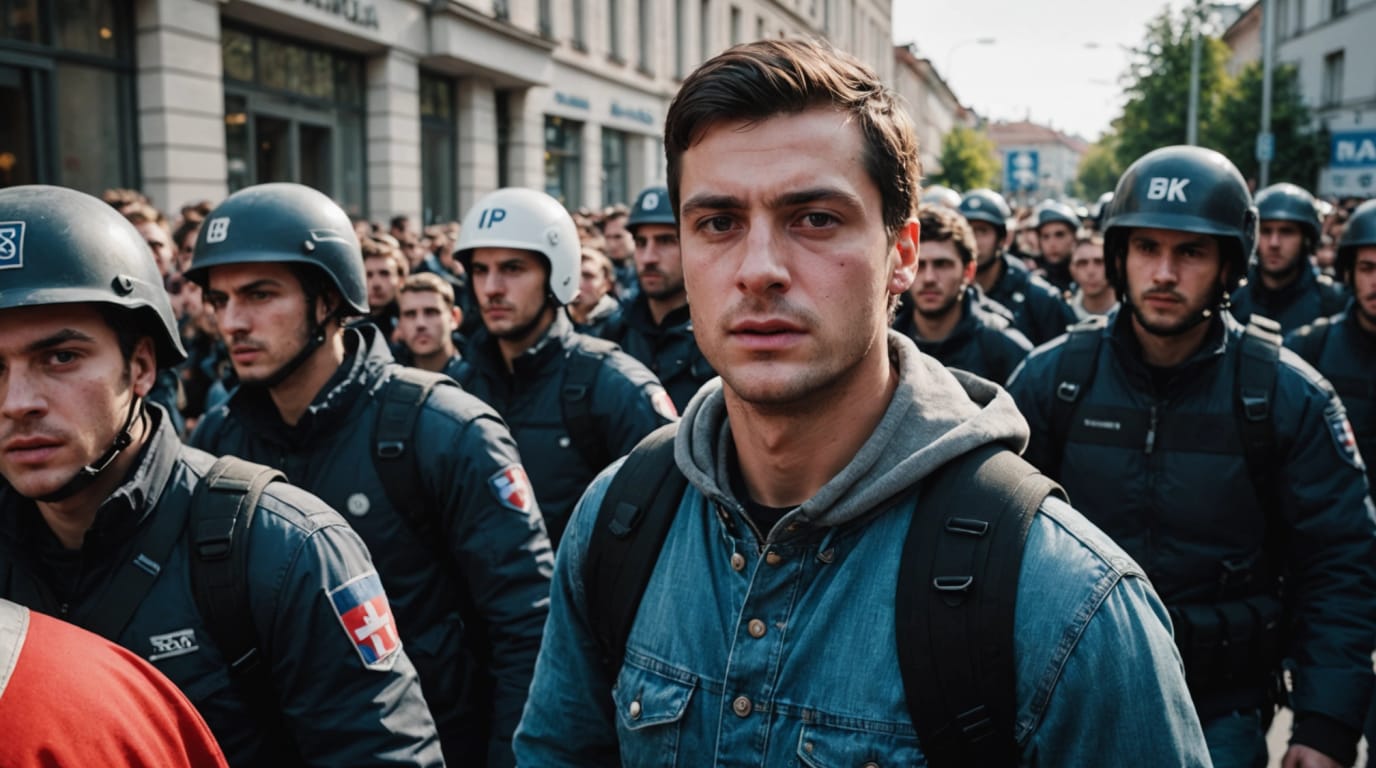
BELGRADE, Serbia – Hundreds of student protesters blockaded the main building of Serbia's public television station, RTS, in Belgrade on Monday and Tuesday, escalating tensions in the Balkan nation. The blockade comes ahead of a planned large rally this weekend, which protesters are calling the culmination of months of anti-government demonstrations.
The student-led protests, which began in November 2024, were initially sparked by the collapse of a concrete canopy at a railway station in Novi Sad that killed 15 people. The incident ignited widespread anger over alleged government corruption and negligence, and the protests have since evolved into a broader movement against the populist rule of President Aleksandar Vucic.
Blockade and Demands
The students initiated their blockade of the RTS building late Monday and continued it into Tuesday, announcing that it would last for at least 22 hours. They accuse the public broadcaster of biased reporting and siding with Vucic and the government during the ongoing demonstrations. Protesters are demanding fair coverage of their movement and an end to what they see as the station's pro-government slant.
Tensions flared during the Monday blockade when riot police briefly intervened, using batons against the crowd as they attempted to block one of the entrances to the TV building with metal security fences. Skirmishes resulted in injuries, including at least one plainclothes officer.
Root of the Protests
The protests initially erupted in response to the Novi Sad railway station canopy collapse. Many Serbians believe the collapse was a direct result of shoddy renovation work fueled by government corruption. The tragedy served as a catalyst for broader discontent with Vucic's administration, which has been accused of authoritarianism, media censorship, and political violence.
Beyond accountability for the canopy collapse, the student protesters have articulated a range of demands, including:
- The publication of all documents related to the reconstruction of the Novi Sad railway station.
- The dismissal of charges against arrested and detained students, activists, and citizens involved in previous protests.
- The filing of criminal charges against individuals who have attacked students, professors, and citizens.
- A 20 percent increase in the budget for higher education.
Vucic's Response
President Vucic appeared on the main TV news bulletin on Monday evening, just hours before the student blockade began. While it remains unclear if his appearance directly triggered the protest, his remarks further inflamed tensions. During the interview, Vucic reportedly insulted the student-led protests and warned that security forces would use force against participants in the planned Saturday rally. He also stated that he would never step down because of the demonstrations, declaring, "You will have to kill me if you want to replace me."
The TV reporter who interviewed Vucic further stoked controversy by referring to the protesting students as "a mob."
Growing Movement
The protests, which began in Novi Sad, have spread to over 400 cities and towns across Serbia. Demonstrations have taken various forms, including weekly 15-minute traffic blockades held on Fridays at 11:52 a.m., the time of the Novi Sad collapse. These blockades have sometimes resulted in confrontations, with reports of cars, allegedly affiliated with the ruling SNS party, striking protesters.
Despite the challenges and occasional violence, the student-led movement has gained momentum, drawing support from various segments of Serbian society. Employees of RTS even publicly expressed their support for the students during a protest in January.
Looking Ahead
The planned large rally this weekend is being viewed as a critical moment for the protest movement. Organizers hope to draw massive crowds and further amplify their demands for accountability, transparency, and democratic reforms. The government's response to the rally remains uncertain, but Vucic's recent statements suggest a potential for further clashes and heightened tensions.
The student blockade of the RTS building underscores the deep divisions and simmering discontent within Serbian society. As the protests continue, the future of Vucic's government and the direction of the country remain uncertain.


