Sudan at a Crossroads: Could the Nation Split Again?
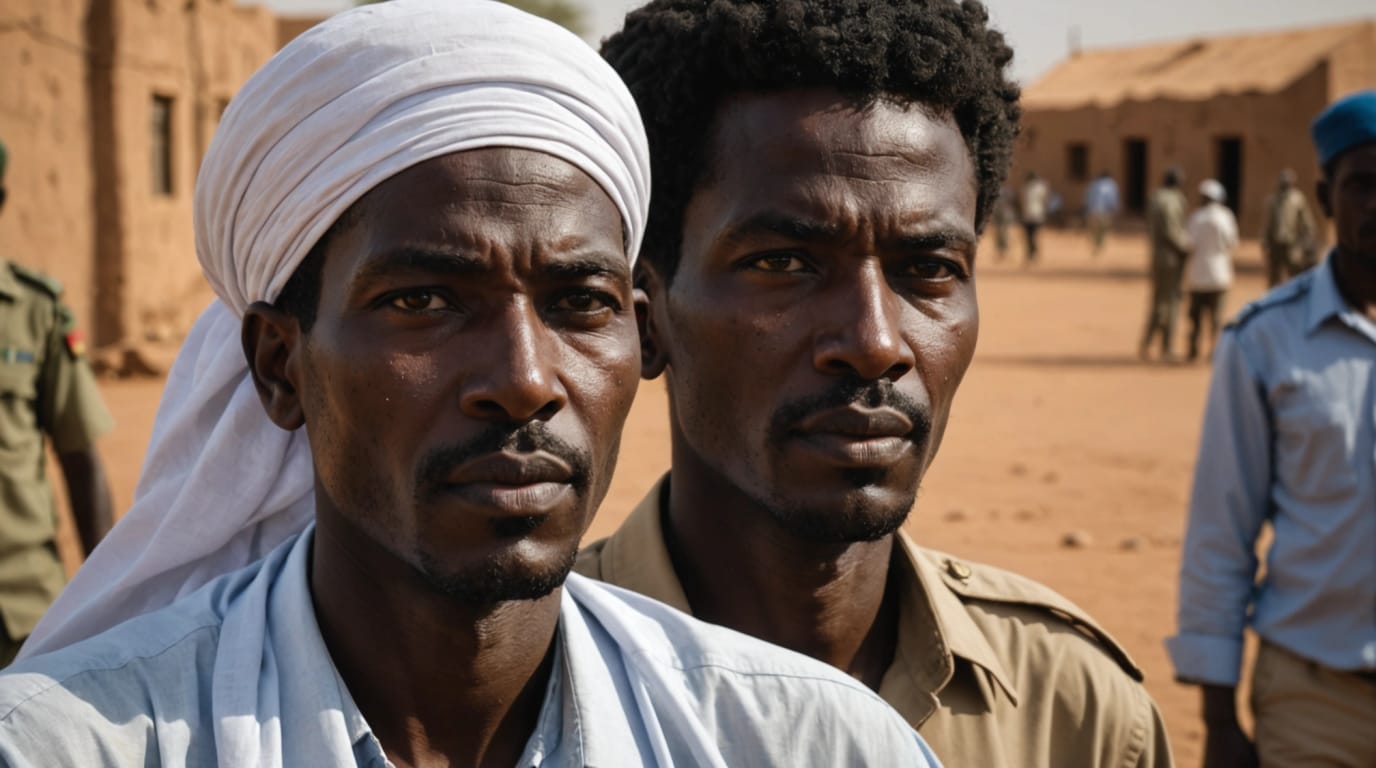
Sudan, a nation scarred by decades of conflict and political instability, faces a precarious future that raises the specter of further fragmentation. The ongoing civil war, which erupted in April 2023, has exacerbated existing tensions and deepened the divide between the Sudanese Armed Forces (SAF) and the Rapid Support Forces (RSF), raising concerns about the potential for Sudan to break apart once again. The current crisis echoes the historical and cultural divisions that ultimately led to South Sudan's independence in 2011, leaving many to wonder if Sudan is destined for a similar fate.
A History of Division and Conflict
Since gaining independence from British and Egyptian rule in 1956, Sudan has been plagued by recurring civil wars, primarily between the north and south. These conflicts were fueled by a complex interplay of factors, including religious and ethnic differences, economic marginalization, and disputes over resources and political power. The northern region, predominantly Arab and Muslim, has historically held greater wealth and political influence compared to the less-developed southern region, where most people are Christian or follow traditional African religions.
The First Sudanese Civil War (1955-1972) erupted just before Sudan's independence, as southern Sudanese fought against northern rule and cultural imposition. Although the Addis Ababa Agreement in 1972 granted autonomy to the south, the peace was short-lived. In 1983, President Gaafar Nimeiry annulled the autonomy of the south and imposed Islamic law (Sharia) nationwide, sparking the Second Sudanese Civil War (1983-2005). This devastating conflict, led by the Sudan People's Liberation Army/Movement (SPLA/M), resulted in approximately 2 million deaths and set the stage for South Sudan's eventual secession.
The Comprehensive Peace Agreement (CPA) of 2005 ended the Second Sudanese Civil War and granted autonomy to South Sudan for five years, followed by a referendum on independence. In January 2011, South Sudanese voted overwhelmingly (98.83%) for independence, and on July 9, 2011, South Sudan officially became an independent nation.
The Current Crisis: A Power Struggle with Devastating Consequences
The current conflict in Sudan is primarily a power struggle between the leaders of the Sudanese Armed Forces (SAF) and the paramilitary Rapid Support Forces (RSF). The two groups, led by General Abdel Fattah al-Burhan and Mohamed Hamdan “Hemedti” Dagalo, respectively, are battling one another for control of the state and its resources. The conflict began on April 15, 2023, with attacks by the RSF on government sites, and has since escalated into a full-blown civil war.
The fighting has resulted in a dire humanitarian crisis, with over 12.5 million people displaced, including internally displaced people (IDPs), asylum seekers, and refugees. More than 8.9 million people are displaced within Sudan, and 3.4 million have fled to neighboring countries. The conflict has also exacerbated existing challenges, including ongoing conflicts, disease outbreaks, economic and political instability, and climate emergencies.
The war has had a devastating impact on Sudan's economy, with an estimated $15 billion in economic losses. Critical sectors such as agriculture and industry have been decimated, and poverty rates have risen to alarming levels. The conflict has also led to increased reports of human rights abuses, including sexual and gender-based violence, and the targeting of civilian communities based on ethnic and political affiliation.
Echoes of the Past: Could History Repeat Itself?
The current crisis in Sudan shares several similarities with the historical factors that led to South Sudan's independence. The conflict has deepened existing divisions within the country, particularly along ethnic and regional lines. The RSF, which has its roots in the Janjaweed militias that were responsible for widespread atrocities in Darfur, has been accused of targeting non-Arab populations. The fighting has also disrupted the delivery of humanitarian aid, leading to famine and widespread suffering, particularly in the Darfur region.
The failure of mediation efforts and attempts to broker a peace deal has further fueled concerns about the potential for Sudan to split apart. The lack of a clear path towards a peaceful resolution has led some to believe that the only way to end the conflict is through the creation of separate states.
However, there are also significant differences between the current crisis and the situation that led to South Sudan's independence. The current conflict is primarily a power struggle between rival factions within the military, rather than a conflict between the north and south. There is also no clear consensus among Sudanese people about the need for further division.
Regional and International Implications
The ongoing conflict in Sudan has significant implications for regional security and stability. Sudan borders several volatile countries, including the Central African Republic, Chad, Eritrea, Ethiopia, Libya, and South Sudan. The conflict has the potential to further destabilize these countries, as refugees flee across borders and armed groups exploit the chaos.
The crisis has also drawn in regional and international actors, who have been accused of fueling the conflict by providing weapons and support to their allies. The involvement of external actors has complicated mediation efforts and made it more difficult to reach a peaceful resolution.
The Path Forward: Unity or Division?
The future of Sudan remains uncertain. While the possibility of further division cannot be ruled out, there is still hope for a peaceful resolution that preserves the country's unity. However, achieving this will require a comprehensive peace process that addresses the root causes of the conflict, including the need for power-sharing, economic development, and justice for past abuses.
The African Union, regional organizations, and the international community must play a more active role in mediating the conflict and ensuring that all stakeholders are included in the peace process. It is also essential to address the humanitarian crisis and provide assistance to the millions of Sudanese people who have been displaced and affected by the conflict.
Ultimately, the decision about whether Sudan will remain united or split apart rests with the Sudanese people themselves. It is up to them to decide whether they can overcome their differences and build a future together, or whether they are destined to follow the path of division and fragmentation. The stakes are high, and the future of Sudan hangs in the balance.


