Sudan's Falcons of Jediane Carry Nation's Hopes Amidst War at AFCON 2025
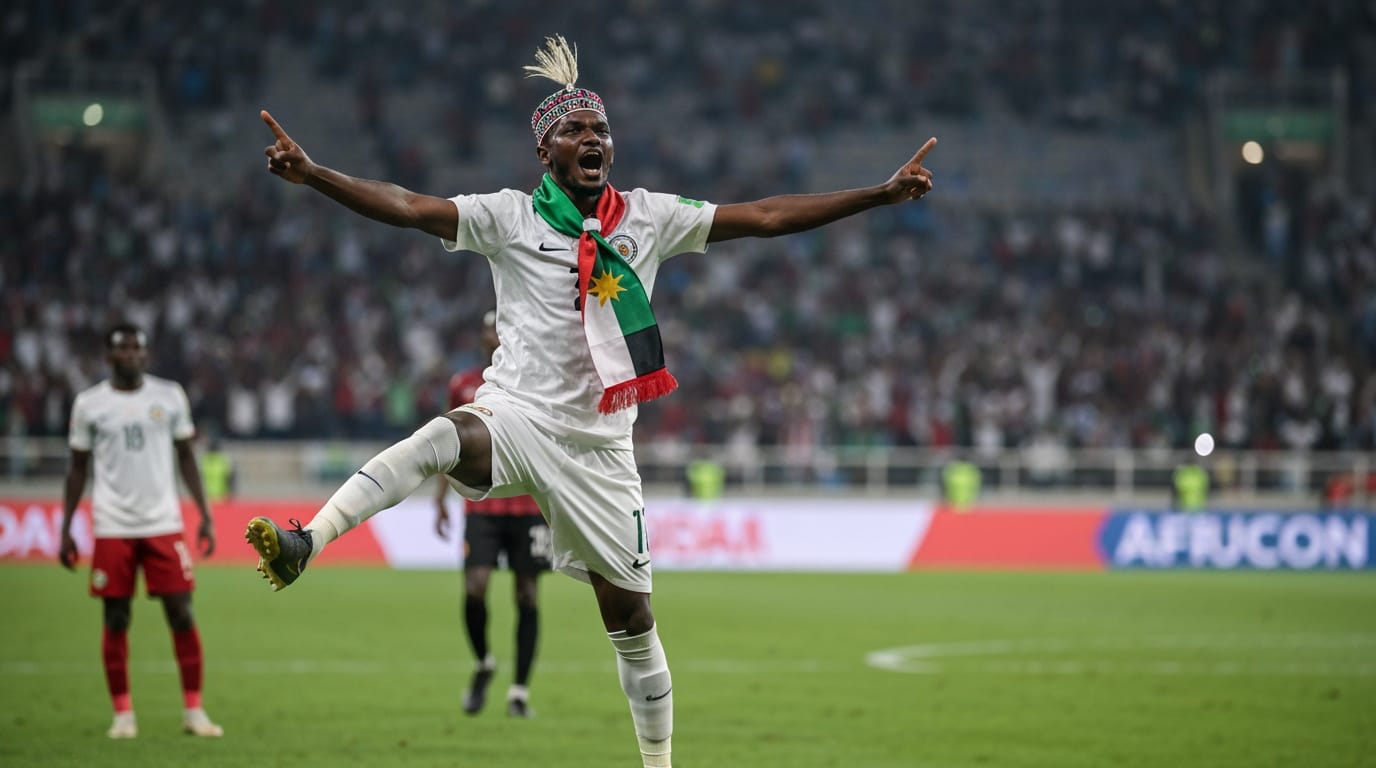
Rabat, Morocco – As Sudan grapples with an intractable civil war that has displaced millions and claimed countless lives, the nation's football team, the Falcons of Jediane, has emerged as an improbable beacon of hope at the 2025 Africa Cup of Nations (AFCON) in Morocco. Their very presence on the continental stage, achieved against a backdrop of devastating conflict and immense personal sacrifice, transcends the boundaries of sport, offering a rare glimpse of unity and joy to a populace scarred by over two and a half years of brutal fighting.
A Nation in Crisis, a Team in Exile
The civil war in Sudan, ignited in April 2023 by a power struggle between the Sudanese army and the paramilitary Rapid Support Forces (RSF), has plunged the country into what the United Nations describes as the world's largest humanitarian crisis. Over 150,000 people are reported killed, and more than 12 million have been forced from their homes, facing widespread famine and disease. In this maelstrom, daily life, including organized football, has largely ceased. Domestic leagues are suspended, and iconic stadiums lie in ruins. Major clubs like Al Hilal and Al Merrikh have been compelled to relocate, first to Mauritania and now competing in Rwanda's league, underscoring the deep disruption to the nation's sporting infrastructure.
Despite these dire circumstances, the Falcons of Jediane defied expectations, securing their spot in AFCON 2025 for only the fourth time since 1976. Their qualification journey was fraught with challenges, as the team was forced to play all its "home" matches in neutral venues across various countries, including Libya, South Sudan, Tanzania, and Mauritania. A significant moment in their improbable qualification campaign was a victory over Ghana, a result that surprised many and underscored the team's determination.
Personal Sacrifices and Unwavering Spirit
The players themselves carry the heavy burden of their country's turmoil. For many, the war has brought direct personal tragedy. Forward John Mano recounted the murder of his best friend, a victim of the conflict, while national team player Mohamed Abuaagla shared the loss of his uncle due to the inability to access medical care amidst the fighting. These profound experiences fuel a sense of responsibility among the squad, transforming each match into an opportunity to represent their suffering compatriots. As Abuaagla stated, "Playing and winning games brings happiness to our people back home. We are trying to plant a small seed of a smile in them, despite the hardships they are enduring."
The players' commitment is further highlighted by the immense logistical and emotional hurdles they overcome daily. Many have sought refuge and continued their careers in foreign leagues due to the collapse of the Sudanese domestic competition. The constant worry for family members remaining in Sudan adds a profound emotional layer to their professional lives. Yet, this shared adversity has forged a powerful bond within the team. Captain Bakhit Khamis noted that "The feeling of unity becomes part of you... Our goal has become stronger, Sudan first, Sudan above everything."
The Architect of Hope: Coach Kwesi Appiah
Central to the team's resilience and renewed ambition is Ghanaian head coach James Kwesi Appiah. He has been instrumental in cultivating a cohesive, family-like atmosphere within the squad, guiding them through the turbulent qualifying phase and into the AFCON finals. Appiah views the team's participation as more than just a sporting endeavor; it is a mission to uplift national spirits. He articulated a powerful vision, stating, "My message to all Sudanese people is: pray for us and support the team, and we will fight to raise the flag of Sudan." He even shared that after their qualifying victory against Ghana, an ambassadorial delegation reported that soldiers back home had momentarily laid down their arms to celebrate, prompting Appiah to hope that "at least for one day, they put their guns down." This demonstrates the profound impact of the team's success beyond the football pitch.
While acknowledging the challenges, Coach Appiah has publicly expressed a bold ambition for the team, stating, "Our ambition is to win the title, not just to achieve a single victory." This aspiration reflects the deep-seated desire to bring a sense of national pride and achievement to a nation desperately in need of positive news.
A Journey of Resilience on the Pitch
Sudan's AFCON 2025 campaign began with a challenging 3-0 defeat to Algeria. However, the team demonstrated its fighting spirit in its second group match, securing a vital 1-0 victory against Equatorial Guinea, a result that significantly boosted their chances of progressing to the knockout stages. This match was not without its moments of concern, as goalkeeper Monged Elneel briefly collapsed on the pitch due to low blood sugar but heroically returned to finish the game, securing a clean sheet. The Falcons of Jediane are now preparing for their decisive final group game against Burkina Faso, with a place in the last 16 at stake.
The unwavering support from Sudanese fans, both within Morocco and across the diaspora, has been palpable. They view the tournament as a "rare beacon of hope" and have flocked to Morocco, eager to witness their team's performance and find a collective escape from the daily realities of war. Their chants and fervent backing underscore the profound connection between the team's performance and the nation's collective psyche.
In a conflict-ridden landscape where grim statistics often dominate the narrative, the Sudan national football team offers a testament to human resilience and the enduring power of sport. Their journey through AFCON 2025 is more than a quest for sporting glory; it is a profound expression of hope, unity, and a desperate plea for peace from a nation yearning for solace. Their determination to "free our country the football way" resonates deeply, providing a vital psychological lifeline for millions.