Sudan's Unfolding Tragedy: Civilians Trapped as Warring Factions Allegedly Employ 'Human Shields'
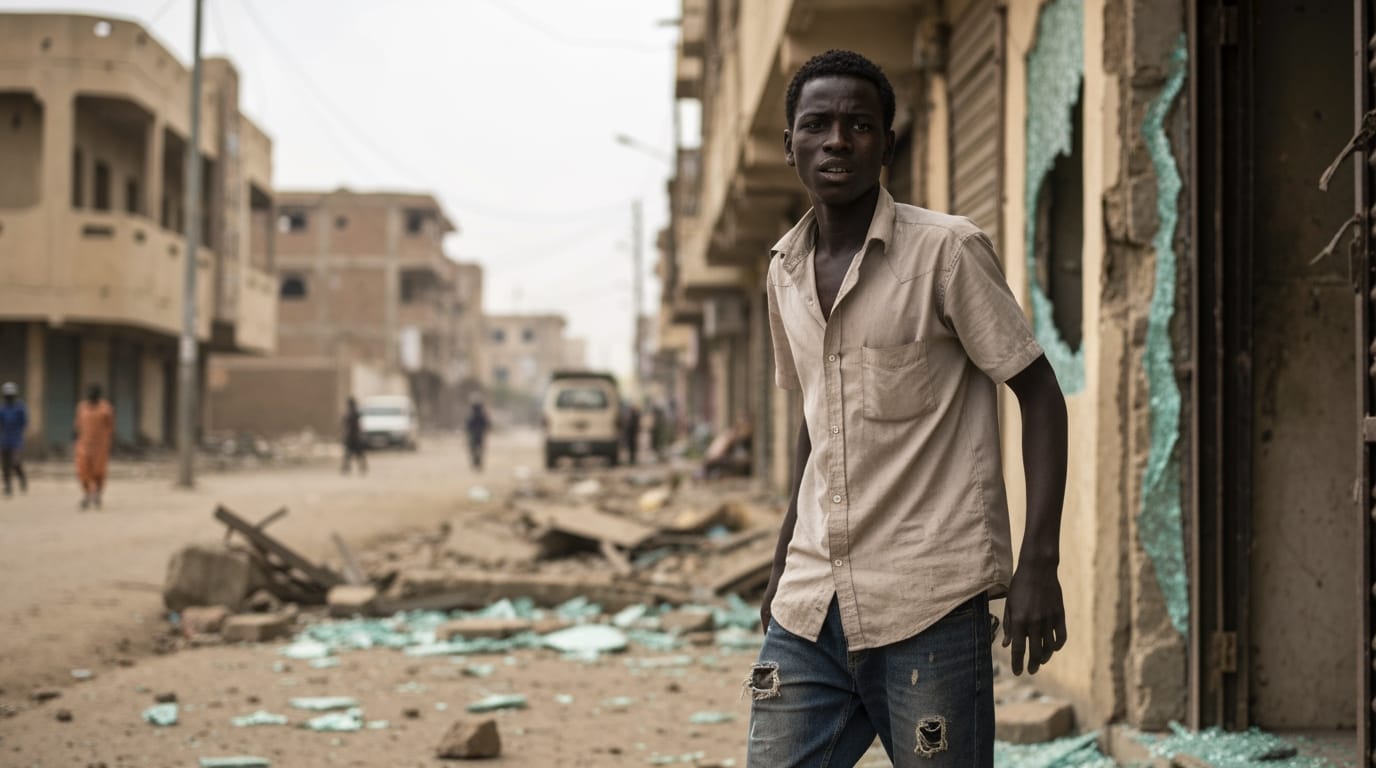
Khartoum, Sudan – Amidst the brutal civil war ravaging Sudan, a harrowing pattern has emerged where civilians are not merely casualties of conflict but are increasingly caught in the deliberate crossfire, with grave accusations surfacing that some are being used as "human shields" by combatants. The conflict, now in its third year, pits the Sudanese Armed Forces (SAF) against the paramilitary Rapid Support Forces (RSF), plunging the nation into an unprecedented humanitarian crisis marked by widespread atrocities and a catastrophic disregard for human life. Millions have been displaced, tens of thousands killed, and the specter of famine looms large over a population already enduring unspeakable horrors, with recent reports highlighting tactics that deliberately endanger non-combatants for military advantage.
A Conflict Defined by Civilian Suffering
Since fighting erupted in April 2023, the struggle for power between General Abdel Fattah al-Burhan's SAF and General Mohamed Hamdan Dagalo's (Hemedti) RSF has devastated Sudan, transforming once-vibrant cities into battlegrounds and displacing nearly 14 million people. Both sides have been widely accused of severe violations of international humanitarian law and human rights, leading to mass civilian casualties. Attacks have been indiscriminate, targeting residential areas, vital infrastructure, and even humanitarian workers. The UN Human Rights Council's Independent International Fact-Finding Mission (FFM) has unequivocally stated that civilians are paying the highest price, being targeted for their real or perceived affiliations. Looting, burning, shelling, and systematic abuses such as sexual violence have become daily realities for millions, leaving no safe haven in a country spiraling into chaos.
El Obeid's Dire Warning: Allegations of Human Shields
Perhaps most disturbingly, recent evidence points to the deliberate weaponization of civilian presence, particularly in the strategic city of El Obeid, North Kordofan State. Reports from human rights groups and aid agencies accuse the Sudanese Armed Forces (SAF) of trapping civilians within the city, effectively turning them into de facto human shields and obstructing their right to flee. Accounts suggest SAF-linked forces have actively prevented residents from leaving, with specific allegations including a video featuring an SAF-affiliated commander, Abu Aqla Mohammed Kaikal of "Sudan's Shield," reportedly threatening to shoot civilians attempting to evacuate.
This tactic extends to stationing military troops and equipment within residential neighborhoods and civilian facilities, directly exposing hundreds of thousands of trapped inhabitants to intensified fighting. Rights lawyers argue that such conduct could constitute the war crime of using civilians as human shields, as well as unlawful confinement or forced displacement under international humanitarian and criminal law. The legal framework is clear: parties to a conflict must allow civilians to leave besieged areas safely and must not use them to shield military objectives. Preventing evacuation, especially under threat of violence, directly violates the obligation to protect non-combatants. While international attention has often focused on the RSF's siege tactics around El Obeid, critics argue that the SAF's internal control and alleged manipulation of the civilian population have received insufficient scrutiny, creating an "asymmetry of accountability."
Widespread Atrocities Beyond the Frontlines
While the specific allegations of human shielding in El Obeid cast a dark shadow, they are but one facet of the broader atrocity crisis unfolding across Sudan. The Rapid Support Forces (RSF) have been implicated in a litany of severe human rights abuses. In Darfur, the RSF and allied militias have reportedly engaged in large-scale attacks, particularly targeting non-Arab communities, leading to fears of ethnic cleansing and even genocide. The fall of El Fasher in October 2025, after an 18-month siege, saw the RSF accused of massacring civilians and committing other war crimes, with witness accounts detailing shooting, beating, and sexual violence against women and girls. Estimates of deaths in El Fasher alone following the RSF takeover range dramatically, with some satellite estimates suggesting numbers as high as 150,000, making it potentially one of the largest massacres of the 21st century.
Beyond Darfur, reports from the UN Human Rights Office indicate that the RSF killed at least 60 civilians in North Kordofan's Bara locality in July 2025, while civil society groups reported up to 300 fatalities. The SAF has also been accused of lethal airstrikes on civilian areas, with one incident in Bara killing 11 members of a single family. Attacks on health facilities, deliberate obstruction of humanitarian aid, and the widespread use of sexual violence as a weapon of war, predominantly attributed to the RSF and their allies, further exacerbate the civilian suffering.
The Humanitarian Catastrophe and International Response
The cumulative effect of these abuses has been a catastrophic humanitarian emergency. Sudan is now experiencing the world's largest hunger crisis, with over 26.4 million people trapped in a spiral of deteriorating food security and famine declared in parts of Darfur and Kordofan. Over 2.9 million children are acutely malnourished. Restricted humanitarian access, due to blockades, attacks, and looting by warring parties, severely impedes aid delivery to 33.7 million people in desperate need.
The international community has voiced grave concerns, with the UN Human Rights Council and the International Criminal Court (ICC) actively investigating alleged war crimes and crimes against humanity. The ICC has taken steps to preserve evidence from Darfur for future prosecutions, and a landmark conviction for Darfur atrocities was secured in October 2025 against a former Janjaweed leader. Calls for a nationwide arms embargo and for the international community to enforce accountability measures are intensifying. However, despite sanctions and condemnations, the conflict persists, fueled by external alliances and a seeming lack of concrete action sufficient to stem the tide of violence.
The grim reality in Sudan is one where civilians are not just accidental victims but are increasingly being treated as expendable pawns in a brutal power struggle. The allegations of human shielding in El Obeid underscore a chilling disregard for international law and human dignity, adding another horrific dimension to an already devastating conflict. Without urgent and concerted international pressure to protect non-combatants, hold perpetrators accountable, and secure a lasting peace, the human cost of Sudan's war will continue its tragic escalation, leaving an indelible stain on the conscience of the world.


