Supreme Court Delivers Major Blow to Presidential Power, Strikes Down Sweeping Tariffs
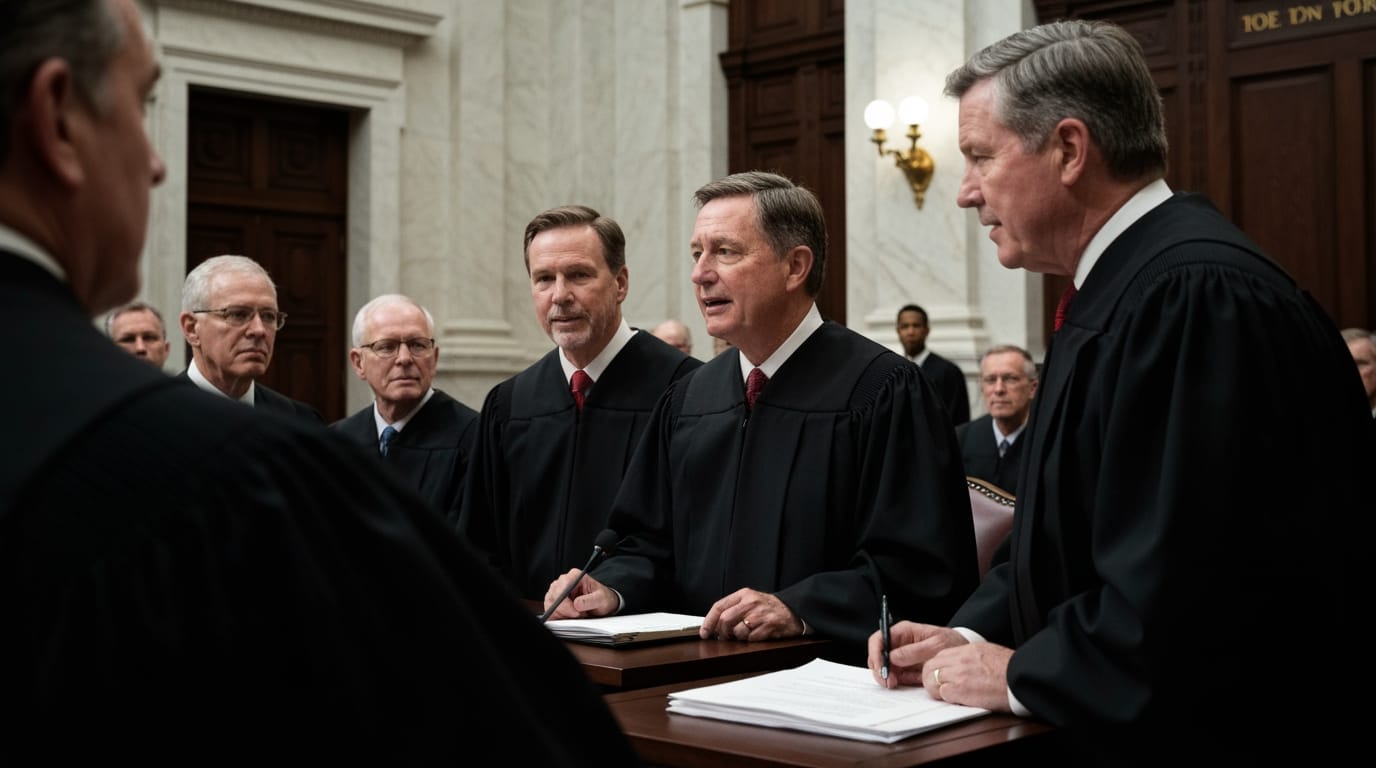
Washington, D.C. – In a landmark decision handed down Friday, the U.S. Supreme Court dramatically curtailed presidential authority over trade policy, striking down a broad array of tariffs imposed by the Trump administration. The 6-3 ruling represents a significant legal and political setback for the President’s economic agenda, reaffirming Congress’s constitutional prerogative to levy taxes, including import duties. The decision is poised to trigger billions of dollars in refunds to American businesses and reshape the future landscape of U.S. trade relations.
A Constitutional Redrawing of Lines
The high court's majority opinion, authored by Chief Justice John Roberts, asserted that President Donald Trump had overstepped his authority by implementing "sweeping" and "far-reaching global tariffs" under the International Emergency Economic Powers Act (IEEPA) of 1977. The IEEPA was originally designed to allow presidents to regulate or prohibit international transactions during a declared national emergency. However, the Court determined that the statute did not grant the President the power to impose such broad tariffs, emphasizing that the Constitution "very clearly" vests the power to tax, including tariffs, in Congress. "The Framers did not vest any part of the taxing power in the Executive Branch," Chief Justice Roberts wrote, underscoring the need for "clear congressional authorization" for such extraordinary assertions of power.
This decision emerged from legal challenges initiated by affected businesses and a coalition of 12 U.S. states, predominantly governed by Democrats, who argued that the executive branch had exceeded its constitutional limits. While the Trump administration contended that these tariffs were regulatory rather than revenue-generating, the Court ultimately rejected this distinction as sufficient justification for bypassing congressional authority. The ruling marks the first major piece of the President's expansive agenda to receive a definitive challenge and defeat before the nation's highest court, which he significantly influenced with three conservative judicial appointments during his first term.
In dissent, Justices Clarence Thomas, Samuel Alito, and Brett Kavanaugh argued against the majority's interpretation. Justice Kavanaugh, in his dissenting opinion, stated that "The tariffs at issue here may or may not be wise policy. But as a matter of text, history, and precedent, they are clearly lawful." This highlights the ideological divide within the Court regarding the scope of presidential authority in foreign policy and trade.
The Genesis of a Trade War and Legal Scrutiny
President Trump first employed these "reciprocal" tariffs upon taking office for his second term, leveraging them as a primary instrument in his economic and foreign policy toolkit. These duties, some as high as 145% on goods from countries like China, and 25% on imports from allies such as Canada and Mexico, were part of a global trade strategy that aimed to address perceived trade imbalances and national security concerns. The administration asserted that issues like trade deficits and the flow of illegal drugs constituted national emergencies, thereby justifying the use of IEEPA.
However, the "up and down, fluctuating tariffs" created significant uncertainty for American businesses, forcing many to scramble to adjust supply chains, reroute manufacturing, and find funds to cover unexpected costs. Gail Ross, Chief Operating Officer at Krimson Klover, an outdoor clothing company, described needing multiple contingency plans due to the tariff volatility, noting her company paid significantly more in duties than ever before. A Federal Reserve Bank of New York analysis revealed that U.S. businesses and consumers largely bore the financial burden of these tariffs, accounting for nearly 90% of the levies.
It is crucial to note that this ruling specifically targets tariffs imposed under IEEPA. Other tariffs enacted by the Trump administration, such as those on steel and aluminum under Section 232 of the Trade Expansion Act of 1962, or duties on Chinese goods under Section 301 of the Trade Act of 1974, were not challenged in this case and remain in effect. This distinction highlights the specific legal basis of the Supreme Court's decision, focusing narrowly on the interpretation of IEEPA's powers rather than a blanket rejection of all executive-imposed tariffs.
Economic Reverberations and Billions in Refunds
The Supreme Court's decision carries substantial economic implications, signaling potential relief for many American businesses and consumers. Experts predict that the ruling will necessitate the refund of billions of dollars in tariff duties collected under the invalidated IEEPA authority. Estimates suggest that approximately $130 billion to $140 billion in tariff revenue, collected through mid-October 2025 under IEEPA, could be eligible for rebates. This process, which will be overseen by the U.S. Court of International Trade (CIT) and administered by U.S. Customs and Border Protection (CBP), will allow importers to seek refunds on entries subject to these now-unlawful duties.
Business owners have expressed optimism about the ruling. Beth Benike, co-founder of Busy Baby, a Minnesota-based company, recounted how the uncertainty surrounding IEEPA tariffs forced her to halt imports from China, where her products are manufactured. She had delayed a shipment worth $48,000 in potential tariffs while awaiting the Court's decision. The prospect of refunds and a more stable trade environment could alleviate financial pressures on companies that have absorbed significant costs, potentially translating to lower prices for consumers and a reduction in inflationary pressures.
Shifting Sands of Future Trade Policy
While the Supreme Court’s decision delivers a significant blow to the administration’s previous tariff approach, it does not necessarily signal the end of its aggressive trade posture. The Trump administration has alternative statutory tools at its disposal, and officials have indicated a willingness to explore these options. Potential avenues include Section 122 of the Trade Act of 1974, which allows for temporary tariffs to address trade imbalances; Section 338 of the Tariff Act of 1930, enabling duties against discriminatory foreign trade practices; and further use of Section 232 or 301 authorities for specific industries or countries.
However, these alternative authorities come with greater limitations and procedural requirements compared to the expansive interpretation of IEEPA. For instance, Section 122 tariffs require congressional approval for extensions, and Section 232 and 301 typically mandate investigations before implementation, which can take months. This means any future tariff actions by the executive branch may face increased scrutiny and be more difficult to implement rapidly or universally. The Court's ruling places the onus firmly back on Congress to establish clear and transparent trade policy, potentially ushering in a period of legislative activity if the administration seeks to continue its tariff-based strategies.
Conclusion: A Reassertion of Checks and Balances
The Supreme Court's decision striking down the Trump administration's sweeping tariffs marks a pivotal moment in American constitutional law and trade policy. By reasserting Congress's fundamental role in controlling taxation and trade, the Court has drawn a clearer line between executive and legislative powers, limiting the president's ability to unilaterally impose broad economic sanctions.
The ruling offers a measure of relief to businesses and consumers grappling with the costs and uncertainties of a global trade war, promising potential refunds and a more predictable trade environment. However, it also opens the door to a new phase of trade policy maneuvering, as the administration is expected to explore other legal avenues to pursue its objectives. Ultimately, this landmark decision underscores the enduring importance of constitutional checks and balances, ensuring that major economic policy shifts are rooted in the express will of the legislative branch, rather than solely in executive discretion. The implications will resonate across the global economy, shaping not only U.S. trade relations but also the delicate balance of power within American governance for years to come.


