Supreme Court Poised to Expand Presidential Power in Landmark FTC Case
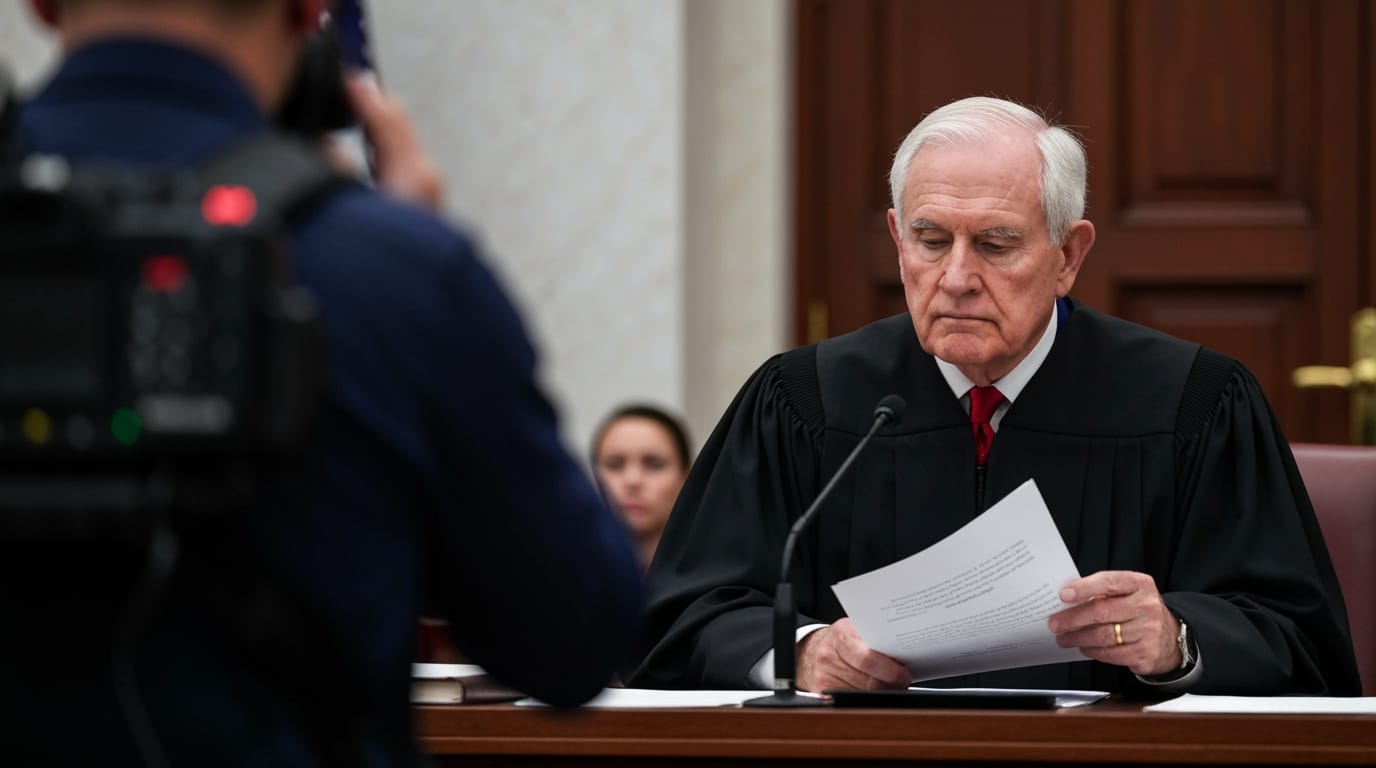
WASHINGTON D.C. — The U.S. Supreme Court appears ready to significantly expand presidential authority over the federal bureaucracy, with conservative justices signaling a likely decision to uphold former President Donald Trump's power to dismiss a Federal Trade Commission (FTC) member without cause. The case, Trump v. Slaughter, heard in oral arguments on Monday, December 8, challenges a nearly century-old legal precedent designed to insulate independent agencies from direct political interference, potentially reshaping the balance of power across the federal government.
The Firing at the Heart of the Dispute
The legal battle stems from President Trump's decision in March 2025 to remove Rebecca Slaughter from her position as an FTC commissioner. Slaughter, initially appointed by Trump during his first term in 2018 and later reappointed by President Joe Biden for a term set to expire in 2029, received an email stating that her "continued service on the FTC is inconsistent with my administration's priorities." This rationale directly challenged the long-established "for cause" removal protection embedded in the 1914 Federal Trade Commission Act, which permits a president to remove FTC commissioners only for specific reasons such as "inefficiency, neglect of duty, or malfeasance in office," not for policy disagreements. Slaughter’s removal prompted a lawsuit, with lower federal courts initially ruling in her favor, declaring her removal unlawful and ordering her reinstatement. However, the Supreme Court, in September 2025, issued an emergency order allowing her firing to take effect while it agreed to hear the Trump administration's appeal, setting the stage for this critical constitutional showdown.
Challenging a 90-Year Precedent: Humphrey's Executor
At the core of Trump v. Slaughter is a direct challenge to the 1935 Supreme Court ruling in Humphrey's Executor v. United States. That landmark decision established that presidents could not remove officials of independent agencies, like the FTC, without specific cause, thereby creating a buffer between these regulatory bodies and direct political pressure. The Humphrey's Executor ruling affirmed Congress's power to create agencies intended to be independent, shielding their decision-making from the immediate whims of the executive branch.
The Trump administration, represented by Solicitor General D. John Sauer, argued before the Supreme Court that Humphrey's Executor was "grievously wrong" and an "indefensible outlier" that should be overturned. Sauer contended that the Constitution vests all executive power in the president, granting "illimitable" authority over officers exercising that power. The administration's argument posits that removal protections for independent agency members unlawfully infringe on the president's constitutional duty to ensure laws are faithfully executed, effectively creating a "headless fourth branch" of government unaccountable to the people. Conversely, counsel for Rebecca Slaughter, Amit Agarwal, argued that upholding Humphrey's Executor is fundamental to maintaining the rule of law and shielding governmental processes from undue political interference, asserting that if the administration is correct, "all three branches of government have been wrong from the start" of the nation's history.
Oral Arguments Signal a Shift
During Monday's 2.5-hour oral arguments, the Supreme Court's 6-3 conservative majority appeared largely sympathetic to the Trump administration's position. Several conservative justices questioned the continued relevance of the 1935 precedent, with Chief Justice John Roberts suggesting that Humphrey's Executor is merely a "dried husk" of what it once was, given that the FTC's powers have grown significantly since its inception. This line of questioning suggested a willingness to reconsider the foundational principles governing independent agencies.
The Court's liberal justices voiced strong opposition to the potential implications of overturning Humphrey's Executor. Justice Elena Kagan warned that such a decision would grant the president "massive, uncontrolled and unchecked power" over numerous federal entities. The liberal bloc underscored concerns that eliminating "for cause" removal protections would fundamentally alter the structure of American governance, allowing presidents to remove agency heads based solely on policy differences, thus eroding their intended independence and objectivity.
Broader Implications for Federal Governance
A ruling in favor of the Trump administration would extend far beyond the Federal Trade Commission. Such a decision could impact approximately two dozen other independent agencies, including the National Labor Relations Board (NLRB), the Consumer Financial Protection Bureau (CFPB), the Federal Housing Finance Agency (FHFA), the Securities and Exchange Commission (SEC), and the Federal Election Commission (FEC). These agencies, Congress designed with removal protections to shield them from partisan shifts, would suddenly find their leadership directly susceptible to presidential will.
This potential shift marks a significant expansion of presidential power, allowing presidents to exert greater control over regulatory policy and enforcement across vast sectors of the U.S. economy and public life. Critics argue that this could lead to increased political polarization within these agencies and undermine their ability to make decisions based on expertise and impartiality rather than political alignment. Notably, the Supreme Court has already, in recent years, chipped away at the Humphrey's Executor precedent by ending removal protections for the heads of the CFPB in 2020 and the FHFA in 2021, signaling a trend toward strengthening presidential oversight of the executive branch.
Conclusion
The Supreme Court's eventual decision in Trump v. Slaughter, expected by the end of June 2026, holds profound implications for the structure and functioning of the U.S. federal government. Should the Court's conservative majority uphold President Trump's firing of Rebecca Slaughter and overturn the Humphrey's Executor precedent, it would represent a historic expansion of presidential power, granting future presidents unprecedented authority to shape the leadership and direction of critical independent agencies. This potential reshaping of the executive branch could fundamentally alter the delicate balance of power between the president and Congress, ushering in an era of heightened political control over institutions Congress designed to operate independently.


