Supreme Court Upholds Birthright Citizenship, Rebuffing Executive Challenge

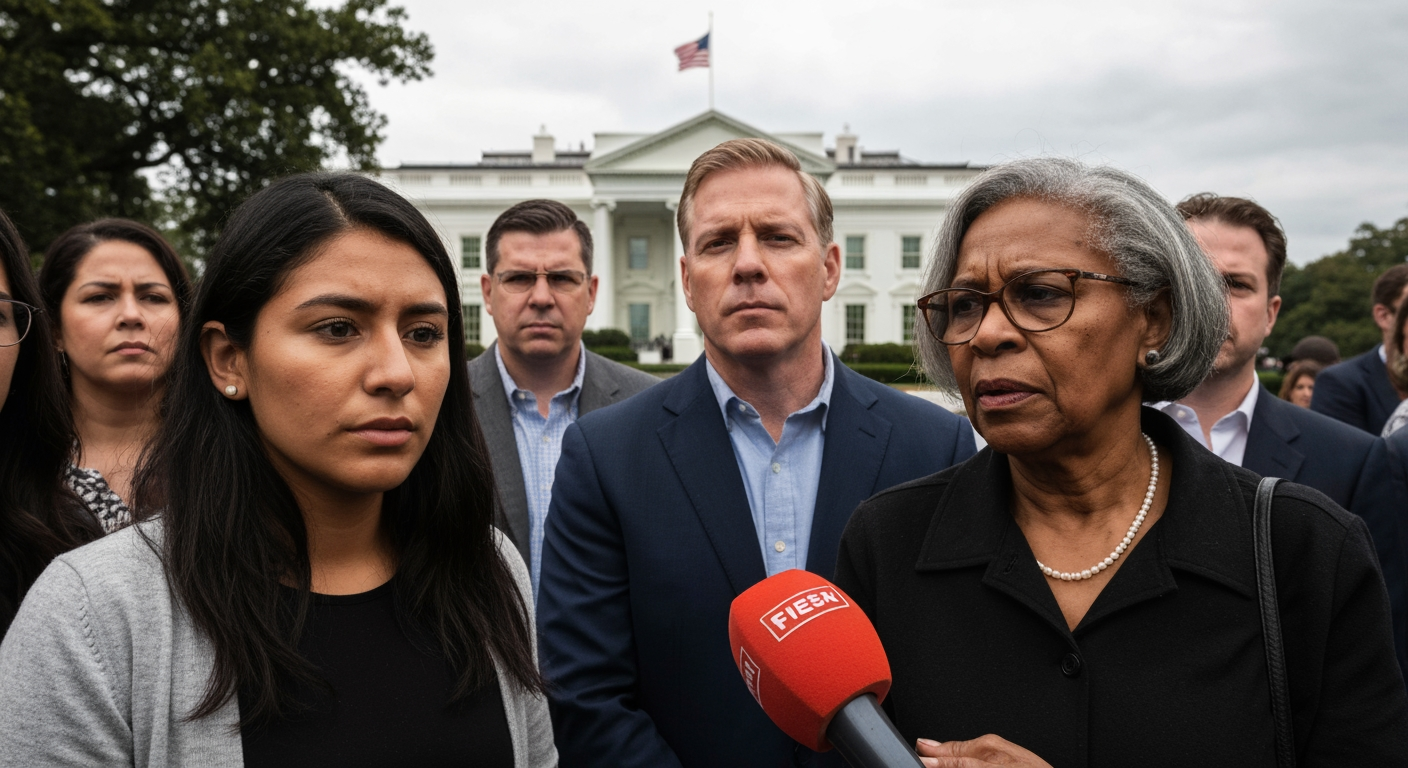
WASHINGTON, D.C. — In a landmark decision that reaffirms over a century of constitutional interpretation, the U.S. Supreme Court on Tuesday struck down an executive order from former President Donald Trump that sought to dramatically alter birthright citizenship. The 6-3 ruling effectively closes the door on the Trump administration's efforts to unilaterally redefine who qualifies as an American citizen, solidifying the long-held understanding that nearly all individuals born on U.S. soil are citizens under the 14th Amendment. The decision signals a significant victory for civil rights and immigrant advocacy groups and entrenches a principle central to the nation's identity since the Reconstruction Era.
The Enduring Cornerstone of American Citizenship
At the heart of the debate lies the first sentence of the 14th Amendment to the U.S. Constitution, ratified in 1868: "All persons born or naturalized in the United States, and subject to the jurisdiction thereof, are citizens of the United States and of the State wherein they reside." This clause, often referred to as the Citizenship Clause, was a direct response to the 1857 Dred Scott v. Sandford Supreme Court decision, which denied citizenship to Black Americans. The 14th Amendment sought to ensure equality under the law, establishing a broad grant of citizenship regardless of race or ancestry.
The scope of this clause was further cemented by the Supreme Court's 1898 decision in United States v. Wong Kim Ark. In that case, the Court ruled that a child born in the United States to Chinese immigrant parents, who were not themselves citizens, was indeed a U.S. citizen. This ruling affirmed the principle of jus soli, or "right of the soil," meaning citizenship is determined by place of birth, with only narrow exceptions, such as children of foreign diplomats or invading forces. For over a century, this interpretation has served as a foundational element of American law and national identity, ensuring that those born within the nation's borders are full members of society.
The Executive Challenge to a Long-Standing Precedent
The enduring principle of birthright citizenship faced a direct challenge on January 20, 2025, when then-President Donald Trump issued Executive Order 14160, titled "Protecting the Meaning and Value of American Citizenship," on his first day in a second term. This executive order aimed to deny automatic U.S. citizenship to children born in the United States if their parents were present "unlawfully" or on temporary visas, such as student or tourist visas, and were not U.S. citizens or lawful permanent residents.
The Trump administration argued that the phrase "subject to the jurisdiction thereof" in the 14th Amendment had been misinterpreted for generations. They contended that children of undocumented immigrants or temporary visa holders were not fully "subject to the jurisdiction" of the United States because their parents' presence was either unauthorized or conditional. This reinterpretation, if successful, would have marked the most significant change to the definition of American citizenship in over 150 years. President Trump had long advocated for such a change, characterizing birthright citizenship as a "magnet for illegal immigration" since his initial presidential campaigns.
A Legal Battle to the Highest Court
Immediately following the issuance of Executive Order 14160, a cascade of legal challenges emerged from state attorneys general, civil rights organizations, and immigrant rights groups across the country. Lawsuits, including a prominent class-action case titled Barbara v. Trump, argued that the executive order was unconstitutional and sought to block its implementation. Federal district courts swiftly issued nationwide injunctions, preventing the executive order from taking effect anywhere in the U.S.
Advocates emphasized that stripping birthright citizenship would create a vulnerable subclass of individuals born in the U.S. but denied fundamental rights, potentially leading to statelessness for some children. They highlighted the historical context of the 14th Amendment, arguing its broad language was intentionally crafted to prevent the creation of such a two-tiered society. The legal challenges ultimately made their way to the Supreme Court, with oral arguments heard in April 2026. The case generated intense public and legal scrutiny, with some justices expressing skepticism regarding the administration's arguments during the proceedings.
The Supreme Court's Definitive Ruling
On June 30, 2026, the Supreme Court delivered a decisive blow to the former president's initiative, ruling 6-3 that Executive Order 14160 was unlawful and violated the 14th Amendment. Chief Justice John Roberts penned the majority opinion, asserting that the 14th Amendment, along with over a century of legal precedent including United States v. Wong Kim Ark, clearly guarantees birthright citizenship to nearly all individuals born within U.S. borders.
The majority opinion stressed that the framers of the 14th Amendment intended a broad and inclusive grant of citizenship, explicitly rejecting the notion that citizenship could be denied based on the immigration status of parents. Chief Justice Roberts wrote, "Citizenship, then and now, was the right to have rights — to freely participate in our political community. The Framers of the Fourteenth Amendment extended that promise to 'every free-born person in this land.' We keep that promise today." He further clarified that children born to parents present in the United States, even if unlawfully or temporarily, are indeed "subject to the jurisdiction thereof" under the Constitution and are therefore citizens at birth. While Justices Clarence Thomas, Samuel Alito, and Neil Gorsuch dissented, the Court's majority firmly upheld the existing interpretation, marking a significant defeat for the executive branch's attempt to reinterpret constitutional law.
Implications for National Identity and Future Debates
The Supreme Court's ruling on birthright citizenship solidifies a fundamental aspect of American democracy and national identity. The decision ensures that the U.S. continues to adhere to the principle of jus soli, where citizenship is determined by the happenstance of birth on American soil, rather than by the lineage or legal status of one's parents. This outcome averts the potential creation of a marginalized group of U.S.-born individuals without full citizenship rights, which critics warned could lead to profound societal instability and undermine core American values of equality.
While former President Trump's executive efforts to alter birthright citizenship have been definitively rejected by the nation's highest court, the broader political debate surrounding the issue is likely to persist. Opponents of birthright citizenship often argue it incentivizes unauthorized immigration and contributes to "birth tourism." Proponents, however, maintain that it is a moral imperative, a practical solution for integrating individuals born within the nation's borders, and a bulwark against the complexities of determining citizenship based on parental status.
The Supreme Court's decision underscores the enduring power of the Constitution and judicial review in safeguarding established legal principles against executive challenges. It reaffirms that fundamental changes to citizenship require constitutional amendments, not executive fiat. As the nation moves forward, the affirmation of birthright citizenship stands as a testament to the resilience of a legal framework designed to ensure that all persons born within its jurisdiction are afforded the full rights and responsibilities of American citizenship.
Related Articles


Landmines Resurge Globally, Shattering Two Decades of Progress
The global effort to eradicate antipersonnel landmines, once heralded as a monumental success in humanitarian disarmament, is facing a perilous reversal. Despite an international treaty banning these indiscriminate...

Disinformation Campaigns Cloud Michigan's Critical US Senate Race
LANSING, Mich. — The fiercely contested Democratic primary for the U.S. Senate in Michigan has become a battleground not just of policy and ideology, but of pervasive disinformation, with progressive candidate Abdul...