Sweden Fast-Tracks Mining to Secure Critical Minerals, Counter Chinese Dominance
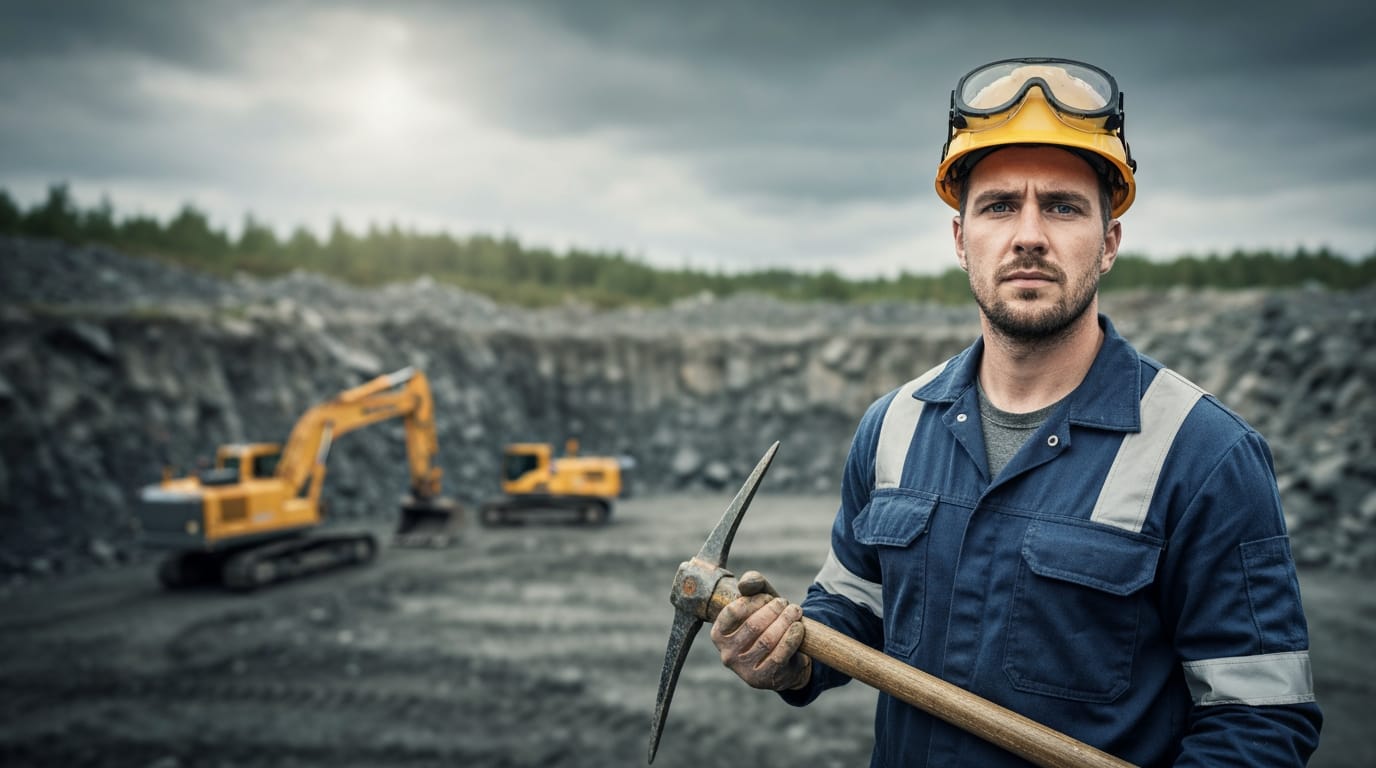
STOCKHOLM – In a significant strategic pivot, Sweden has announced an accelerated process for mining permit approvals, aiming to bolster Europe's supply of critical raw materials and reduce the continent's considerable reliance on China. The move, declared a matter of national security, underscores a growing urgency within the European Union to secure vital minerals essential for green technologies and defense industries amidst intensifying geopolitical competition.
The Scandinavian nation, already the EU's leading producer of iron ore, is rich in deposits of graphite, cobalt, rare metals, and phosphate minerals, yet currently attracts only one percent of global investment in exploring these critical resources. This new national mining strategy seeks to unlock Sweden's vast potential, directly challenging China's firm grip on 70 percent of global rare earth mining.
A Strategic Imperative: Breaking Dependence
The Swedish government's decision, outlined by Energy Minister Ebba Busch, reflects a broader European endeavor to enhance supply chain resilience. Busch emphasized that Europe's dependence on China for these crucial materials poses a "systemic risk" to Sweden, the EU, and even NATO's defense capabilities. The strategy aligns with EU legislation passed in 2024, which aims to secure raw material supplies and reduce external dependencies. This proactive stance from Stockholm signals a clear elevation of critical mineral and rare earth mining to a national security interest, marking an escalation in the geopolitical contest over these finite resources.
The minerals in question are indispensable for a wide array of modern applications, including electric vehicles, wind turbines, advanced electronics, and defense systems. With China leveraging its dominance in these supply chains as a strategic tool, securing alternative sources has become paramount for Western economies. Sweden's untapped mineral wealth presents a significant opportunity to diversify these critical supply lines.
Streamlining the Path from Ground to Market
To achieve its ambitious goals, Sweden's new strategy includes several key initiatives designed to expedite mining projects. The government plans to streamline authorization procedures to ensure decisions are made more quickly. A new environmental impact assessment authority will be established, intended to provide mining companies with a more consistent and predictable regulatory process. Furthermore, the state will explore mechanisms to help fund strategic projects deemed vital for national self-sufficiency.
These measures are critical, as permitting alone for new mines can currently take close to a decade, a timeframe that significantly hinders investment and development. By cutting bureaucratic red tape and offering financial support, Sweden hopes to rapidly convert its mineral potential into tangible supply for European industries. The government also intends to ensure a larger share of mining taxes and royalties benefits the local communities where mining activities occur, a measure that could help address local resistance.
Sweden's Mineral Riches: The Per Geijer Project and Beyond
Sweden possesses substantial mineral resources, making it a natural fit for this strategic role. Among its most promising assets is the Per Geijer deposit, located near LKAB's existing Kiruna mine. This site is recognized as one of Europe's largest known rare earth resources, boasting an estimated 1.2 billion tons of total mineral resources, including 2.2 million tons of rare earth oxides. The Per Geijer project has already been designated as an EU Strategic Project under the Critical Raw Materials Act, highlighting its importance to the continent's resource independence efforts.
Beyond rare earths, Sweden's deposits of graphite, cobalt, and phosphate minerals are also crucial for various high-tech applications, from battery manufacturing to fertilizers. Realizing the full potential of these resources, however, requires not only efficient extraction but also significant investment in processing and refining capabilities—areas where China currently holds overwhelming dominance.
Navigating Environmental and Social Challenges
While the economic and geopolitical imperatives are clear, Sweden's accelerated mining strategy must also carefully navigate inherent environmental and social complexities. Expanding mining operations carries potential ecological impacts, and a balance must be struck between resource extraction and environmental protection. The creation of a new environmental impact assessment authority is intended to ensure consistency, but it will also face scrutiny to uphold rigorous standards.
Another critical aspect involves engaging with local communities, particularly indigenous populations such as the Sami reindeer-herding people. Mining expansion has historically led to tensions over land use and traditional livelihoods. While the government's plan to allocate a larger share of mining taxes and royalties to local authorities aims to provide economic benefits, addressing the concerns and securing the consent of affected communities will be crucial for the long-term success and social acceptance of these projects. There is currently "widespread resistance" in some local communities, despite the promise of increased economic benefits.
Conclusion: A Foundation for European Resource Security
Sweden's bold new mining strategy represents a critical step towards strengthening Europe's resource sovereignty and reducing its vulnerability to external geopolitical pressures. By streamlining permits, supporting key projects like Per Geijer, and acknowledging mining as a national security interest, Stockholm is laying a foundation for increased domestic production of vital minerals.
However, the journey towards genuine supply chain independence extends beyond mere extraction. The real challenge lies in developing robust European capabilities in midstream refining, alloying, and magnet manufacturing—areas where China's lead is still substantial. Sweden's initiative, while addressing a crucial bottleneck, is a powerful "wake-up call" for Europe to build a comprehensive, resilient supply chain for the critical raw materials that underpin its future economic prosperity and strategic autonomy.


