Sweden Fortifies Baltic Defense with Landmark $4.25 Billion Frigate Acquisition from France's Naval Group
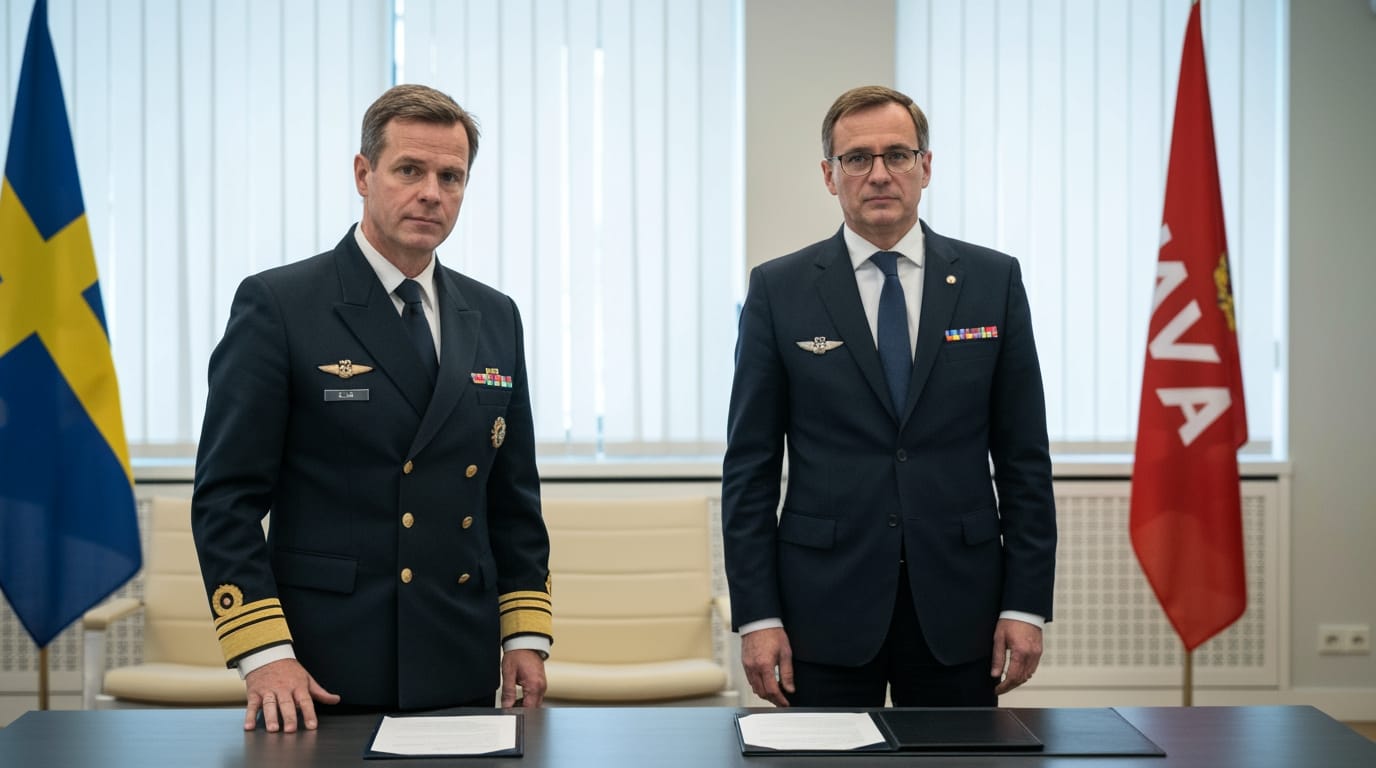
STOCKHOLM – In a pivotal move set to redefine its naval capabilities and bolster regional security, Sweden has announced a monumental decision to acquire four advanced frigates from French defense contractor Naval Group. The approximately $4.25 billion (40 billion Swedish crowns) procurement represents Sweden's largest military investment in decades and underscores a strategic pivot towards enhanced maritime defense in the wake of shifting geopolitical realities in the Baltic Sea and its recent accession to NATO.
Prime Minister Ulf Kristersson and Defence Minister Pål Jonson unveiled the landmark deal on Tuesday, May 19, 2026, from the deck of a Visby-class corvette in Stockholm, highlighting the urgency and significance of the acquisition. The new Luleå-class frigates, based on Naval Group's formidable Frégate de Défense et d'Intervention (FDI) concept, are slated for initial delivery in 2030, with all four vessels expected to be operational by 2035. This rapid timeline was a crucial factor in France's successful bid, leveraging an existing "hot" production line already servicing the French Navy and Greece.
A Strategic Imperative: Adapting to a New Security Landscape
The decision to acquire these multi-mission frigates is a direct response to the evolving security landscape in Europe, fundamentally reshaped by Russia's full-scale invasion of Ukraine and Sweden's subsequent membership in NATO. For decades, the Swedish Navy primarily focused on coastal defense with smaller, stealth-optimized vessels like the Visby-class corvettes. However, as Defence Minister Jonson articulated, the new frigates will provide significant "blue water" capabilities, enabling Sweden to contribute more effectively to NATO operations both within and beyond the Baltic Sea.
The Baltic Sea, increasingly referred to as a "NATO lake" following the accessions of Finland and Sweden, has become a critical strategic area. The new Luleå-class frigates, each displacing around 4,000 tonnes, are specifically designed for advanced air defense and anti-submarine warfare, capabilities deemed essential for protecting vital sea lines of communication and deterring potential aggressors in the region. This marks a substantial shift from previous plans for enlarged corvettes, reflecting a newfound emphasis on robust, alliance-compatible combatants.
Unpacking the FDI Frigate: Advanced Capabilities and Swedish Integration
Naval Group's FDI frigates, already in service with the French Navy and on order for Greece, stood out for their technical maturity and integrated combat systems. The vessels are characterized by a high degree of digitalization and are equipped with advanced sensor and weapon systems to tackle contemporary naval threats. Notably, the Swedish government has mandated the integration of several domestically developed weapon systems, ensuring compatibility and leveraging Sweden's robust defense industry.
These integrations include Saab's potent RBS15 anti-ship missile, the Torpedo 47 for anti-submarine warfare, the G1X radar, and Trackfire weapon stations. In terms of defensive capabilities, the frigates will carry the state-of-the-art Aster 30 air defense system, capable of intercepting ballistic missiles, alongside CAMM-ER medium-range air defense missiles—systems already being retrofitted to Sweden's Visby-class corvettes for an inner layer of defense. Additionally, BAE Systems Bofors will supply 57mm and 40mm cannons. This bespoke integration ensures the Luleå class will be tailored to Sweden's unique operational requirements while maintaining interoperability with NATO allies.
The selection process was competitive, with Naval Group prevailing over a joint bid from the UK's Babcock, partnered with Saab on the Arrowhead 120 design, and an offer from Spain's Navantia. Defence Minister Jonson cited rapid delivery, technical maturity, and cost-sharing opportunities with France and Greece as key determinants in favoring the French proposal.
Deepening European Defense Cooperation
The procurement also signifies a deepening of Swedish-French defense cooperation, aligning with broader European efforts to enhance autonomous defense industrial solutions. French Ambassador to Sweden, Thierry Carlier, previously emphasized Sweden as a central partner for Europe's future defense, stating, "The time has now come to seriously develop autonomous, European defence industry solutions together between Sweden and France. We have both the expertise and the industrial assets to do so." This collaborative spirit extends to other defense projects, with France expressing interest in Saab's GlobalEye airborne early warning and control aircraft.
The economic impact is substantial, with the roughly $4.25 billion price tag representing a significant boost to the European defense sector. Each frigate is estimated to cost around 10 billion Swedish crowns, depending on its specific weapon systems. This investment aligns with Sweden's commitment to significantly increase its military spending, with the government aiming to reach NATO's target of 3.5% of GDP by 2030, several years ahead of the alliance's deadline.
A Long-Term Vision for Maritime Power
The Luleå-class frigates are projected to have an operational lifespan of approximately 40 years, serving as the backbone of the Swedish Navy's surface fleet for decades to come. This long-term investment will allow the Royal Swedish Navy to project power and influence across the Baltic Sea and contribute more substantially to collective defense initiatives. The emphasis on air defense capabilities, in particular, reflects Sweden's intent to integrate fully into NATO's Integrated Air and Missile Defense (IAMD) program.
As Sweden continues to modernize its military, this frigate acquisition stands as a testament to its commitment to collective security and its role as a robust NATO member. The new vessels will not only enhance Sweden's self-defense but also strengthen the alliance's overall maritime posture in a region of heightened strategic importance, safeguarding stability and deterrence in the Baltic Sea and beyond.


