Sweden Plunges Into Political Deadlock as Winning Center-Left Coalition Collapses
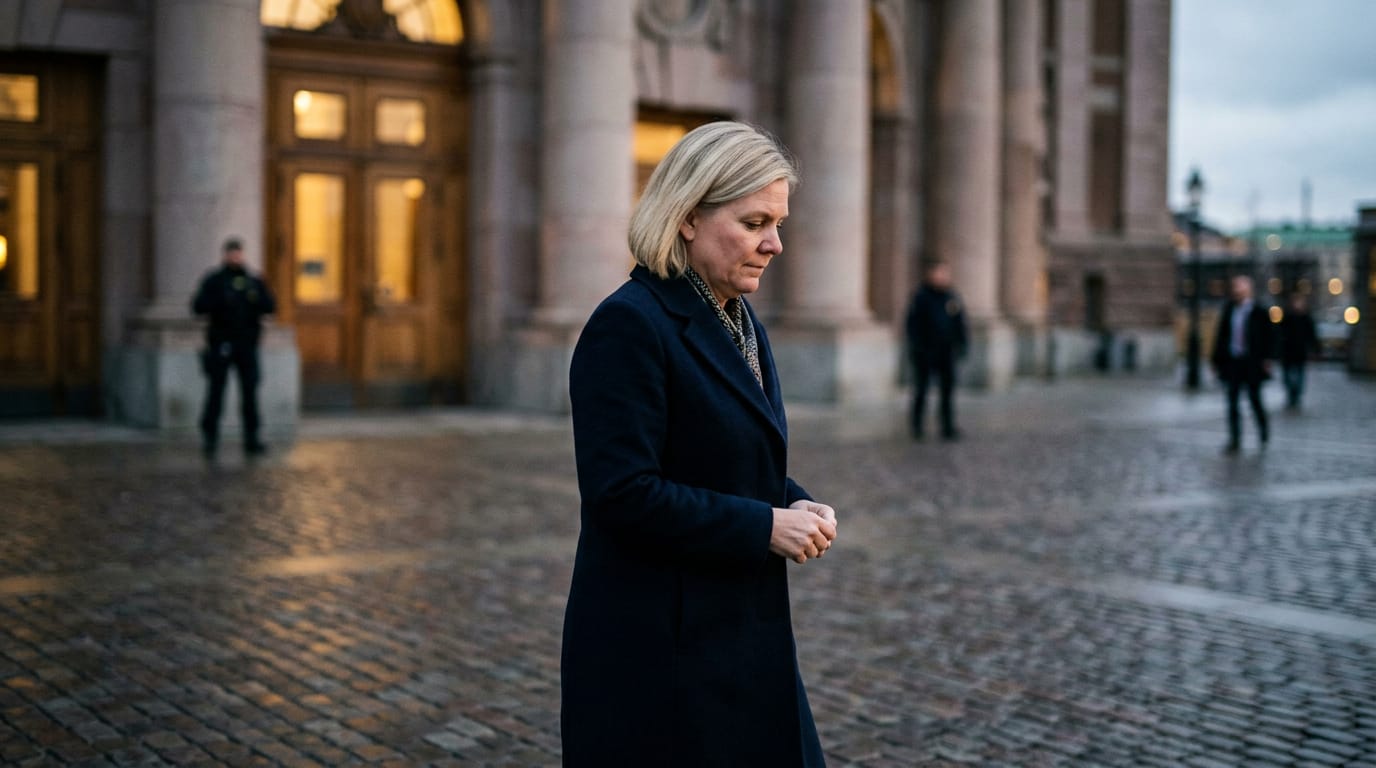
Sweden entered a fresh phase of political paralysis after the center-left bloc, despite securing a narrow majority in the recent general election, failed to assemble a workable governing coalition. Social Democratic leader Magdalena Andersson formally abandoned her initial mandate to build an administration, conceding that internal divisions had fractured her parliamentary backing. The sudden breakdown abruptly halts the momentum of the center-left forces and transfers the initiative back to the center-right, exposing deep ideological fissures across the Nordic nation of 10.6 million people.
A Razor-Thin Victory Dissolves
The national election delivered what appeared to be a decisive shift in power, ending the tenure of the conservative government. The four-party center-left opposition captured 176 seats in the 349-seat Riksdag, edging past the incumbent center-right bloc, which retained 173 seats. The victory hinged on a narrow difference of just over 50,000 votes nationwide and was propelled by a notable dip in support for the anti-immigration Sweden Democrats, reversing a broader continent-wide trend of far-right electoral advances.
Yet that three-seat parliamentary edge quickly proved illusory. Building a functioning cabinet required unanimous cooperation among four ideologically disparate factions: the dominant Social Democrats, the Green Party, the pro-market Centre Party, and the socialist Left Party. The structural fault line between the economically liberal Centre Party and the Left Party re-emerged as an insurmountable hurdle. While both parties sought to keep the right-wing alliance out of executive power, the Centre Party maintained its longstanding refusal to endorse any administration influenced by the Left Party, creating an immediate tactical impasse.
The Speaker Standoff That Broke the Bloc
The fragility of the center-left alliance reached a breaking point during parliamentary maneuvering over the position of Riksdag speaker. In a surprise decision that caught Social Democratic leadership off guard, the Left Party chose to endorse Andreas Norlen, a Moderate Party incumbent, for the speaker post rather than backing a unified left-bloc alternative.
The move dealt an immediate blow to inter-party trust and signaled that the Left Party would not rubber-stamp a center-left cabinet without receiving tangible policy concessions and formal cabinet participation—terms the Centre Party remained completely unwilling to accept. Without the active support of both key partners, the center-left's numeric majority dissolved. Conceding that negotiations had hit a dead end, Andersson stepped aside, ending the first round of official talks and leaving the assembly without an immediate path toward a stable executive.
Constitutional Mechanics and the Conservative Counterpart
The focus of the government-formation process now shifts to Speaker Andreas Norlen, who conducts formal consultations with party leaders before designating the next negotiator. Under Sweden's constitution, the speaker can propose up to four prime ministerial candidates for confirmation votes in parliament. If all four nominees fail to win sufficient backing, the country is automatically forced into a snap election.
The immediate beneficiary of the center-left collapse is caretaker Prime Minister Ulf Kristersson, leader of the conservative Moderate Party. Despite his bloc finishing three seats short of a majority, Sweden operates under a system known as negative parliamentarism. Under these rules, a prime ministerial nominee does not require an absolute majority in favor; they need only avoid having an absolute majority of 175 lawmakers vote against them.
If Kristersson can convince the Centre Party to abstain rather than actively vote against him, his 173-seat conservative minority could survive a parliamentary investiture vote. However, such a strategy carries severe political risks. Kristersson spent the previous electoral cycle relying on parliamentary backing from the Sweden Democrats, and any renewed arrangement involving the far right faces fierce resistance from centrist lawmakers.
Wider Reverberations for Nordic Governance
The standoff comes at a delicate moment for Sweden. Beyond long-term policy debates concerning healthcare, rising gang violence, and energy transition, the political system is grappling with unexpected institutional strain. Law enforcement authorities recently launched investigations into several local complaints of voting discrepancies in the Stockholm region, as well as an inquiry in central Borlange that could theoretically place regional mandates under review by the Election Review Board.
For ordinary citizens, prolonged coalition haggling is a familiar frustration. Following the 2018 general election, Swedish politicians spent a record 134 days in negotiations before cobbling together a fragile minority administration. The current stalemate threatens a similar stretch of drift, postponing crucial fiscal decisions and leaving public administration under the temporary authority of a caretaker cabinet.
Conclusion
Sweden finds itself trapped in an acute constitutional dilemma. The electorate delivered a clear mandate rejecting a government formalizing cabinet posts for the nationalist right, yet the progressive coalition assembled to replace it fractured before taking office. As party leaders prepare for intensive rounds of exploratory talks, the Riksdag must choose between fragile minority compromises, cross-bloc pacts, or the uncertainty of another trip to the ballot box. Until rival party leaders bridge the ideological divide between market liberals and the socialist left, Nordic consensus politics remains in an uncharacteristic and volatile state of suspension.