Swiss Police Deploy Tear Gas Against Anti-G7 Protesters Amid Violent Clashes in Geneva
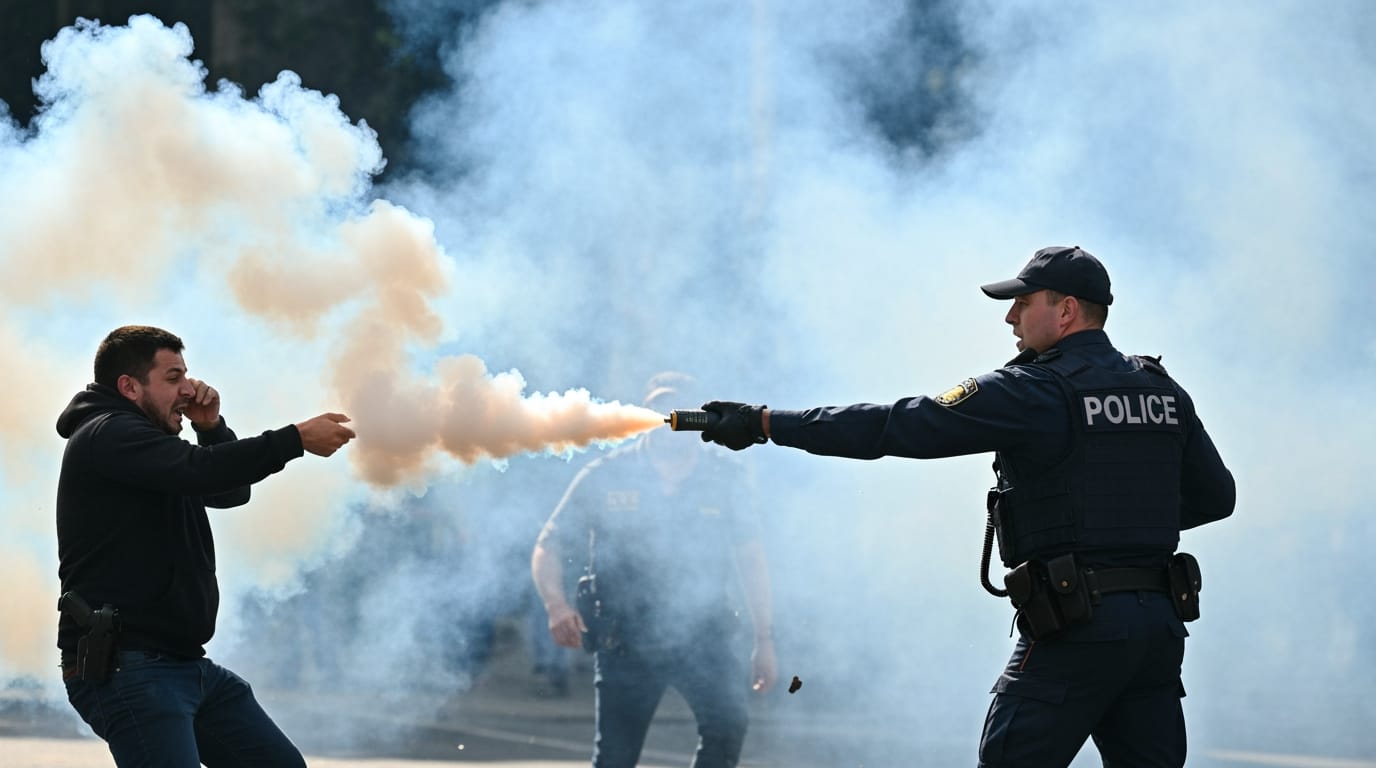
Geneva, Switzerland – Swiss police utilized tear gas on Sunday to disperse thousands of anti-G7 protesters who engaged in clashes and vandalism across Geneva, targeting United Nations facilities and local businesses. The confrontations erupted a day before the Group of Seven (G7) summit is set to commence across the border in Evian, France, highlighting deep-seated global frustrations with the economic bloc. Around 20,000 demonstrators, some resorting to throwing stones, flares, and other projectiles, transformed parts of the normally tranquil city into a scene of unrest, prompting a forceful response from law enforcement.
Escalation on the Streets of Geneva
The day's events began with what was intended to be a large, organized march across the Swiss city, drawing environmentalists, feminists, anti-imperialists, and supporters of various causes. However, by afternoon, the demonstration escalated into direct confrontation. Police confirmed they deployed tear gas after protesters began targeting United Nations buildings, including a telecommunication facility, with stones and flares. A Reuters witness observed the deployment of tear gas as authorities worked to push demonstrators away from the critical international sites.
Beyond the immediate vicinity of the UN, pockets of intense activity were reported throughout Geneva. Protesters ripped down wooden barriers and smashed windows at a local financial institution, Banque du Leman. Further adding to the chaos, a Tesla vehicle was torched, with firefighters dispatched to extinguish the blaze while riot police cordoned off the area. Alexandre Brahier, a spokesperson for the Geneva Police, stated that dispersal orders were issued following these multiple incidents. Among the estimated 20,000 participants, authorities noted the presence of approximately 600 individuals identified as "Black Block" militants, known for their confrontational tactics. Earlier security assessments had prepared for a crowd potentially reaching 50,000, indicating the high level of anticipation for significant unrest.
The Grievances Behind the Gathering
The diverse coalition of protesters converging in Geneva articulated a broad spectrum of grievances, all centered on their opposition to the G7, which they view as a symbol of concentrated power and global inequality. Environmental groups voiced concerns over climate change and what they perceive as inadequate action from leading industrial nations. Feminists advocated for gender equality and women's rights, linking their struggles to the economic policies championed by the G7. Others joined to protest imperialism, defend independent media, and express solidarity with Palestinian rights.
Signs and banners reflected these varied calls for change. Anti-Trump sentiments were visible, with some youths sporting black hoodies and masks behind an anti-Trump banner. Notably, some signs read "Antisemitic never; anti-Zionist always," underscoring the complexities of political messaging within the protest movement. The anti-G7 sentiment extended to Lake Geneva itself, where a boat proudly displayed a "No G7" sail, and flotillas bearing anti-G7 and pro-Palestinian banners had been observed in the days leading up to the main demonstration. These actions underscore a widespread belief among protesters that the G7 agenda fails to address pressing global issues effectively, instead perpetuating systems that exacerbate disparities.
G7 Summit and Heightened Security Measures
The G7 summit, slated to take place from June 15 to 17 in Evian, France, just across the border from Geneva, brings together leaders from the world's most industrialized nations, including U.S. President Donald Trump. The proximity of Geneva to the summit location made it a focal point for activists determined to voice their dissent. Both Swiss and French authorities had enacted extensive security protocols in anticipation of potential disturbances.
These sweeping measures included significant border closures, with only seven of the 35 roadway crossings remaining operational. Military personnel were deployed, and businesses in both Geneva and Evian took precautions against vandalism. Many storefronts in Geneva were boarded up, a measure taken in remembrance of similar disturbances that marred a 2003 summit in Evian. Demonstrators themselves came prepared, with protest organizers distributing a handbook that included a map of the security perimeter, advice on preparing for the march, and instructions on conduct if detained by police. Such comprehensive preparations by both authorities and activists underscore the high stakes and historical tension associated with these international gatherings.
Aftermath and Broader Implications
As Sunday drew to a close, firefighters worked to clear the remnants of the burning car, and police maintained a heightened presence to secure critical zones. While immediate reports did not detail serious injuries, the scenes of confrontation underscored the volatile nature of protests surrounding major international summits. The events in Geneva serve as a stark reminder of the persistent challenges faced by global leaders attempting to convene and discuss critical issues, often in the face of widespread public discontent.
The clash between security forces and anti-G7 demonstrators in Geneva reflects a broader, ongoing global dialogue about economic justice, environmental responsibility, and political representation. As the G7 leaders prepare to deliberate in Evian, the echoes of the protests across the lake in Geneva will undoubtedly reverberate, symbolizing the societal divisions and the deep-seated demands for change that continue to challenge the established international order. The incident highlights the complex interplay between freedom of expression, public order, and the security imperatives surrounding high-profile diplomatic events, a dynamic likely to remain a feature of future international gatherings.


