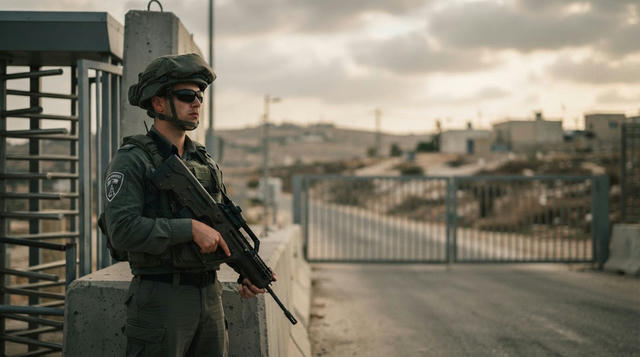
Syria: A New Crucible for Escalating Israeli-Turkish Rivalry
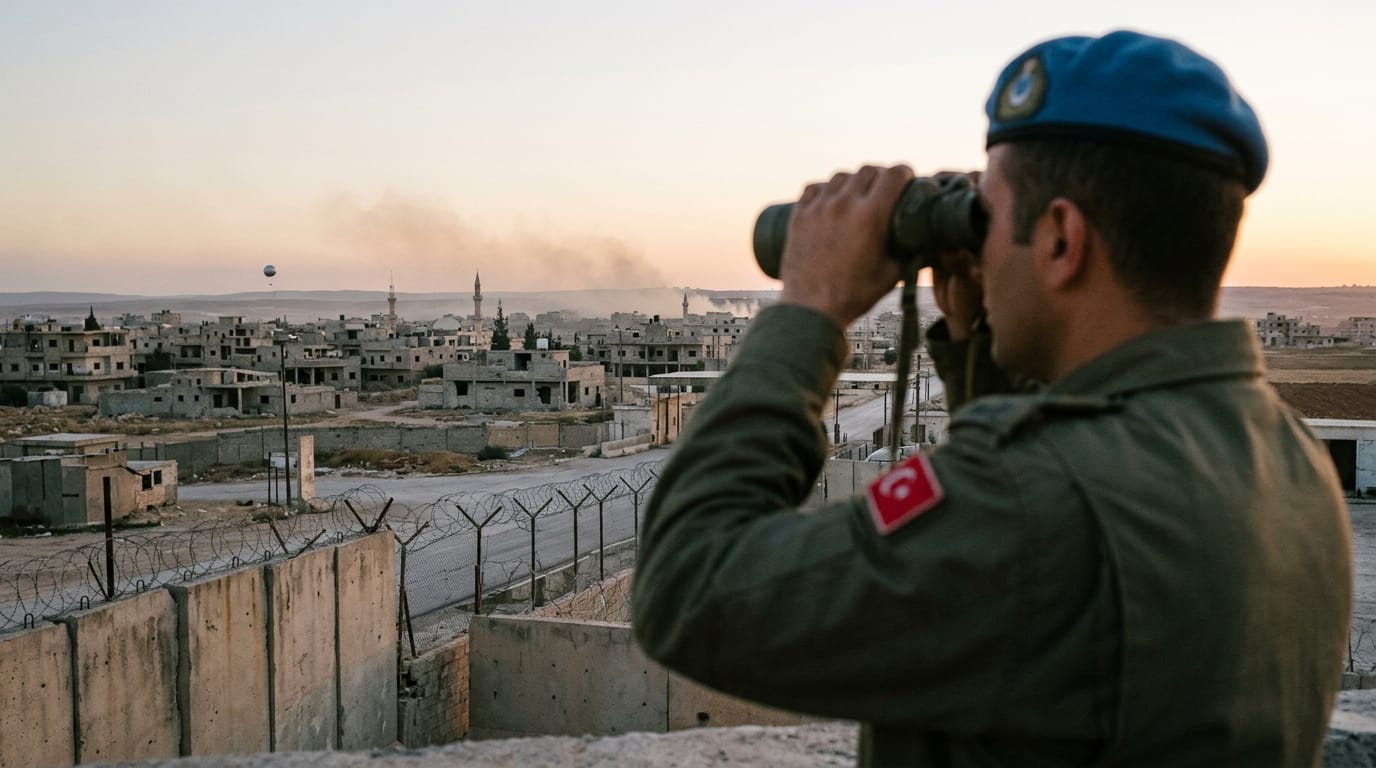
Damascus, Syria – Following the dramatic collapse of the Bashar al-Assad regime in December 2024, Syria has swiftly transformed into a precarious new arena for an intensifying strategic rivalry between Israel and Turkey. Once largely operating with distinct objectives in the war-torn nation, Tel Aviv and Ankara are now finding their geopolitical ambitions increasingly clashing, raising concerns about potential direct confrontations in a region already fraught with instability. The recent Israeli airstrike on the Abu al-Duhur airbase in northwestern Syria serves as a stark illustration of this perilous shift, bringing to the forefront a complex interplay of competing security interests, regional power projection, and deeply fractured diplomatic relations.
The Shifting Sands of Post-Assad Syria
The sudden downfall of the Assad government fundamentally altered the strategic landscape in Syria, creating both opportunities and anxieties for regional powers. For Turkey, the emergence of a new Syrian administration under Ahmed al-Sharaa (formerly known as Abu Mohammad al-Jolani) in December 2024 presented an opportunity to solidify its influence. Ankara has rapidly positioned itself as a leading supporter of the transitional government, aiming to assist in rebuilding Syrian state institutions, its army, and security services. Turkey's objectives in this endeavor are multi-faceted, encompassing the elimination of Kurdish influence along its southern border, geopolitical expansion, and strengthening its regional standing. Reports indicate Turkey's intention to train and equip the new Syrian army, effectively seeking to integrate Damascus into its strategic orbit. This move is seen by many as a clear effort by Turkey to project its power and shape the future of Syria in line with its national security interests.
Conversely, Israel views the rise of the new Islamist-led government in Damascus and Turkey's burgeoning influence with significant apprehension. For years, Israel maintained a "shadow war" in Syria, primarily focused on thwarting Iranian entrenchment and disrupting arms shipments to Hezbollah, operating largely under the tacit understanding that these actions did not threaten Assad's rule. However, Israel's post-Assad policy has become markedly more aggressive. Its primary goal is to keep the new Syrian regime weak and fragmented, explicitly preventing the deepening of Turkish influence, which Tel Aviv now considers a strategic threat on par with the previous Iranian challenge. Israel has intensified its military incursions into Syrian territory, moving beyond its previous limited strikes. It has occupied areas within the demilitarized buffer zone and other strategic positions adjacent to the Israeli-occupied Golan Heights, establishing a "security zone" and working to disarm southern Syria. This expanded military footprint underscores Israel's determination to shape Syria's future and prevent any consolidation of power that could pose a threat to its borders.
Conflicting Agendas and Red Lines
The heart of the escalating friction lies in the fundamentally divergent strategic objectives each nation pursues in Syria. Turkey's central aims include preventing any form of Kurdish autonomy, particularly by targeting groups like the Syrian Democratic Forces (SDF) and the YPG, which Ankara designates as terrorist organizations linked to the PKK. Beyond border security, Turkey seeks to solidify a stable, unified Syrian state that aligns closely with Ankara's regional vision. This involves not only military cooperation but also fostering economic and political ties to ensure a friendly government in Damascus.
Israel's priorities, however, present a direct challenge to these ambitions. Foremost among them is maintaining "freedom of action" – particularly aerial freedom of movement – across Syrian airspace. This unhindered operational capability is deemed crucial for Israel's ongoing efforts to counter Iranian and Hezbollah military activities in the region, which often involve targets deep within Syria. Consequently, Israel views any deployment of Turkish military infrastructure in Syria, such as advanced air defense systems or radar installations, as a direct threat that could restrict its air force's ability to operate. Furthermore, Israel is wary of Syria becoming a haven for Turkish-backed Islamist movements, drawing parallels to the Hezbollah model in Lebanon. Tel Aviv also aims to undermine the new Syrian regime's efforts to rebuild its army and centralize power, preferring a state of internal conflict that prevents it from becoming a cohesive threat. Israel has also actively sought to cultivate relationships with minority communities, such as the Druze, positioning itself as their protector to create buffers against potential threats.
The inherent clash between these objectives was vividly demonstrated by the Israeli airstrike on the Abu al-Duhur airbase in Idlib province on August 18, 2026. Israel justified the attack by asserting that Syria was on the verge of permitting Turkish forces to deploy there, a move it deemed a direct threat to its security. Turkey, however, vehemently denied these allegations, stating there were no plans for such a deployment. This incident underscored Israel's readiness to use force to prevent any transformation in Syria's military environment that could grant Turkey a deeper, more entrenched foothold near Israel's strategic sphere.
Deepening Diplomatic Freeze and Regional Implications
The escalating tensions in Syria are taking place against a backdrop of severely deteriorated Israeli-Turkish diplomatic relations. Historically, ties between the two nations, established in 1949, have weathered various storms, but they reached a profound low following the October 7, 2023, attacks and the subsequent war in Gaza. Turkey, under President Recep Tayyip Erdoğan, became one of Israel's most vocal critics, condemning its military operations in Gaza and openly supporting Hamas. This political and ideological schism has had tangible consequences, including a suspension of trade, a drastic decline in tourism, and the downgrading of diplomatic representation. While formal diplomatic relations have not been severed, the Israeli embassy in Ankara is not operating at full capacity, and relations are described as being at a "deep low".
Experts observe that Syria has now become the "strategic and military dimension" of this broader Turkish-Israeli rivalry. Professor Kobi Michael of the Institute for National Security Studies describes the situation as already constituting "direct friction" between the two powers. The complexity is further compounded by Turkey's status as a NATO member, which makes a direct military confrontation a high-stakes scenario with significant international implications.
The United States has acknowledged the perilous nature of this escalating rivalry and has initiated efforts to mediate and establish a deconfliction mechanism involving Israel, Turkey, and Syria. However, these diplomatic overtures face an uphill battle, as Washington itself has supported Kurdish forces in Syria, a key point of contention for Turkey. This interwoven web of alliances and antagonisms creates a challenging environment for any easy resolution.
A Precarious Balance
The future trajectory of Israeli-Turkish relations in Syria remains highly uncertain. While a full-scale military conflict between the two regional powers is generally considered unlikely, primarily due to the considerable military and political risks involved for both a NATO member and a formidable regional actor, the potential for a "cold struggle for influence" punctuated by "limited hot confrontations" is substantial. This ongoing competition could manifest in various forms, including mutual intelligence operations, a contest for shaping Syrian state institutions, a struggle over the rebuilding and orientation of the Syrian army, and competition for strategic bases and air assets.
Syria has undoubtedly become the "real testing ground" for this new, more confrontational chapter in Israeli-Turkish relations. The core tension persists: Israel's determination to maintain a permissive military environment in a weak and fragmented Syria, crucial for its security operations, versus Turkey's ambition to cultivate a strong, unified, and Ankara-aligned Syria that enhances its regional standing. While deconfliction mechanisms may help avert immediate miscalculations, they cannot resolve the fundamental divergence in strategic visions for Syria's future. The prospects for a durable normalization between Ankara and Tel Aviv appear bleak in the foreseeable future, ensuring that Syria will likely remain a critical axis of Middle Eastern rivalry, with profound implications for regional stability.