Syria One Year After Assad: Divisions Persist Amidst Hopes for a New Dawn
DAMASCUS, Syria – One year has passed since the abrupt collapse of Bashar al-Assad's authoritarian rule, a pivotal moment celebrated as "Liberation Day" across Syria. Yet, as the calendar turns to December 8, 2025, the country remains a complex tapestry of fragile hopes and entrenched divisions, still reeling from over a decade of civil war and facing immense challenges on its path to stability and national unity. While the absence of the Assad regime has opened doors for international re-engagement and nascent political reforms, deep-seated ethnic, sectarian, and political fault lines continue to threaten the hard-won peace, leaving many Syrians to wonder how long it will take for true healing to begin.
The Swift Demise of a Decades-Old Dynasty
The fall of the Assad regime on December 8, 2024, unfolded with surprising speed, marking the end of more than 50 years of family rule. A lightning offensive spearheaded by rebel forces, including Hay'at Tahrir al-Sham (HTS) and the Southern Operations Room, and supported by the Turkish-backed Syrian National Army, overwhelmed government defenses within days. As opposition fighters advanced on Damascus, Bashar al-Assad fled the capital, eventually finding asylum in Russia. The swiftness of the collapse reportedly caught even the insurgents off guard.
In the immediate aftermath, jubilant Syrians celebrated the end of an era, with prisoners from the notorious Sednaya facility among those freed. Ahmed al-Sharaa, formerly a prominent HTS leader, emerged as the interim president, tasked with navigating the turbulent transition. The date of Assad's ouster has since been officially designated "Liberation Day," an annual national holiday, symbolizing a new chapter for the war-torn nation.
Glimmers of Hope and International Re-engagement
In the year since Assad's departure, the interim government under President al-Sharaa has focused on establishing new governance frameworks, consolidating armed forces, and initiating transitional justice and reconciliation efforts. A significant step was the issuance of a "constitutional declaration," which repealed the 2012 Ba'athist constitution, laying the groundwork for a new legal order. Parliamentary elections were held in October 2025, further signaling a move towards institutional change.
Syria has also experienced a notable wave of diplomatic re-engagement and sanctions relief. The European Union suspended and subsequently lifted key economic sanctions to support the country's recovery. Similarly, the United Kingdom lifted some sanctions and delisted President al-Sharaa and Interior Minister Anas Khattab from counter-terrorism sanctions lists. President al-Sharaa has engaged with international leaders, including US President Donald Trump, and the presidents of France and Russia, marking Syria's gradual return to the global diplomatic stage. The country formally joined the US-led coalition against ISIS, and the UN Security Council paid its first-ever visiting mission to Syria in December 2025. These developments underscore a cautious optimism within the international community that a stable, post-Assad Syria could emerge with sustained support.
The Enduring Fault Lines: Divisions Threaten Unity
Despite the political shifts and international recognition, deep-seated internal divisions continue to pose significant threats to Syria's long-term stability. Ethnic and sectarian splits among Arabs, Kurds, Sunnis, Alawites, and Druze, among others, persist, fueling competing visions for the nation's future.
Sectarian violence has resurfaced in various parts of the country. Reports in March 2025 detailed retaliatory attacks targeting Alawite communities in Syria's western coastal region. The UN Independent International Commission of Inquiry on Syria has warned that massacres and human rights violations, some allegedly committed by the interim government's security forces, risk reigniting broader conflict, citing extra-judicial killings, torture, and forced displacement against Alawite civilians. Much of the sectarian hatred, particularly in Sunni-majority areas, appears to be deepening towards minority groups.
Meanwhile, the Kurdish-led Syrian Democratic Forces (SDF) in the northeast remain a key flashpoint. Talks aimed at integrating the SDF's military into the new Ministry of Defense have stalled, primarily over demands for constitutional changes to guarantee Kurdish rights. In the southern region of Suwayda, Druze activists have engaged in intermittent protests since deadly clashes in July, demanding self-determination and expressing mistrust toward the central government's intentions. Concerns also persist regarding arbitrary arrests in SDF-held areas, with nearly 800 detentions documented over the past year, some for criticizing SDF practices or supporting the new government. These instances highlight a fragmented civic and political space, where new repressive legal frameworks could yet emerge.
A Nation in Ruins: Humanitarian and Economic Hurdles
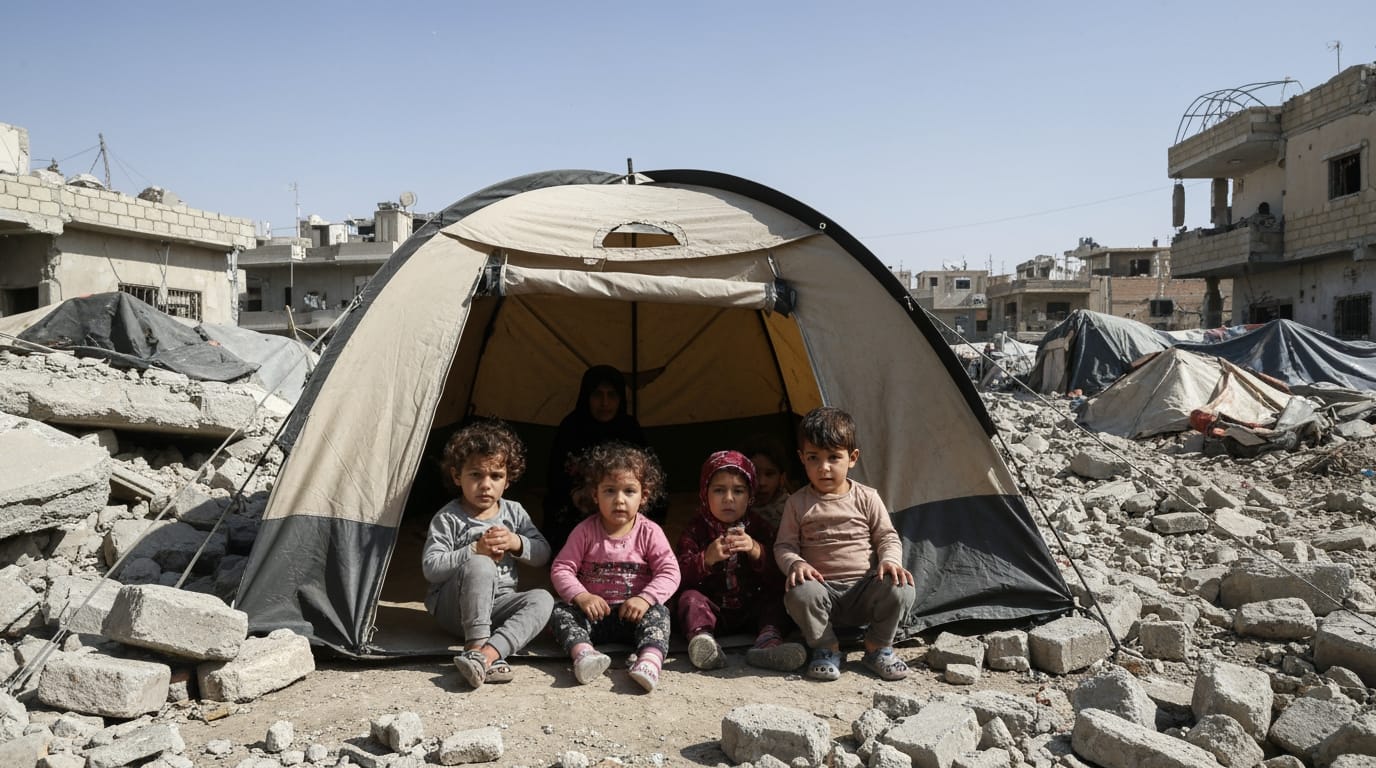
The human and economic toll of over 14 years of conflict remains staggering. An estimated 80% of Syrians are unemployed and dependent on aid, with 90% living in poverty and 25% in extreme poverty. The scale of reconstruction needed is immense, with 40% of schools damaged and 60% of health centers out of operation. Adding to the peril, unexploded ordnance has killed at least 600 civilians and injured over 1,200 in the past year alone.
Despite these daunting figures, there are nascent signs of economic recovery. The Central Bank of Syria reports that the economy is growing faster than anticipated, partly due to the return of approximately 1.5 million refugees and 1.9 million internally displaced people since December 2024. Returning Syrians, however, often find their homes in ruins, with limited access to basic services and a struggling economy. Significant international aid is still urgently needed, yet the UN's 2025 appeal for Syria is only 29% funded. Efforts to rebuild infrastructure are underway, with improvements in electricity supply thanks to aid from Qatar and Saudi Arabia, and a pledged $7 billion investment in grid infrastructure from a Qatari-led consortium. The Central Bank is also attempting to stabilize the currency and financial system, including issuing a new currency.
A Long Road Ahead
As Syria marks its first year without Bashar al-Assad, the future of the nation hangs in a delicate balance. The overthrow of a tyrannical regime has undeniably brought a sense of liberation and newfound international engagement. Yet, the deep scars of decades of authoritarianism and more than a decade of civil war have not healed. The interim government faces the monumental task of bridging profound ethnic, religious, and political divides while simultaneously rebuilding a shattered country and addressing the immense humanitarian needs of its population. The international community's sustained support, both financially and diplomatically, remains crucial to nurturing Syria's fragile transition. The path to a truly stable, unified, and inclusive Syria, where all citizens can live securely and with dignity, will be long and arduous, requiring patience, persistent reconciliation efforts, and an unwavering commitment to justice.


