Syrian President's Berlin Visit Ignites Fierce Debate
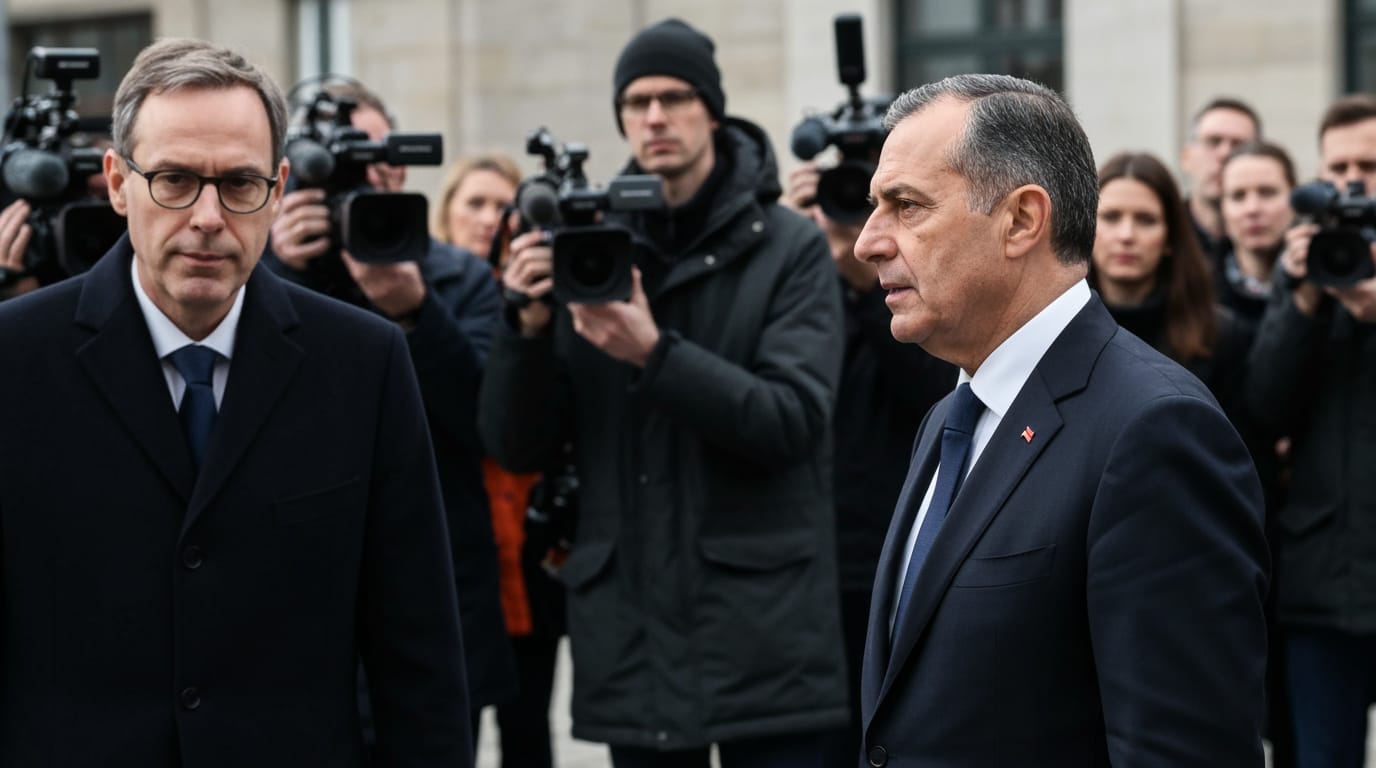
BERLIN – Syrian President Ahmed al-Sharaa is poised to embark on a historic visit to Germany this week, marking his first official trip to Berlin since assuming power in December 2024 following the ousting of longtime ruler Bashar al-Assad. However, what German officials hope will be a pivotal step toward diplomatic re-engagement and economic cooperation has instead unleashed a torrent of controversy, drawing sharp condemnation from human rights organizations and vocal segments of the Syrian diaspora across Europe. The visit underscores the complex and often contradictory calculus European nations face in navigating a post-Assad Syria, balancing the desire for stability and refugee return against deeply entrenched concerns over human rights and the legitimacy of the new leadership.
A New Era, A Contentious Figure
The anticipated arrival of President al-Sharaa in Berlin signifies a notable shift in European foreign policy towards Syria, reflecting a cautious move away from the staunch isolation maintained during the Assad regime. Al-Sharaa, described as a "former jihadist who later presented himself as a moderate figure," ascended to the presidency after leading rebel forces that ultimately deposed Bashar al-Assad. Since then, he has actively pursued a "rapid reinvention" on the international stage, undertaking diplomatic visits to the United States, France, and Russia, aiming to build trust with Western governments. This diplomatic push has already seen a series of international sanctions on Syria lifted, opening avenues for renewed engagement.
Germany, in particular, has signaled a desire for a "new start" with the transitional Syrian government. Its motivations are multifaceted, encompassing discussions on Syria's economic stability, post-conflict reconstruction, energy cooperation, and strengthening bilateral economic relations. Berlin had already reopened its embassy in Damascus in March 2025, and Syria reciprocated by opening a consulate in Bonn just last month, demonstrating a gradual thaw in diplomatic ties. A key agenda item for the upcoming talks with Chancellor Friedrich Merz and President Frank-Walter Steinmeier will be the issue of returning Syrian refugees from Germany to their homeland, a politically sensitive topic that has gained increasing prominence in European domestic debates.
The Deep Divide: Human Rights and Minority Concerns
Despite the official agenda, the visit has been met with significant resistance, primarily due to persistent human rights concerns and allegations of ongoing violence under al-Sharaa’s transitional administration. Critics point to the government's perceived failure to adequately protect minority communities, including Alawites, Druze, and Kurds, despite the President's assurances of a more inclusive approach. These concerns are amplified by al-Sharaa's past as a former Islamist rebel leader, a history that casts a long shadow over his claims of moderation.
The deep skepticism and outright opposition to the visit are particularly strong within Germany’s substantial Syrian diaspora. NGOs representing Kurdish and Alawite Syrian communities in Germany have publicly labeled the planned reception as "totally unacceptable". Protests have been organized by a broad coalition of groups, including Christian, Kurdish, Druze, and Alawite Syrians, as well as secular factions from the exiled Syrian community, all united in their criticism of what they perceive as al-Sharaa's "undemocratic leadership style". Concerns also exist among Syrians in Germany regarding al-Sharaa's actual capacity to safeguard minority rights effectively.
This scheduled visit is not without precedent in its controversial nature. An earlier attempt for al-Sharaa to visit Berlin in January 2026 was abruptly postponed at the last moment by the Syrian side. This cancellation came amidst a major military escalation by Syrian government forces against Kurdish groups in Aleppo and other regions, which sparked a wider confrontation with the Syrian Democratic Forces (SDF). This military action was seen as a breach of a March 2025 agreement between Sharaa and SDF commander Mazloum Abdi, further fueling doubts about the new government's commitment to peace and stability. The events surrounding the January postponement raised fundamental questions about the consistency of state actions and the protection of victim communities who had found refuge in Germany.
Germany's Shifting Stance and Domestic Pressures
Germany's decision to host President al-Sharaa reflects a complex interplay of foreign policy objectives and domestic pressures. With roughly one million Syrians having sought refuge in Germany, particularly during the peak of the civil war in 2015-2016, the issue of refugee integration and potential repatriation remains a significant political challenge. While many Syrians have successfully integrated into the German labor market, helping to address workforce shortages, persistent concerns about criminality and security risks have led to a sharpening domestic debate over Syrian refugees. Some voices within Germany, particularly from far-right parties, are increasingly urging for the return of Syrians to their home country.
For Berlin, engaging with the new Syrian leadership offers a pragmatic, albeit controversial, pathway to discuss the conditions and mechanisms for such returns. German government spokespersons have explicitly stated that the talks aim to address the issue of Syrians residing in Germany and their potential return. Additionally, Germany sees an opportunity to contribute to the reconstruction of war-torn Syria, with potential economic benefits and a chance to foster regional stability. The lifting of numerous EU, UN, and other sanctions following Assad's overthrow has created a perceived foundation for economic recovery, and Germany is keen to explore its role in this process.
Navigating the Path to Stability: Engagement vs. Isolation
The visit of President al-Sharaa to Germany encapsulates a broader international dilemma: how to effectively address the aftermath of the Syrian conflict. On one side, proponents of engagement argue that dialogue with the current leadership is a necessary evil to foster stability, facilitate reconstruction, and manage the complex issue of refugee returns. They suggest that prolonged isolation risks exacerbating humanitarian crises and creating a vacuum that extremist groups could exploit. By offering a path to re-engagement, Germany and other European nations might be able to exert some influence over the future trajectory of Syria, albeit limited.
Conversely, a substantial chorus of critics, including human rights advocates and many Syrian exiles, argues that engaging with a leader like al-Sharaa, despite the change in presidency, risks legitimizing a regime still implicated in abuses and lacking genuine democratic credentials. They fear that such visits send a message that past atrocities can be overlooked in the name of political expediency, undermining international efforts to hold perpetrators of war crimes accountable. The ongoing violence and unresolved issues surrounding minority protection further complicate any attempts at normalization, suggesting that the "new beginning" might be more cosmetic than substantive for many Syrians.
Conclusion
President Ahmed al-Sharaa's visit to Germany this week stands as a stark testament to the intricate and often contradictory nature of international diplomacy in the wake of prolonged conflict. While Germany eyes opportunities for diplomatic renewal, economic partnership, and a strategic solution to its refugee challenge, the controversial nature of the Syrian leadership and the deep scars of the civil war ensure that the visit will be anything but straightforward. The protests in Berlin and the outcry from human rights organizations underscore the profound moral and ethical questions embedded in such engagements. As discussions unfold, the world will be watching to see how Germany navigates the delicate balance between geopolitical pragmatism and the imperative to uphold human rights, and what long-term implications this controversial dialogue will have for Syria's future and its relationship with the international community.


