Taiwan Urges U.S. to Advance Arms Deal Following Trump-Xi Summit Deliberations
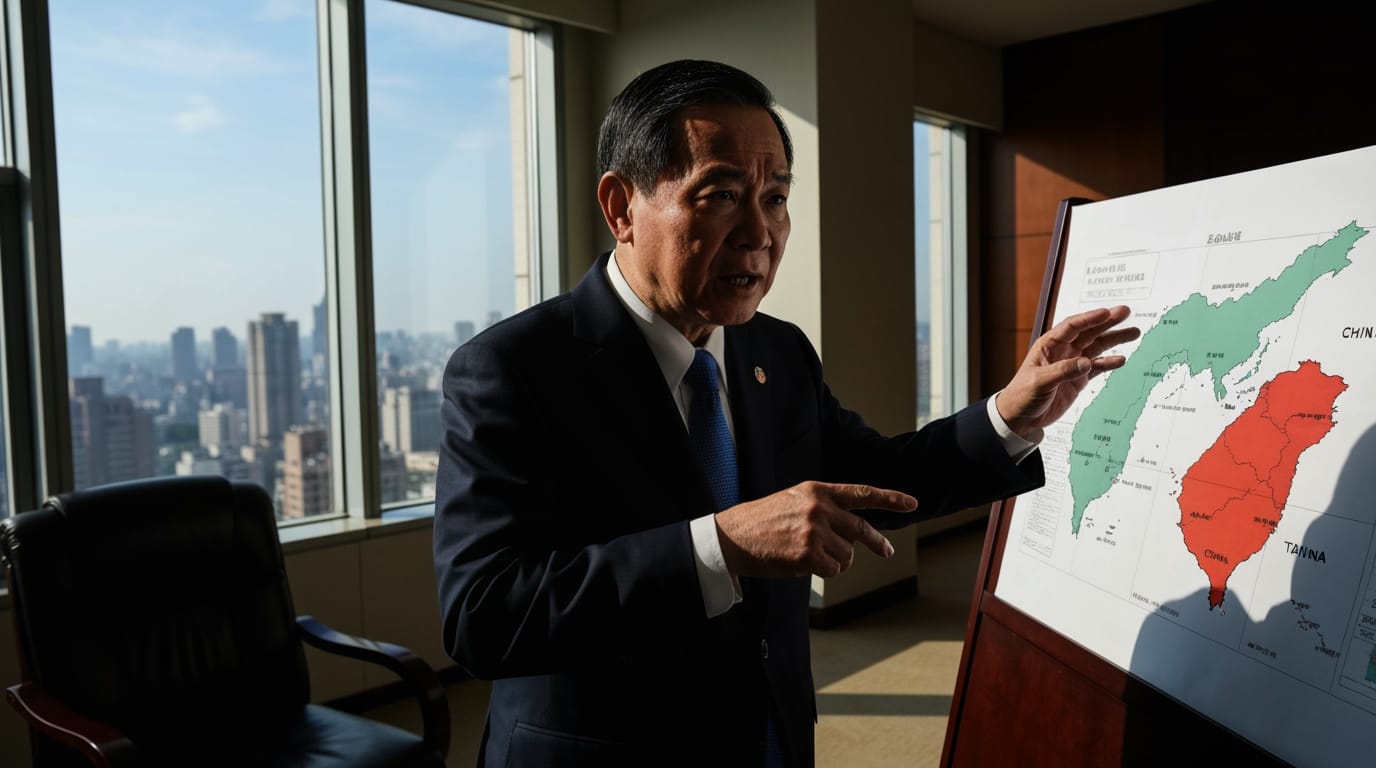
Taipei, Taiwan – Taiwan has underscored the critical importance of proposed U.S. arms sales for its self-defense, urging Washington to move forward with vital military packages after former President Donald Trump indicated a period of deliberation following a high-stakes summit with Chinese President Xi Jinping. The call from Taipei highlights the enduring geopolitical tightrope walked by the democratic island nation amidst escalating regional tensions and the complex dynamics of U.S.-China relations.
Taipei’s plea comes in the wake of comments made by President Trump aboard Air Force One, where he expressed a non-committal stance on a significant arms deal for Taiwan. The former president acknowledged discussions with his Chinese counterpart, Xi Jinping, during a summit in Beijing, where the issue of U.S. arms sales to Taiwan was reportedly raised by the Chinese leader. Trump's remarks suggested that a decision on the pending arms package would be made "over the next fairly short period" and even implied a potential direct conversation with Taiwan's leader, a move that would represent an unprecedented shift in diplomatic protocol since the U.S. formally recognized Beijing in 1979.
Taipei's Appeal for Certainty
For Taiwan, the continuity of U.S. military support is not merely a matter of policy but a cornerstone of its national security. Deputy Foreign Minister Chen Ming-chi reiterated that U.S. arms sales are explicitly confirmed under the Taiwan Relations Act (TRA), a foundational piece of U.S. legislation enacted in 1979. Karen Kuo, spokesperson for Taiwan's President Lai Ching-te, emphasized that arms sales constitute "not only a clear security commitment under the Taiwan Relations Act, but also a form of collective deterrence against regional threats." Taiwan's government has consistently argued that these sales are essential for maintaining peace and stability in the Indo-Pacific region, especially given China's continuous military pressure and assertion of sovereignty over the self-governed island.
Prior to the summit, the Trump administration had authorized a record-setting $11 billion weapons package for Taiwan in December. However, a second package, estimated at $14 billion and reportedly including advanced interceptor missiles, was awaiting Trump's formal approval before it could be sent to Congress. The uncertainty surrounding this second deal has fueled concerns in Taipei about the consistency of U.S. backing at a time when China's military capabilities and assertive posture are growing. Taiwan's defense authorities continue to communicate with the U.S. side to understand the situation, acknowledging the sensitive nature of these deliberations.
The Diplomatic Tightrope: Washington's Balancing Act
President Trump's post-summit comments signaled a potential strategic recalculation, viewing the arms package as a "bargaining chip" in broader U.S.-China negotiations. He notably stated, "I'm temporarily withholding approval, and it depends on China. It's a very good bargaining chip for us." This transactional approach, while characteristic of the former president's foreign policy, raised questions among analysts and policymakers regarding the long-standing "Six Assurances" — a set of non-binding U.S. policy principles from 1982. The second of these assurances explicitly states that the U.S. "did not agree to consult with the People's Republic of China on arms sales to Taiwan." Trump's acknowledgment of discussing the matter with Xi could be perceived as a departure from this established principle, potentially unsettling the carefully calibrated balance of U.S. policy.
The former president also voiced a desire to avoid a distant conflict, stating, "I think the last thing we need right now is a war that's 9500 miles away." He reiterated a preference for "maintaining the status quo" regarding Taiwan and expressed opposition to any moves toward Taiwanese independence that could provoke conflict. Despite Trump's perceived hesitancy, it is important to note that his administration generally increased arms sales to Taiwan, with the volume and sophistication of weapons surpassing previous administrations' standards, aimed at counterbalancing China's expanding military power in the Taiwan Strait.
Beijing's Firm Opposition
China's stance on U.S. arms sales to Taiwan remains unequivocally firm: Beijing considers such sales a severe interference in its internal affairs and a violation of the "One China" principle. Chinese officials have consistently protested these transactions, reiterating that the "Taiwan question is at the core of China's core interests and the first red line that cannot be crossed in China-U.S. relations." The Chinese Foreign Ministry has urged the U.S. to abide by the "One China" principle and the Three China-U.S. Joint Communiqués, particularly the August 17, 1982 Communiqué, which states that the U.S. "does not seek to carry out a long-term policy of arms sales to Taiwan" and "intends to reduce gradually its sales of arms to Taiwan."
China's military, the People's Liberation Army (PLA), frequently conducts drills and air incursions around Taiwan, signaling its resolve to assert sovereignty and deter any moves towards formal independence. Beijing views Taiwan's democratically elected government as "separatists" and has never renounced the use of force to bring the island under its control, complicating cross-strait relations and regional stability.
The Larger Geopolitical Chessboard
Taiwan's strategic importance extends beyond its democratic governance. Situated within the "First Island Chain," its geographic position is crucial for regional security and global trade, particularly given its dominance in the advanced semiconductor industry. The U.S., through the Taiwan Relations Act, maintains an obligation to provide Taiwan with the means to defend itself, a commitment widely supported by a bipartisan consensus in the U.S. Congress. This support underscores a broader U.S. interest in upholding peace and stability in the Indo-Pacific.
Taiwan, for its part, has been actively pursuing a "porcupine strategy," investing significant sums in its own defense to develop asymmetric warfare capabilities that could deter or complicate a potential invasion. The island has increased its defense spending, with its 2026 defense budget at 3.2% of GDP, and aims to reach 5% of GDP by 2030. This strategy focuses on acquiring numerous, smaller, highly mobile, and lethal systems designed to inflict prohibitive costs on an invading force, rather than matching China's conventional military might.
Enduring Tensions and Taiwan's Quest for Security
The delicate balancing act between Washington, Beijing, and Taipei continues to define regional geopolitics. While the U.S. officially adheres to the "One China" policy, its commitment under the Taiwan Relations Act provides critical security assurances to Taiwan. The recent episode following the U.S.-China summit serves as a stark reminder of the complexities inherent in this relationship and the constant need for Taiwan to seek clear and consistent support for its defense.
As Taiwan navigates persistent threats from mainland China, the advancement of arms deals from its primary international backer remains paramount. The ongoing dialogue between Washington and Beijing, often punctuated by strategic ambiguities and transactional considerations, ensures that Taiwan's quest for security will remain a central, sensitive issue on the global stage. The stability of the Taiwan Strait, and by extension, the broader Indo-Pacific, hinges on a precarious equilibrium, where U.S. defense commitments and Taiwan's self-reliance form critical pillars against an assertive China.


