Taiwan's Lai Returns from Eswatini Amidst Beijing's Vehement Opposition
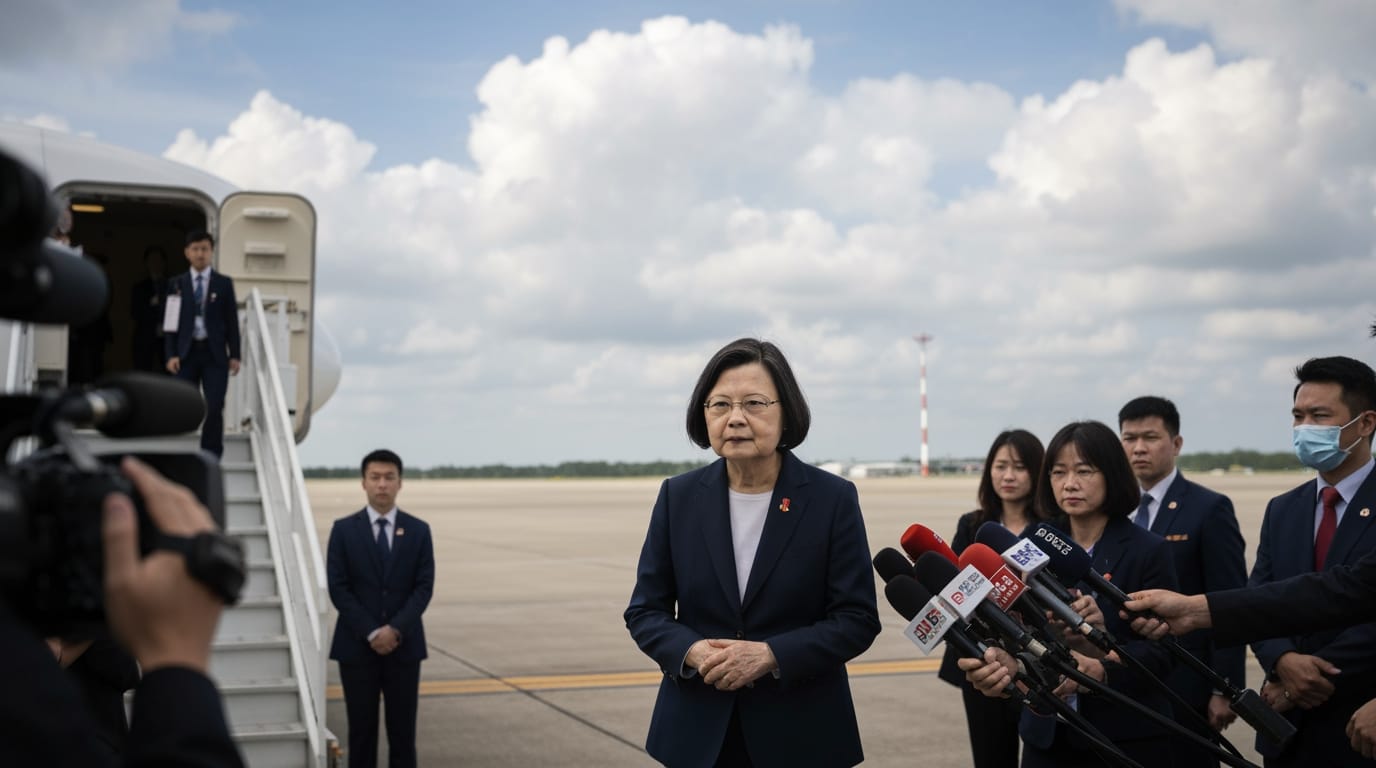
Taipei, Taiwan – Taiwan's President Lai Ching-te returned to Taipei this week following a high-stakes diplomatic visit to Eswatini, his nation's sole remaining African ally, a trip that drew fierce condemnation and alleged obstruction attempts from Beijing. The journey underscored Taiwan's ongoing struggle to maintain its international presence against China's relentless campaign for diplomatic isolation, as well as its determination to engage with global partners despite significant geopolitical pressure.
The visit, which concluded Tuesday, May 5, was originally scheduled for late April but was delayed after Taiwan accused China of pressuring several Indian Ocean nations to revoke overflight permissions for Lai's aircraft. Despite these reported obstacles, President Lai ultimately completed his mission, reiterating upon his return that Taiwan would not yield to external pressures and asserting its fundamental right to engage with the international community.
A Diplomatic Mission Under Duress
President Lai Ching-te’s state visit to Eswatini, a small Southern African kingdom, was intended to commemorate the 40th anniversary of King Mswati III's accession to the throne and his 58th birthday. Beyond the ceremonial aspects, the trip aimed to reinforce the longstanding diplomatic ties between Taiwan and Eswatini, which date back to 1968. Taiwan has historically provided significant aid and investment to Eswatini, supporting various development projects. During his visit, President Lai toured Taiwan-funded initiatives, including a planned Taiwan Industrial Innovation Park and a Strategic Oil Reserve project, emphasizing Taiwan's commitment as a reliable and resilient partner.
The delegation's initial travel plans, set for April 22-26, were disrupted when Seychelles, Mauritius, and Madagascar reportedly rescinded previously granted overflight permits. Taiwan’s government attributed these cancellations to "strong pressure" and "economic coercion" from China, characterizing Beijing's actions as a blatant interference in the internal affairs of other countries. Reports also indicated that Germany and the Czech Republic had denied Taiwan's requests for transit through their airspace.
Undeterred, President Lai's team made alternative arrangements. He ultimately departed for Eswatini on May 2 aboard King Mswati III's private Airbus A340 jet. The return journey on May 4 was meticulously planned, involving a circuitous route over the southern Indian Ocean to avoid airspace controlled by nations considered close to China. The flight garnered significant global attention, with over 14,000 people reportedly tracking it on flight monitoring applications. This "arrive then announce" strategy aimed to minimize further interference.
Beijing's Swift and Harsh Rebuttal
Beijing's reaction to Lai's visit was swift and unequivocally hostile. China, which regards Taiwan as an inseparable part of its territory with no right to state-to-state relations, views any official interactions between Taiwan and sovereign nations as a challenge to its "One China" principle. Chinese officials condemned President Lai as a "troublemaker" and "separatist," describing the visit as a "farce" and a "stunt." A spokesperson for the State Council's Taiwan Affairs Office likened Lai's conduct to that of a "rat scurrying across the street" and accused him of "sneaking" out of the island and wasting taxpayer money.
The Chinese Foreign Ministry praised the actions of countries that denied overflight permissions, stating their adherence to the "One China" principle was in full compliance with international law. This robust response highlights China's intensified diplomatic and economic pressure tactics, often dubbed an "anaconda strategy," designed to isolate Taiwan on the global stage. Chinese state media further amplified Beijing's narrative, criticizing Lai for proceeding with the trip even as an earthquake struck Taiwan, portraying it as indifference to his own people.
Taiwan's Diminishing Diplomatic Space
Eswatini holds particular significance for Taiwan as its last remaining diplomatic ally on the African continent. Once boasting around 30 African allies, Taiwan's official presence in Africa has dwindled significantly since the People's Republic of China assumed China's seat at the United Nations in 1971. Eswatini has consistently maintained its recognition of the Republic of China (Taiwan) since 1968, a steadfastness that Taiwan highly values.
The consistent erosion of its diplomatic partners forces Taiwan to prioritize substantive relationships over formal recognition and strategically invest in its remaining allies. The incident with the denied overflight permissions marks a new dimension in China's efforts to restrict Taiwan's international engagement, extending beyond traditional diplomatic poaching to directly impede travel for Taiwanese leaders. This tactic aims to demonstrate China's expanding influence and ability to dictate Taiwan's international movements.
International Reaction and Cross-Strait Tensions
The diplomatic maneuvering surrounding President Lai’s Eswatini visit drew international attention. The U.S. State Department weighed in, characterizing Lai's travel as "routine and should not be politicized." Washington reiterated that Taiwan's global partnerships yield significant benefits for partner countries, including Eswatini, and signaled its continued support for Taiwan's international engagement despite Beijing's objections. This stance underscores the delicate balance the United States maintains, acknowledging the "One China" policy while supporting Taiwan's democratic government.
The incident further escalates cross-strait tensions, which have been consistently high. China regularly conducts military exercises around Taiwan and sends fighter jets and naval vessels into Taiwan's self-declared air defense identification zone. Taiwan's government remains resolute, with President Lai asserting that his nation has a right to engage with the world and "will not retreat in the face of suppression." The perceived obstruction of a diplomatic trip, followed by its successful completion through alternative means, serves as a testament to Taiwan's determination to break through Beijing's efforts to isolate it.
Conclusion
President Lai Ching-te's journey to and from Eswatini highlights the complex and often precarious nature of Taiwan's diplomatic efforts. In the face of intense pressure and direct attempts at obstruction from Beijing, Taiwan demonstrated a commitment to nurturing its international relationships. While China views such visits as provocative challenges to its sovereignty claims over the island, Taiwan asserts its right to engage as a sovereign entity on the global stage. The episode underscores the ongoing geopolitical tug-of-war, where even a routine state visit can become a battleground, shaping the future of cross-strait relations and Taiwan's place in the international community.


