Taiwan's Opposition Leader to Visit China Amid Heightened Cross-Strait Tensions
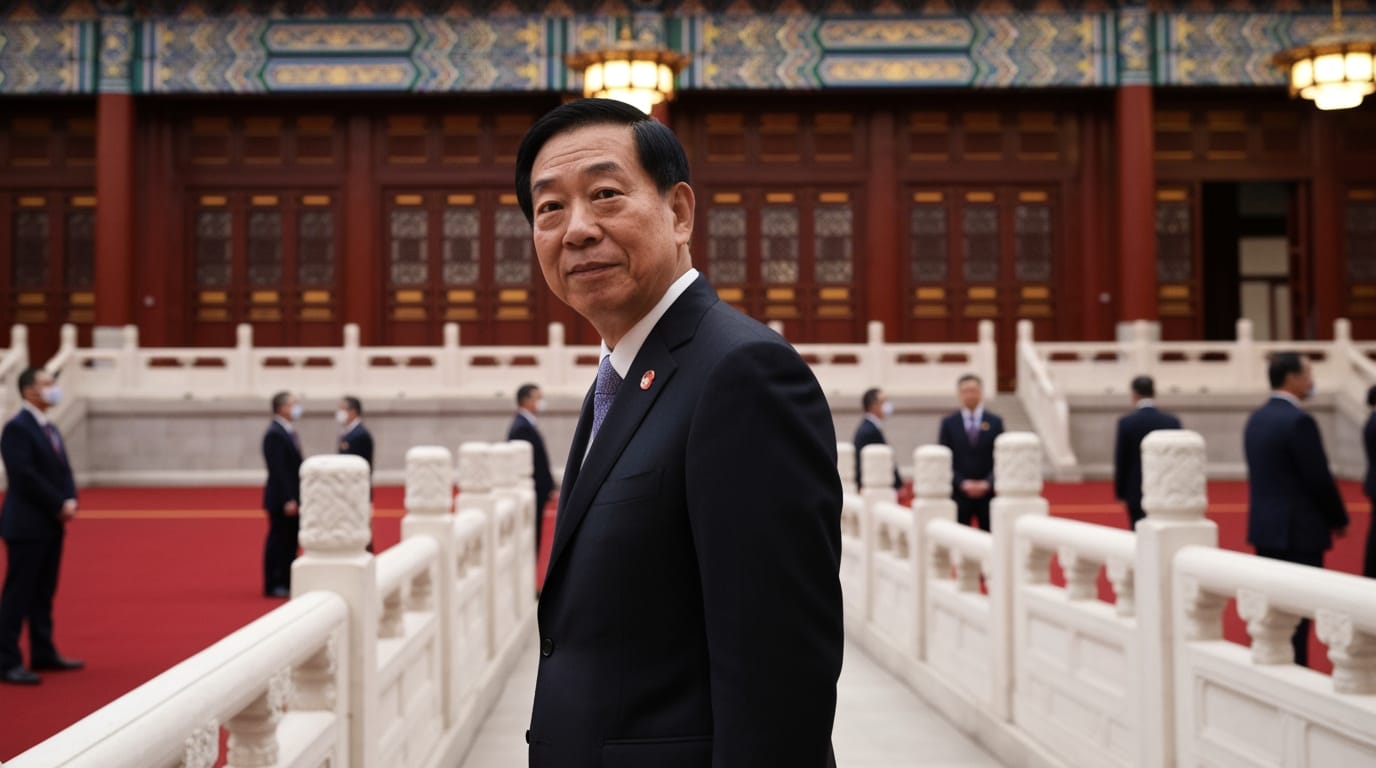
Taipei, Taiwan – In a development poised to reshape the delicate balance of cross-Strait relations, Cheng Li-wun, the newly appointed chairperson of Taiwan's main opposition Kuomintang (KMT) party, has accepted an invitation from Chinese President Xi Jinping to visit mainland China next month. The planned delegation, slated for April 7-12, comes amidst a period of escalating military and political tensions between Beijing and Taipei, placing a critical spotlight on the future of dialogue and potential pathways to de-escalation in the volatile region.
Cheng Li-wun, who assumed her leadership role in November, confirmed her acceptance of the invitation on Monday, March 30, emphasizing that the trip aims to demonstrate that "the two sides are not destined for war." This move by the KMT, traditionally advocating for closer ties with Beijing, is being closely watched by political observers both domestically and internationally, particularly as it precedes a scheduled visit by U.S. President Donald Trump to Beijing in mid-May.
The Invitation and the KMT's Stated Goals
The invitation to Cheng Li-wun was extended by the Central Committee of the Communist Party of China (CPC) and Xi Jinping, with China's Taiwan Affairs Office (TAO) Director Song Tao noting Cheng's repeated expressions of a desire to visit the mainland since taking office. The KMT chairperson "gladly accepted" the offer, according to party statements, articulating hopes for joint efforts to advance the peaceful development of cross-Strait relations.
The KMT delegation's itinerary includes visits to Jiangsu, Shanghai, and Beijing, though specifics on whether Cheng will meet directly with President Xi Jinping remain unconfirmed, despite her public push for such a high-level engagement. Central to the KMT's approach for these discussions is the "1992 Consensus," a tacit understanding between the KMT and the CCP that acknowledges "one China" while allowing for differing interpretations. Cheng underscored that any efforts to improve relations during her visit must be based on this consensus and an opposition to Taiwan independence, aligning with the KMT's long-standing policy. The party believes that engagement through such channels is crucial for fostering stability and improving the well-being of people on both sides of the Strait.
Historical Precedent and Evolving Cross-Strait Dynamics
High-level exchanges between the KMT and the CCP are not without historical precedent. Since the Kuomintang retreated to Taiwan in 1949 following the Chinese Civil War, party-to-party dialogue has served as an important, albeit often contentious, communication channel. Notably, in 2005, then-KMT chairman Lien Chan embarked on a "peace journey" to China, holding talks with then-CCP General Secretary Hu Jintao, marking the first meeting between the two parties' leaders since 1945. Subsequent visits by KMT leaders, including Wu Po-hsiung in 2008 and 2009, further solidified this party-to-party engagement, often centered on the "1992 Consensus."
However, the current political landscape differs significantly. Taiwan's ruling Democratic Progressive Party (DPP), led by President Lai Ching-te, maintains a stance that does not endorse the "1992 Consensus," which Beijing views as a prerequisite for official government-to-government dialogue. Consequently, Beijing has refused to engage with the DPP administration, often labeling President Lai as a "separatist." This has created a vacuum in official communication, with party-to-party exchanges, particularly involving the KMT, taking on amplified significance as a de facto channel. The current visit signals Beijing's continued strategy of engaging with politically non-independence-leaning groups in Taiwan.
Domestic Political Fallout and Geopolitical Implications
The KMT's decision to send a high-profile delegation to China has ignited considerable debate within Taiwan. The ruling DPP has sharply criticized Cheng, accusing her of being overly pro-China and, more specifically, of stalling government defense spending plans. This accusation touches upon a sensitive nerve, as Taiwan grapples with increased pressure from Beijing, which has ramped up military drills and assertive actions in the Taiwan Strait over the past three years.
Adding to the domestic complexities, Taiwan is currently experiencing significant political gridlock. Since President Lai Ching-te assumed office in May 2024, the executive branch, controlled by the DPP, has faced clashes with the opposition-controlled Legislative Yuan, where the KMT and the smaller Taiwan People's Party (TPP) hold a majority. This discord has reportedly stalled legislative approval for crucial defense spending increases and national security reforms. Concerns are also circulating within the KMT itself that a meeting between Cheng and Xi could trigger a voter backlash in upcoming district elections later this year, highlighting the delicate balance the party must strike between engaging Beijing and maintaining public support in a democratically vibrant society.
On the international stage, the visit carries significant geopolitical weight. It occurs just weeks before a critical meeting between U.S. President Donald Trump and President Xi Jinping in Beijing, where cross-Strait stability is expected to be a key topic. Beijing's invitation to Cheng Li-wun can be interpreted as an attempt to exert influence over Taiwan's political narrative, potentially seeking to demonstrate that dialogue is possible when based on Beijing's terms, while simultaneously isolating the DPP administration. This strategy aims to advance Beijing's long-term goal of "reunification" with Taiwan, an objective Xi Jinping has stated "must be fulfilled," even if not ruling out the use of force. The visit, therefore, is not merely an internal affair but a move with wide-ranging implications for regional stability, U.S.-China relations, and the intricate dynamics of power in the Indo-Pacific.
Conclusion
Cheng Li-wun's impending visit to mainland China represents a pivotal moment in cross-Strait relations, underscored by the KMT's commitment to dialogue based on the "1992 Consensus." While presented by the KMT as an effort to promote peace and stability, the trip is fraught with domestic political challenges for the opposition party and carries significant geopolitical ramifications. As the delegation prepares to depart, the world watches to see what, if any, bridges can be built across the Taiwan Strait, and how these renewed party-to-party engagements will impact the complex and increasingly tense relationship between Taipei and Beijing. The success or failure of this visit to foster tangible de-escalation and understanding will undoubtedly shape the narrative of cross-Strait future for years to come.


