Taiwan's Precarious Energy Lifeline: A Hidden Russian Dimension in China Conflict Scenario
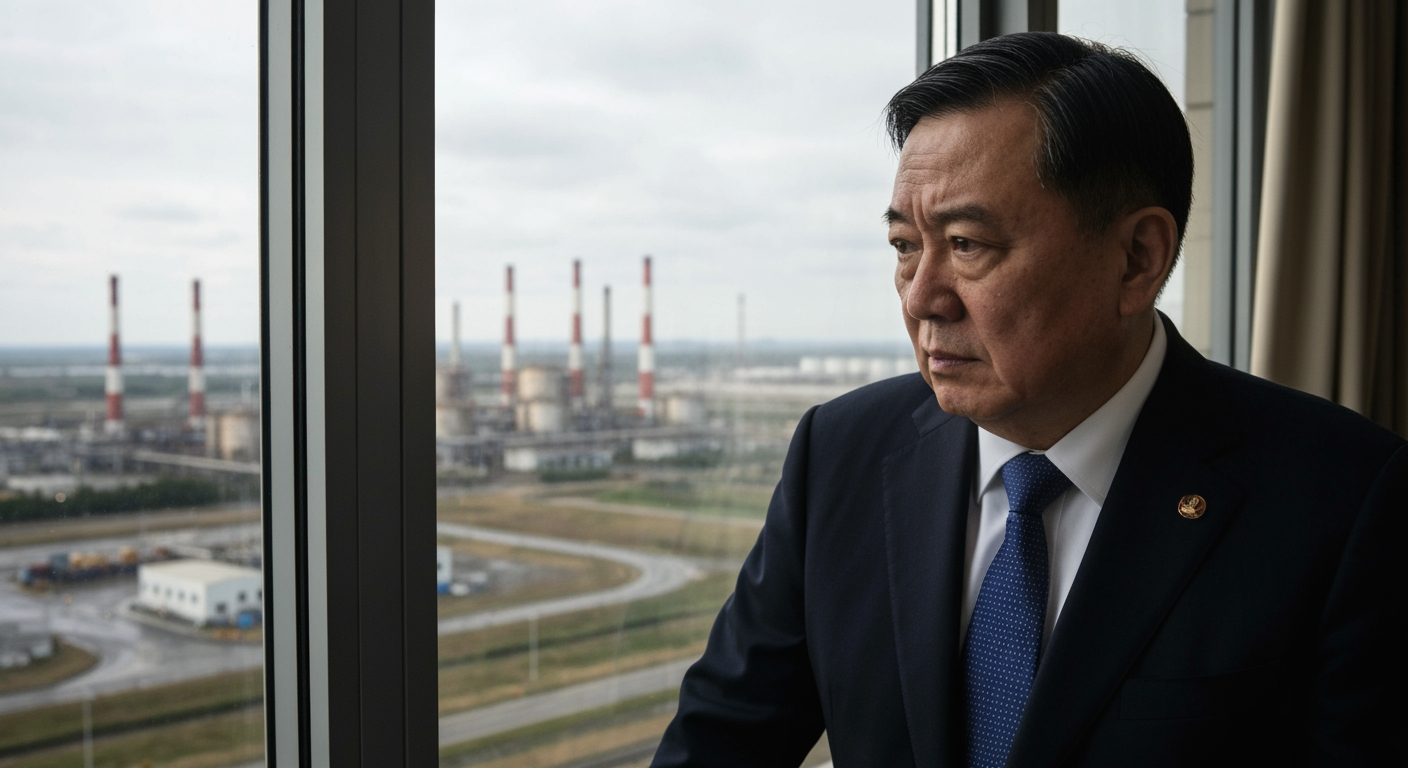
Taipei, Taiwan - As geopolitical tensions simmer across the Taiwan Strait, the island nation's profound reliance on imported energy stands as its most critical vulnerability, a challenge unexpectedly complicated by Russia's enduring role in global energy markets. With nearly 98% of its energy needs met by imports, Taiwan faces a multifaceted threat to its economic and national security should a conflict with Beijing erupt, a scenario where the indirect influence of Russian energy could exacerbate an already precarious situation. The island's energy independence is minimal, rendering it highly susceptible to any disruption of its maritime supply routes.
Taiwan, a global powerhouse in semiconductor manufacturing, depends heavily on a constant and uninterrupted energy supply. Its energy mix is dominated by fossil fuels, with natural gas and coal accounting for over 80% of electricity generation. Crude oil, primarily from the Middle East and West Africa, makes up a significant portion of its total energy consumption, with LNG imports also crucial. However, the strategic reserves are alarmingly low: merely 11 to 14 days for liquefied natural gas (LNG), 30 to 42 days for coal, and approximately 146 days for crude oil. This stark reality presents China with potential "gray-zone tactics" to exert pressure, even without a full-scale invasion, by targeting energy supply lines through economic, legal, or cyber warfare.
The Vulnerable Archipelago: A Maritime Energy Lifeline
Taiwan's geographical isolation dictates its energy import strategy, with nearly 100% of its crude oil arriving via tankers. The primary receiving ports for these vital shipments are predominantly located on the island's vulnerable west coast, directly facing mainland China. This creates a direct exposure to potential Chinese People's Liberation Army Navy (PLAN) operations, which could include blockades or quarantines. Recent war games have starkly illustrated this peril, suggesting that a Chinese blockade could slash Taiwan's electricity production to a mere 20% of its pre-blockade levels, effectively halting critical manufacturing sectors, including the global semiconductor industry. Such a disruption would not only devastate Taiwan's economy but also send catastrophic ripples through the global technological supply chain.
The energy vulnerability is further compounded by Taiwan's shift away from nuclear power. Following the decommissioning of its last operational nuclear power plant in May 2025, Taiwan officially entered a nuclear-free era. While there is ongoing debate about restarting nuclear facilities and significant investment in renewable energy, the immediate reliance on imported fossil fuels for electricity generation remains profound.
Russia's Indirect Hand: Fuelling Global Instability
The role of Russian energy in this complex scenario, though not always direct, introduces a significant "hidden risk" for Taiwan. While Taiwan has joined international sanctions against Russia following its 2022 invasion of Ukraine, evidence suggests continued, albeit often indirect, energy trade. Taiwan has been identified as the world's fifth-largest importer of Russian coal, with imports increasing from 12% in 2022 to 18% in 2024. Furthermore, since February 2022, Taiwan has become the largest global importer of Russian naphtha, a petroleum derivative crucial for the semiconductor industry, acquiring $4.9 billion worth, representing 20% of Russia's total naphtha exports. While state enterprises reportedly do not engage in these imports, private companies continue to procure Russian naphtha. This ongoing trade, despite Taiwan's stated support for Ukraine, indirectly contributes to Russia's war economy, a factor that could influence the broader geopolitical landscape and the strategic calculus of both Beijing and Moscow.
Beyond direct imports, Russia's broader influence on global energy markets poses an indirect, yet potent, threat. The Russia-Ukraine conflict triggered an unprecedented global energy crisis, leading to significant price surges and market volatility worldwide. Should a conflict erupt in the Taiwan Strait, combined with Russia's ongoing disruption of European energy stability and its pivot towards Asian markets, the global energy system would face an even more severe shock. Russia's burgeoning energy cooperation with China could also create an alternative energy bloc, potentially limiting the effectiveness of Western sanctions against Beijing in a conflict scenario and making it more challenging for Taiwan to secure alternative supplies if traditional sources are pressured.
The Geopolitical Interplay: Pressure Points and Alliance Dynamics
The intricate web of global energy dependencies means that even Taiwan's established energy partners are not immune to geopolitical pressure. Several countries supplying Taiwan with crucial LNG, such as Qatar, also maintain significant economic ties with Beijing. Experts warn that China could leverage these relationships to subtly influence or even disrupt Taiwan's energy lifelines without overt military action. The formation of a Russia-China energy axis could further complicate these dynamics, empowering a revised global energy geometry that is less susceptible to Western influence.
Addressing these vulnerabilities requires a multi-pronged approach. Taiwan is exploring diversification of energy import sources, increasing strategic reserves, and investing heavily in renewable energy. However, the logistical challenges and the sheer scale of energy demand mean that immediate and complete self-sufficiency remains an distant goal. The island's energy security is intrinsically linked to broader international stability and the ability of global powers to manage and mitigate geopolitical risks that impact energy flows.
Conclusion: A Looming Energy Imperative
Taiwan's energy predicament is a critical flashpoint in any potential conflict scenario. Its near-total dependence on imported energy, coupled with limited strategic reserves and vulnerable maritime supply routes, presents a profound strategic challenge. While direct dependence on Russian energy is not the primary concern, Russia's central role in global energy markets, its increasing alignment with China, and its demonstrated capacity to weaponize energy can indirectly exacerbate Taiwan's vulnerabilities. The ongoing, albeit controversial, imports of Russian fossil fuels by Taiwan's private sector also introduce a layer of complexity, potentially undermining broader international efforts to isolate Moscow.
As the international community watches the Taiwan Strait with increasing concern, ensuring Taiwan's energy resilience becomes not just a matter of national survival for the island, but a critical imperative for global economic stability. The hidden risks emanating from Russia's influence on the global energy landscape underscore the intricate and interconnected nature of modern geopolitics, where distant conflicts can have profound and unexpected consequences for nations far removed from the immediate theater of operations.
Related Articles


The Regulatory Maze: Why Taming Social Media Harms Remains an Elusive Quest
The digital public square, once heralded as a beacon of connection and information, has increasingly become a battleground rife with misinformation, hate speech, cyberbullying, and threats to mental health. Despite...


Gamescom 2026: Industry Thrives Amid Record Success, Grapples with AI's Transformative Power
COLOGNE, GERMANY – Gamescom 2026, the world's largest video game trade fair, concluded its latest edition with resounding success, demonstrating the enduring vitality and economic strength of the global gaming industry....


Volkswagen's Defining Moment: Restructuring Talks Poise to Reshape German Automotive Landscape
Wolfsburg, Germany – Europe's largest automaker, Volkswagen, stands at a critical juncture, facing what its CEO, Oliver Blume, has termed a "more than critical" situation. Intense internal discussions, dubbed "crunch...