Taliban Forces Open Fire on Women's Dress Code Protest in Afghanistan, Casualties Reported
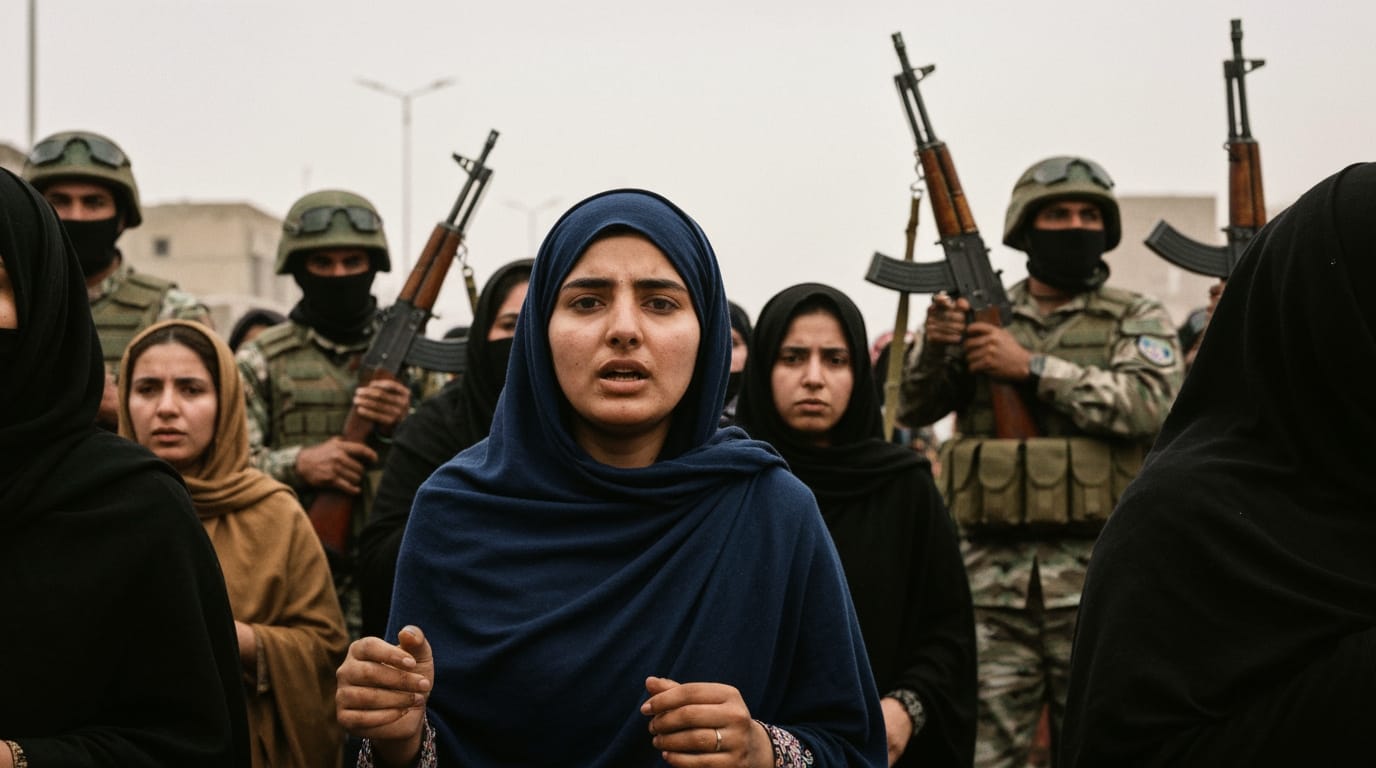
Herat, Afghanistan – Taliban forces violently dispersed a rare protest in the western city of Herat on Tuesday, opening fire on demonstrators challenging the arbitrary arrests of women for alleged violations of the group’s strict dress code. The crackdown resulted in at least one woman and a child being killed, with multiple others sustaining gunshot wounds, according to reports from local medical sources and international media partners. This deadly incident underscores the escalating repression faced by Afghan women under Taliban rule and the regime's brutal intolerance for public dissent.
The protest, involving an estimated 100 to 150 people, erupted in response to a wave of detentions initiated by the Taliban's Ministry for the Propagation of Virtue and the Prevention of Vice. This ministry had recently intensified its enforcement of dress code regulations in Herat, announcing that women found non-compliant would face arrest and imprisonment. Eyewitnesses described a chaotic scene where security forces clashed with protesters, firing shots and using sticks, leaving blood on the streets.
Escalating Repression: The Herat Incident
The immediate trigger for Tuesday's demonstration was the widespread apprehension of women and girls in Herat province by the Taliban's morality police. Reports indicate that the Taliban’s Ministry for the Propagation of Virtue and the Prevention of Vice in Herat had issued new directives, threatening arrest and transfer to prison for women who failed to adhere to the prescribed dress code, which often entails wearing a full-body covering like a burqa or abaya with a niqāb, leaving only the eyes visible. The United Nations Assistance Mission in Afghanistan (UNAMA) had already voiced concern over these arrests, highlighting serious human rights implications.
As protesters gathered to voice their opposition to these detentions and the broader restrictions on women’s attire, Taliban forces moved in to disperse them. Eyewitness accounts suggest a rapid escalation, with police initially firing shots into the air before directly targeting the crowd. A doctor at a local hospital, speaking anonymously due to fear of reprisal, confirmed that at least three people were admitted with gunshot wounds. Tragically, CBS News' partner network BBC, citing unnamed medical sources, reported that a woman and a child were killed in the confrontation, with more than a dozen others injured. Videos circulating on social media appeared to show Taliban forces firing at protesters and beating them with sticks, while some protesters reportedly retaliated by throwing stones and chanting demands for work, education, and freedom. Richard Bennett, the United Nations' investigator on human rights in Afghanistan, expressed alarm at the "excessive use of force against seemingly peaceful protesters" and called for accountability for those responsible.
A System of "Gender Apartheid"
This violent crackdown in Herat is not an isolated event but rather a stark manifestation of the Taliban's systemic dismantling of women's rights since their return to power in August 2021. Following the withdrawal of U.S.-led forces, the Taliban swiftly imposed a draconian interpretation of Islamic Sharia law, effectively erasing decades of progress for Afghan women and girls.
The comprehensive restrictions have targeted nearly every aspect of women's public and private lives. Education for girls beyond primary school and for women at universities has been largely banned, making Afghanistan the only country globally to impose such prohibitions. Women have been barred from most employment sectors, including public administration, the private sector, and even humanitarian organizations, including the United Nations. Freedom of movement is severely curtailed, with women often required to have a male guardian (mahram) to travel beyond certain distances or to even leave their homes for non-essential activities. Access to public spaces like parks, gyms, and beauty salons has also been restricted or prohibited.
The mandatory dress code, which dictates full body and face coverings, is rigorously enforced by the Ministry for the Propagation of Virtue and the Prevention of Vice, with male relatives often held responsible for ensuring compliance. These policies, taken collectively, have led human rights groups and the United Nations to describe the situation in Afghanistan as an institutionalized system of discrimination and segregation, amounting to "gender apartheid." The UN has termed Afghanistan the world's most repressive country for women in 2023.
A History of Resistance Against Intolerance
Despite the severe risks, Afghan women have consistently demonstrated remarkable courage and resilience by protesting the Taliban's oppressive decrees since 2021. These acts of defiance, though rare and often small in scale, have emerged across various cities, demanding fundamental rights such as education, work, justice, and peace. However, such protests are not tolerated under the current regime, and dissent is routinely met with violent suppression.
Previous demonstrations have faced similar brutal responses, including firing shots in the air, beatings, arbitrary arrests, and intimidation. In September 2021, a women's rights demonstration in Kabul demanding the right for girls to return to secondary school was violently broken up by Taliban forces who fired shots into the air and pushed back protesters. Reports from Amnesty International detail instances where female protesters were beaten, subjected to tear gas and electric shocks, and arbitrarily detained and tortured. Those who speak out, including human rights defenders and journalists, face profound risks, including physical and sexual violence and incommunicado detention. The recent surge in arrests and ill-treatment of women and girls for "bad hijab" since early January further illustrates the regime's systematic targeting of women.
International Response Under Scrutiny
The international community's response to the deteriorating human rights situation in Afghanistan, particularly concerning women and girls, has been widely criticized as "tepid," "disorganized," and "ineffective." While UN bodies and human rights experts have consistently condemned the Taliban's policies and called for accountability, practical measures to pressure the regime or alleviate the suffering of Afghan women have often fallen short.
UN Special Rapporteur Richard Bennett has urged the international community to codify "gender apartheid" as a crime under international law and hold perpetrators accountable for potential crimes against humanity. However, many critics argue that diplomatic engagement with the Taliban has yielded little to no improvement in women's rights, and some fear it may even be counterproductive, with the focus often shifting to other geopolitical concerns. Organizations like the Free Women in Exile Movement and the Afghanistan Women's Freedom Movement have called for stronger targeted sanctions and robust international support for Afghan women's civil resistance, emphasizing that "silence in the face of gender apartheid is complicity in injustice." The ongoing crisis, exacerbated by humanitarian needs affecting 23 million people, disproportionately impacts women and girls, yet global attention has reportedly waned.
A Future Defined by Resistance
The violent suppression of the hijab protest in Herat serves as a grim reminder of the escalating risks faced by Afghan women who dare to challenge the Taliban's authoritarian rule. This incident, resulting in deaths and injuries, highlights the regime's unwavering determination to enforce its extreme interpretation of Sharia law, further entrenching an institutionalized system of discrimination. Despite the brutal repression, Afghan women continue to demonstrate immense courage, finding ways to resist and advocate for their fundamental rights against overwhelming odds. Their ongoing struggle underscores the urgent need for a more robust and unified international response that prioritizes human rights and holds the Taliban accountable for its systematic abuses, ensuring that the calls for justice and freedom from the women of Afghanistan are not silenced.


