Tanzania's Muted Independence Day Reflects Deepening Political Crisis
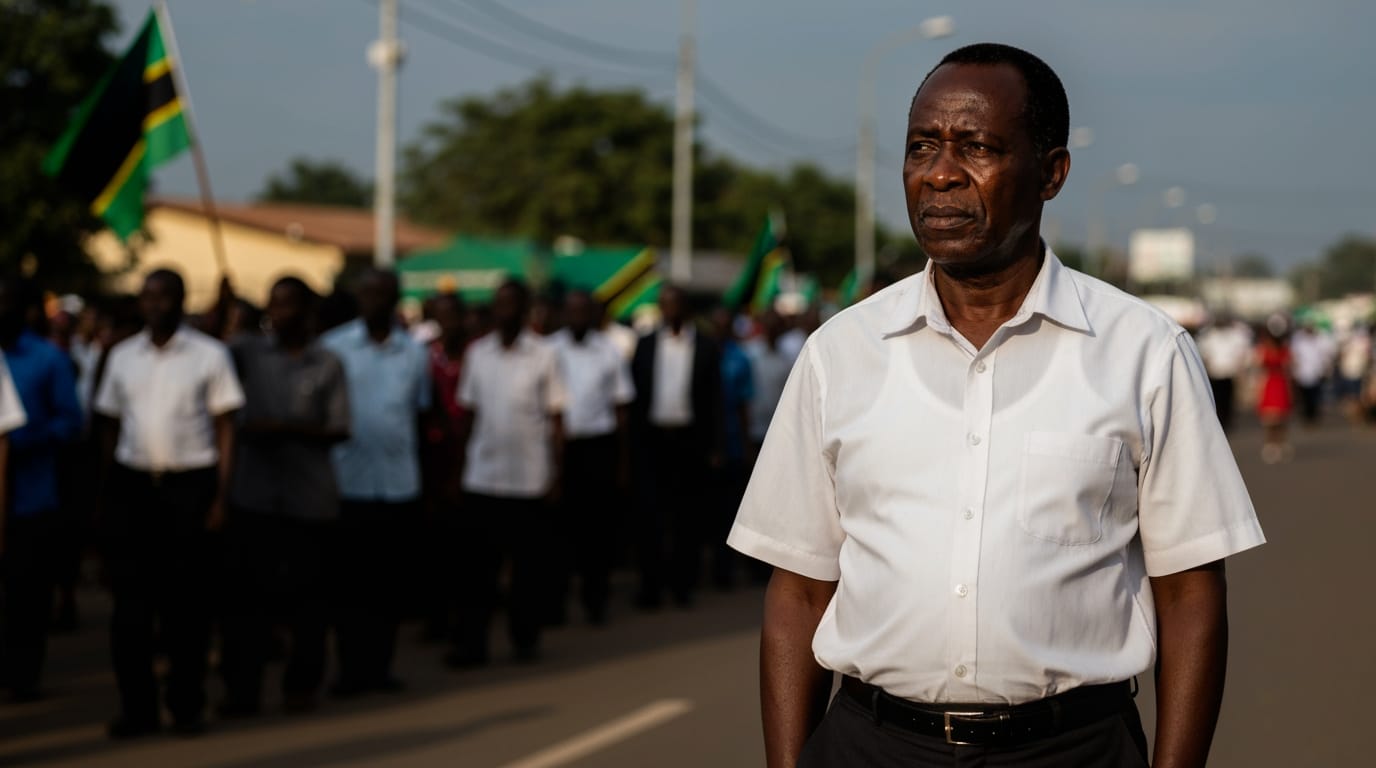
Dar es Salaam, Tanzania – Tanzania marked its 64th Independence Day on December 9, 2025, not with its customary vibrant parades and presidential addresses, but with an unprecedented quietness, underscoring a nation grappling with profound political tensions in the wake of a highly disputed general election. Official celebrations were cancelled, citizens were urged to remain indoors, and major cities were patrolled by heavy security forces, transforming a day traditionally dedicated to national pride into a stark reflection of a country in crisis.
A Nation's Silence on a Day of Celebration
The streets of Dar es Salaam, Dodoma, Arusha, and other key urban centers, usually bustling with patriotic fervor on December 9, remained largely deserted. The government, through Prime Minister Mwigulu Nchemba, had announced the cancellation of the annual festivities, redirecting funds typically allocated for pomp and circumstance. This move meant that traditional elements of Independence Day – presidential speeches, military parades, and cultural performances at the National Stadium – were conspicuously absent. Instead, President Samia Suluhu Hassan issued a message calling for unity, peace, and national pride, even as the atmosphere on the ground was palpably tense due to fears of anti-government protests. Police and military officers maintained a significant presence, erecting roadblocks and guarding government installations, preempting any potential gatherings. Public transport in Dar es Salaam was also curtailed, with bus owners reportedly withdrawing vehicles amid concerns of potential vandalism.
The Shadow of Disputed Elections
The decision to forego public celebrations was directly linked to the aftermath of Tanzania's contentious general election held on October 29, 2025. President Samia Suluhu Hassan was declared the winner with an overwhelming 98% of the vote, a result that swiftly drew accusations of widespread fraud from opposition parties and independent observers. Critics labeled the outcome a "mockery of democracy," pointing to the disqualification or imprisonment of key opposition rivals, including Tundu Lissu, who faced treason charges.
The election results ignited a wave of protests across the country, which were met with a severe crackdown by security forces. Human rights organizations and opposition figures allege that hundreds, possibly even thousands, of protestors were killed in the ensuing violence, though the government has not released an official death toll. Reports included mass arbitrary detentions, extrajudicial killings, and enforced disappearances. A five-day internet blackout was also imposed starting on election day, which critics viewed as an attempt to suppress information and hinder the organization of protests. These events triggered what many observers describe as Tanzania's deepest crisis in decades.
Diverted Funds and Public Discourse
Officially, the government stated that the funds earmarked for the Independence Day celebrations would be re-channeled towards repairing infrastructure damaged during the post-election unrest. Prime Minister Nchemba appealed to citizens to avoid violence and instead engage in dialogue, emphasizing the need for national healing and unity. However, this explanation was met with skepticism by many, who saw the cancellation as a direct measure to prevent opposition groups from using the national holiday as a platform for further anti-government demonstrations.
While not unprecedented for Tanzania to modify its Independence Day observances – former President John Magufuli cancelled celebrations in 2015 and 2020 to redirect funds to development projects, and President Hassan herself did so in 2022 to build dormitories for special needs children – the context of the 2025 decision is markedly different. Past cancellations were generally framed as gestures of fiscal prudence or social investment. The current situation, however, is overshadowed by intense political unrest and allegations of human rights abuses, adding a layer of gravity and controversy to the subdued observance.
Calls for Justice and International Scrutiny
The opposition's calls for renewed protests on Independence Day, coupled with the government's robust security response, highlighted the ongoing struggle for democratic space and accountability. Authorities confirmed arrests of activists and opposition supporters for "online offenses" related to organizing protests, with police actively monitoring social media.
Amid the domestic turmoil, international scrutiny has intensified. Human Rights Watch and other global bodies have voiced serious concerns over the post-election violence, including reports of extrajudicial killings and mass detentions. The United States and other countries issued travel warnings to their citizens, citing potential unrest. A coalition of lawyers and rights organizations formally requested the International Criminal Court to investigate alleged crimes against humanity in Tanzania, including mass killings and disappearances. While the Tanzanian government has established a commission of inquiry into the violence, its independence and impartiality have been questioned by opposition parties and civil society groups.
A Tarnished Anniversary
December 9 traditionally commemorates Tanganyika's achievement of independence from British rule in 1961, a pivotal moment in the nation's history under the leadership of Julius Nyerere. It symbolizes national unity, freedom, and the birth of a sovereign state. The muted and tense commemoration in 2025, however, suggests a departure from this unifying narrative. Instead of celebrating collective achievements, the day became a somber reflection of deep political divisions and a significant test of the country's democratic institutions and human rights commitments. The questions raised by this subdued anniversary extend beyond the cancelled festivities, probing the future direction of governance, reconciliation, and the exercise of fundamental freedoms in Tanzania.


